Home » Products » Steel Pipes & Tubes » API 5CT Casing

API 5CT Casing Manufacturer

Seamless well casing with the grade, wall and connection kept together

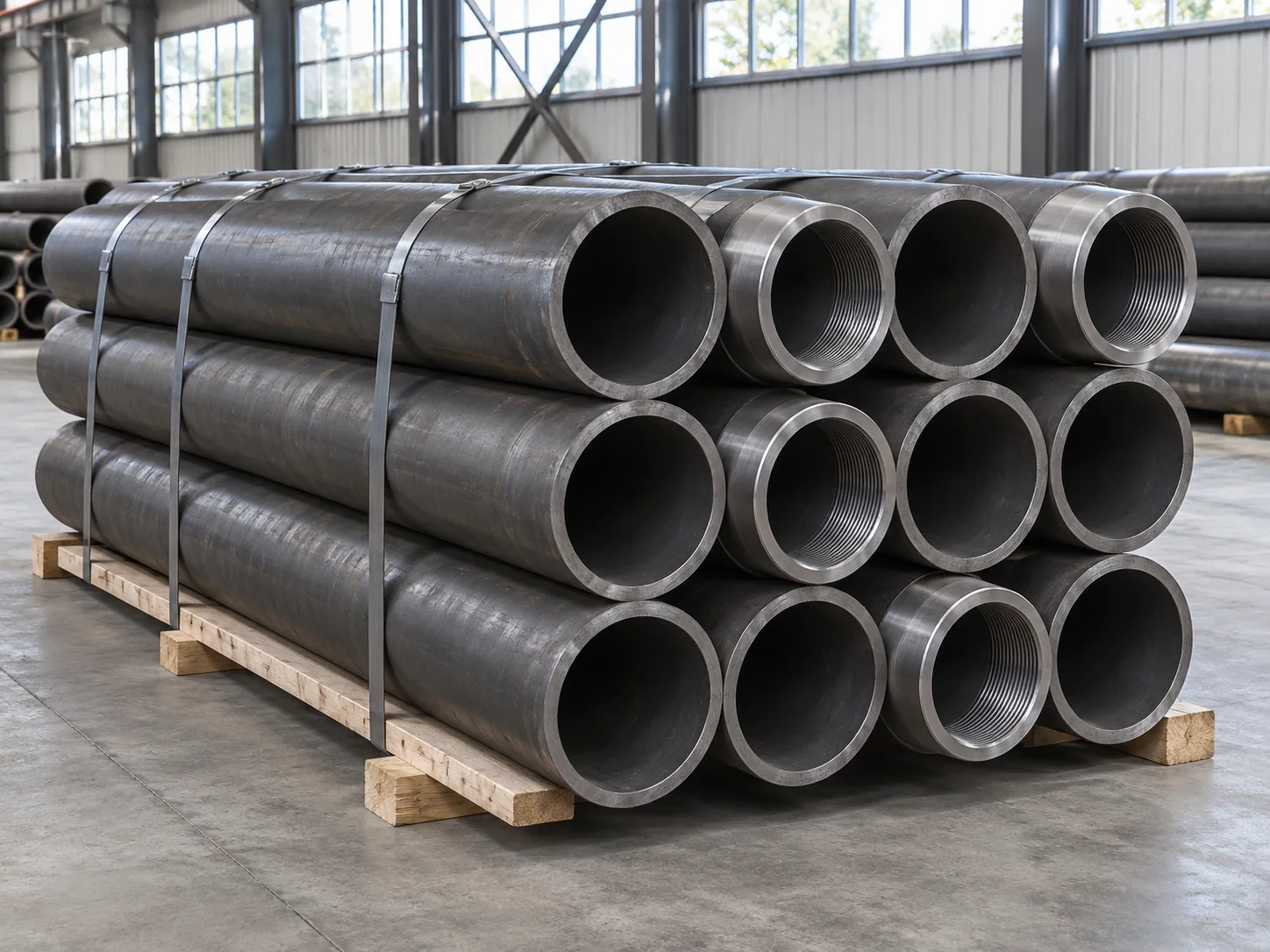
We supply seamless API 5CT casing for oilfield distributors and well contractors. Our published casing range runs from 4½ to 20 in. OD, with J55 and K55 as the core selections. Each quoted line retains its wall or nominal weight, connection and length requirement, so a casing string arrives under the specification used in the well program.
Product
Seamless casing
Published OD
4½–20 in.
Core grades
J55 / K55
End selection
Round / buttress / plain

Casing supply for your well program

Manufacturing routeSeamless steel casing
Core material selectionAPI 5CT J55 and K55
Published outside diameter4½–20 in.
Connection familiesShort-round, long-round, buttress or plain ends, identified by the order
Length basisThe specified length range plus the delivered joint tally
Other material or connection requirementsQuoted as separate lines against the complete designation

Selected casing-body diameters and walls

Use the body diameter and wall together when checking the casing schedule. Thread and coupling dimensions belong to the connection drawing.

Casing OD (in.)Casing OD (mm)Nominal wall (in.)Wall equivalent (mm)
4½114.30.2055.21
4½114.30.2245.69
4½114.30.2506.35
6⅝168.30.2887.32
6⅝168.30.41710.59
10¾273.10.3508.89
10¾273.10.40010.16
10¾273.10.45011.43

No matching specification. Clear the search to see every row.

Scroll sideways to see every column.

Selected J55/K55 entries from our casing catalog. Inch walls are retained; metric wall equivalents use 25.4 mm per inch and are rounded to two decimals. The order also identifies connection and nominal mass designation.

API 5CT material and purchase requirements

J55 and K55 are separate orders

J55 and K55 stay distinct despite the shared strength number. Material identity, test requirements and the approved grade remain attached to the casing line. A different grade is a substitution requiring its own approval.

Keep the applicable API edition on the order

API 5CT addresses casing and tubing delivery requirements. For an 11th-edition order, supplementary requirements are specified by their actual clauses or SR designations, which set the complete inspection scope.

Additional grades and service conditions

N80 types, L80 material types and other project grades need their complete designations. Sour-service suitability, collapse performance and connection sealing are separate requirements, each named on the order.

Casing connections and end preparation

Short-round and long-round threads

Short-round and long-round casing connections use their own coupling and thread geometry. Retaining the connection designation prevents a joint from being supplied against a similar-looking end that belongs to another casing string.

Buttress casing connections

Buttress thread form is distinct from round casing threads. The matching coupling, connection drawing and required handling compound belong with that end form. Acceptance is gauged against the connection drawing.

Plain ends for downstream processing

Plain-end casing leaves the final connection work outside the supplied end finish. The required end allowance and subsequent processing route affect the finished joint length and should be included in the material schedule.

Casing orders for drilling and replacement programs

Planned casing strings

A well program distinguishes surface, intermediate and production strings. Our casing quotation follows those separate line items, preserving changes in body wall, material and connection through the string.

Replacement casing sections

Replacement work needs a positive match to the existing casing designation and mating equipment. The body OD is only the starting point; connection type and the required drift clearance decide whether the replacement fits.

Casing bore, threads and material identity

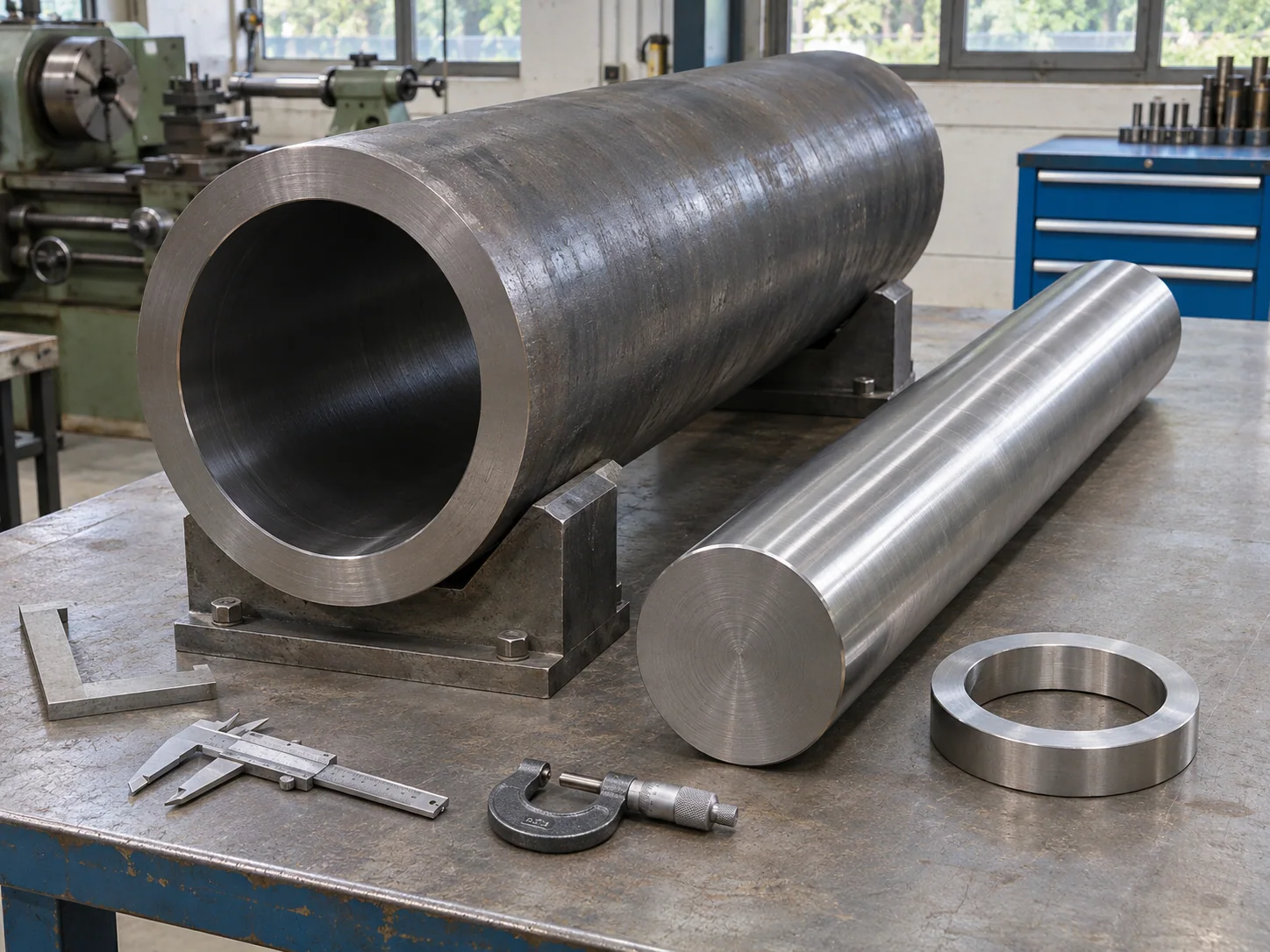
A casing section with a drift mandrel and thread gauge arranged on an inspection bench

Drift is a physical clearance check

A drift test uses a mandrel with a specified diameter and length. The mandrel pass establishes that the required tool envelope clears the delivered casing.

Connection gauges and end condition

Thread geometry and visible end condition are checked before protectors are fitted. Handling dents, contaminated threads and damaged crests affect assembly even where the pipe body remains undamaged.

Records tied to the casing joints

Heat or lot references connect pipe markings with the material and inspection records agreed for the order. Hydrostatic test pressure is recorded as an acceptance-test condition. Well operating pressure is set by the completion design.

Casing release documents

Material certificateDimensional and drift recordsRequired connection inspection recordsJoint tally and packing list

Protected connections and a usable joint tally

End protection during handling

Threaded ends travel with protectors selected for the end form. Supports and restraints keep the connection areas clear of hard contact, while exposed surfaces retain the preservation treatment specified for shipment.

Piece count and delivered footage

A casing range is a length category, not a promise that every joint has an identical length. The shipment tally records individual joints and total footage so the receiving team can reconcile the actual string material.

Separate casing lines in the quotation

The offer identifies body size, wall or nominal mass, grade, connection work and quantities. Packing, production timing and the delivery basis are priced for the actual order and destination.

API casing purchasing questions

Can J55 casing replace K55 casing with the same dimensions?

J55 and K55 remain different API grade designations. Matching OD and wall does not make the material substitution acceptable. The well program and purchase specification determine which grade can be supplied.

Does an API 5CT description prove that the supplied casing is API Monogram licensed?

No. The product specification and the right to apply the API Monogram are separate matters. An order requiring Monogrammed casing needs the actual licensed manufacturer and the applicable product scope identified; a standard name in a quotation is not that evidence.

Is plain-end weight the same as threaded-and-coupled nominal weight?

No. Plain-end weight describes the pipe body basis. A threaded-and-coupled designation includes the relevant end configuration. Keep the weight basis on the order so the selected wall and commercial quantity match the intended casing.

What belongs in an order for a special casing drift?

State the required mandrel diameter and length, the joints to be checked and any specified procedure or witness point. A special drift is an additional acceptance requirement; naming a nominal pipe bore does not define it.

Can you identify an existing casing connection from a photograph?

A photograph can show damage or general end form, but it cannot establish the complete connection geometry. Use the original casing designation, connection drawing or verified inspection information to specify a replacement; visually similar pins may belong to different connections.

How should spare casing couplings be described on a material list?

List the casing size, connection designation, coupling grade or specification and piece count. Coupling size is tied to the mating casing connection; a generic pipe coupling of similar diameter is a different item.

Get a quote for your casing schedule

Attach the casing schedule with OD, wall or nominal lb/ft, grade, connection, length range and quantity. Add the destination and any special drift or inspection requirement. Our offer returns the proposed combination and supply terms for each casing line.

Metdax
Get a quote
Search Metdax

Language

Get a factory quote

Send your specifications or attach a material list.

API 5CT Casing

Your information is used to respond to this inquiry. Privacy policy

sales@metdax.com

+86 177 7599 6440