Home » Products » Ground Screws & Helical Piles » Beam Saddle Brackets

Beam Saddle Bracket Manufacturer

Fabricated steel beam seats with matched pile-top connections

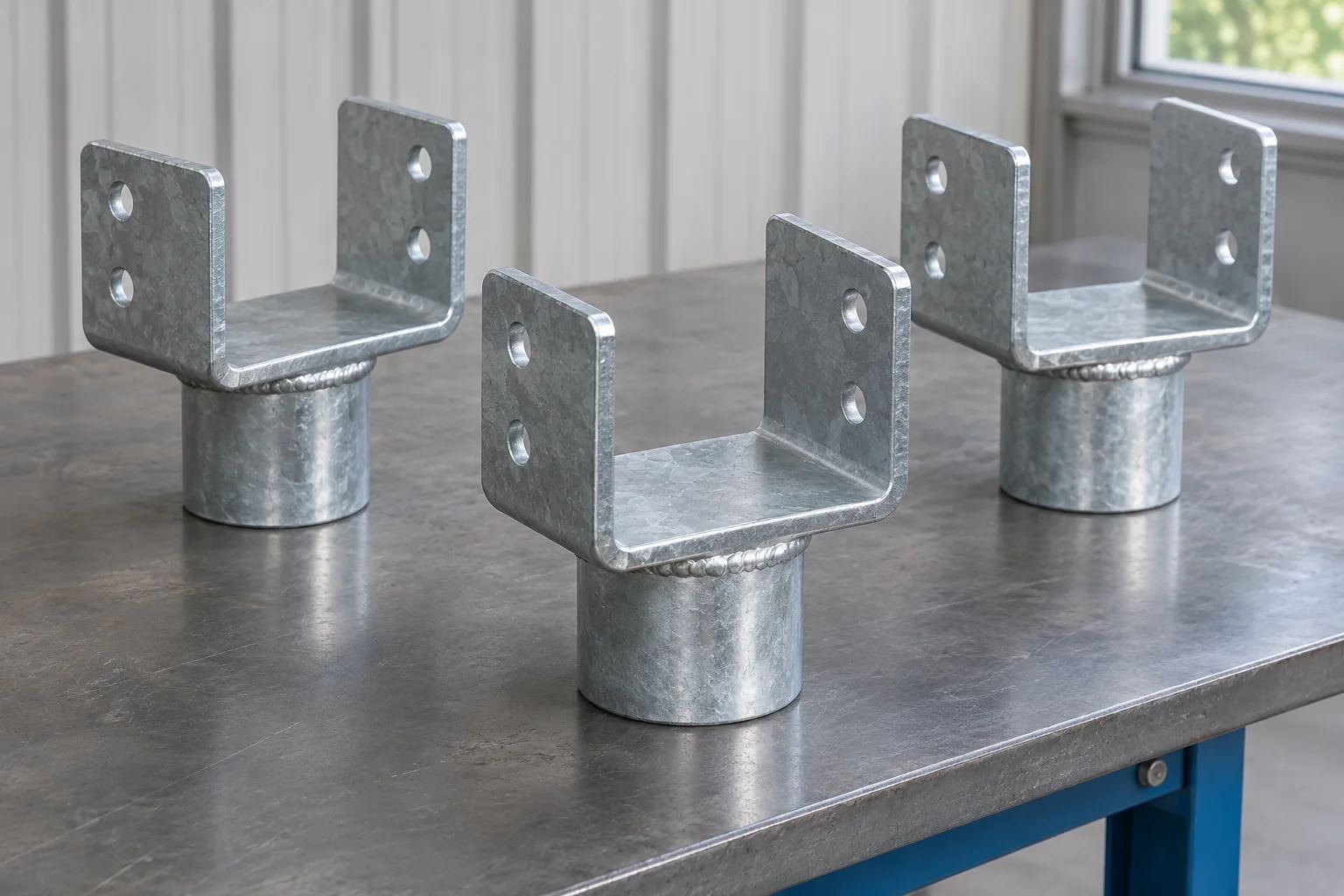
We fabricate steel beam saddles around the actual bearing width, side-fixing detail and lower pile connection. A single timber, built-up beam or steel section uses its own seat drawing. The bearing plate, side plates and sleeve or stem are quoted as one identified assembly, with the upper and lower fasteners counted separately.
Fabrication
Formed or plate-built steel seat
Upper interface
Actual beam and bearing detail
Lower interface
Pile sleeve or specified stem
Order unit
Head assemblies and hardware

Beam seat and lower shaft connection

Clear seat widthActual supported-member width plus the specified installation clearance
Bearing lengthContact length along the beam on the support detail
Seat and side platesSteel specification, thickness, side height and fabrication route
Beam fasteningHole centers, edge distances and side access from the released beam detail
Lower connectionSleeve bore, engagement or stem detail matched to the pile top
PositionBearing elevation, beam direction and offset from the pile centerline
Included itemsFabricated saddle assembly; shaft and beam fastening sets itemized

US glulam widths used to define a saddle request

These published glulam widths identify different beam interfaces. Use the actual delivered member and its permitted variation to set the saddle’s clear seat. The finished saddle dimension allows for that variation.

Published glulam width (in.)Width converted to mmSaddle dimension to establish
3-1/879.375Clear width from actual beam + specified clearance
3-1/288.900Clear width from actual beam + specified clearance
5-1/8130.175Clear width from actual beam + specified clearance
5-1/2139.700Clear width from actual beam + specified clearance
6-3/4171.450Clear width from actual beam + specified clearance

No matching specification. Clear the search to see every row.

Scroll sideways to see every column.

Beam-width reference from American Wood Council technical information on traditional and engineered wood products. Conversions use 25.4 mm/in. These are timber interface dimensions, not stocked saddle sizes, required clearance values or load ratings.

Bearing, restraint and material requirements

Vertical bearing and side restraint

The seat supports the specified bearing contact. Side plates and their bolts provide the restraints shown by the design. An uplift or moment connection is rated in that design.

Timber and steel use different details

A timber saddle follows the member’s actual width, grain-related fastening detail and required end support. A steel beam has its own flange, web and connection geometry. Each support follows its own member geometry.

Plate, weld and finish identity

The assembly retains its plate and sleeve material, welded joints and specified protection. Required system or connection records identify the actual saddle and pile family.

Single beams, built-up members and side-plate geometry

Bearing across the complete beam width

A built-up timber beam needs its complete ply arrangement identified at the support. The seat drawing locates the bearing under the intended member; joining the plies to one another is a separate framing detail, not supplied by the saddle’s width alone.

Side holes from the beam datum

Hole centers follow the beam connection, including its end and edge distances. Tool access, washers and nuts need room beside the side plates so the selected fastening set can be installed without changing the hole pattern.

Welds and bends clear the seating area

A plate-built seat and a formed U-seat have different inside-corner geometry. Weld profiles, bend radii and any gussets are located so the beam can reach its bearing surface without hanging on an unintended obstruction.

The lower socket fixes orientation

The sleeve or stem relates the beam direction to the shaft and finished support level. A rotated saddle or offset seat is a separate assembly mark, since the lower fastening pattern has a fixed orientation.

Saddle lots for timber frames and pile-supported beams

Repeated beam supports

Beam marks and support positions distinguish the seat width, bearing length and side-fixing pattern. Heads with the same lower sleeve can therefore remain different items where the beam details change.

Replacement beam on retained piles

The retained pile-top geometry and the new beam detail define the replacement saddle. A new timber width or support level is carried into that drawing before the replacement head is fabricated.

Finished seat geometry and mating shaft fit

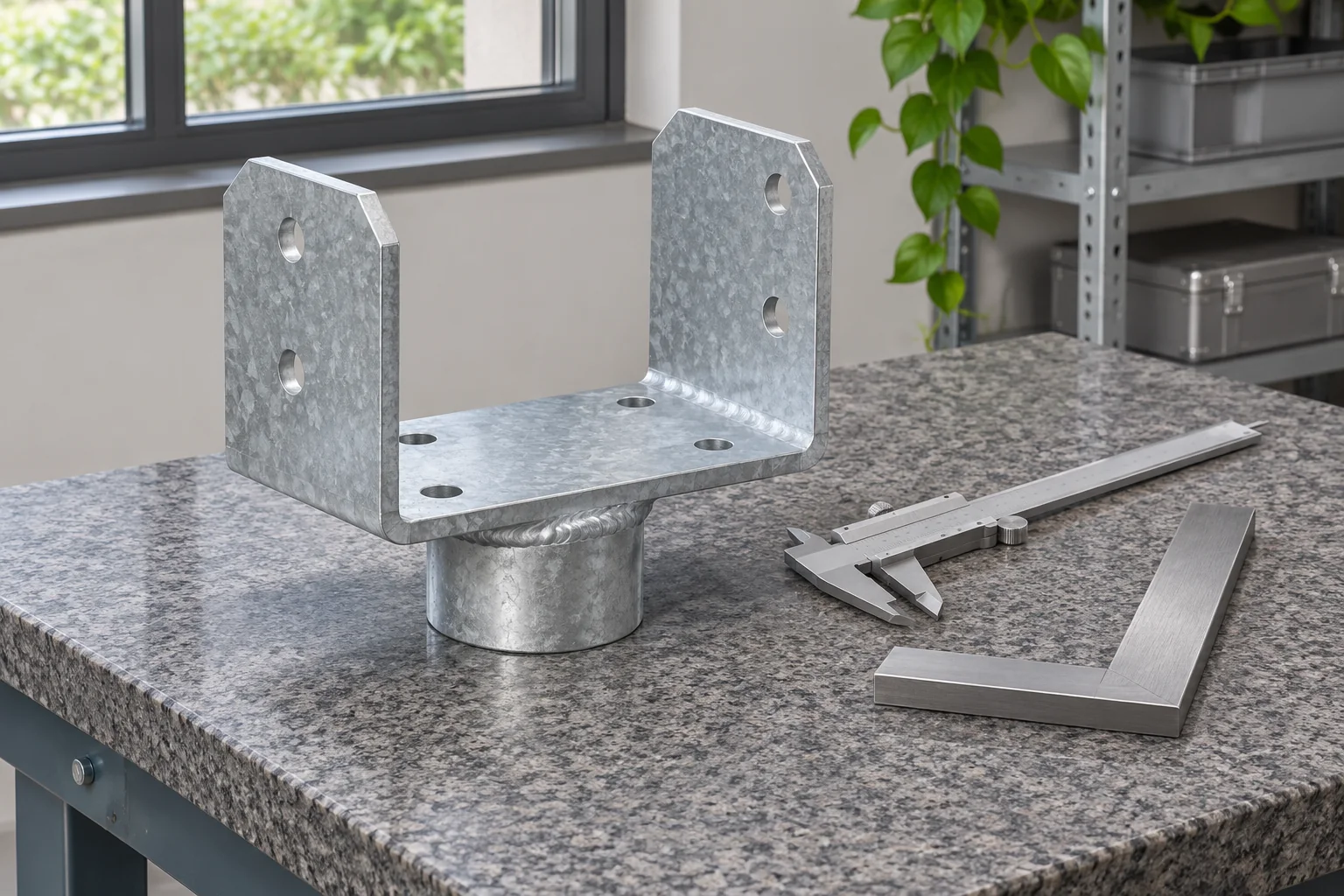
Beam saddle beside dimensional checking tools

Clear bearing and side dimensions

Seat width, bearing length, side height and hole centers are measured from the released datums. The check includes obstructions inside the seat, beyond the outside bracket width.

Lower socket and assembly position

Sleeve bore, engagement and transverse holes are checked with the actual shaft reference. The relationship between the sleeve axis and bearing plane identifies the finished head position.

Welds, finish and hardware

The required weld examination and protection checks follow the component plan. Shaft hardware and upper-member fastening sets retain separate identities against the finished saddle mark.

Saddle fabrication records

Seat drawing and revisionBearing and socket dimensionsRequired weld recordsFinish coverageUpper and lower hardware

Saddle assembly prices and protected seats

Fabricated heads and fastening sets

Our quotation lists the complete fabricated saddle, loose plates and fastening sets as named items. Different seat widths, lower sockets and handed or offset pieces keep their own marks and quantities.

Packing around projecting sides

Divided packing protects the side plates, bearing faces and sleeve openings. Stacked assemblies and loose hardware bear clear of the projecting plates.

Receiving against beam positions

Position marks and drawing revisions follow the saddles through the packing list. Extra hardware is counted separately, keeping spares distinguishable from the two fixing groups assigned to each head.

Beam saddle purchasing questions

Can a nominal 6 in. beam be ordered into a 6 in. saddle without measurements?

No. Nominal timber names and actual dressed or engineered widths can differ. The actual member width and permitted variation establish the seat request; the released drawing sets its clear width and installation clearance.

Can packing shims be added to raise a beam in the saddle?

Only a packing arrangement accepted by the connection design is used. Added shims can change bearing contact, side-bolt location and retained engagement; a loose stack is not an assumed height-adjustment feature.

What if the beam runs at a slope?

The support detail must define the bearing plane and connection for that slope. A level seat with contact only at one edge is a different bearing condition from the intended full seating; the saddle geometry follows the accepted detail.

Can the saddle keep water out of the timber end?

A steel cradle is not a timber waterproofing system. Exposure, drainage and any specified separation or contact treatment are resolved in the timber support detail; coating the steel does not establish timber durability.

Are timber bolts included with the pile-shaft bolt set?

They are separate fastening groups. The quote identifies the upper-member bolts, nuts and washers independently from the lower shaft hardware so neither group is implied by the saddle piece count.

Can the socket be welded directly to an existing pile on site?

That route needs an accepted joint detail, material and coating information, welding responsibility and inspection scope. A head supplied for a bolted sleeve connection is not automatically released for a field-welded attachment.

Quote the beam seat and pile interface as one assembly

Attach the beam section and connection drawing with the pile-top detail. Include bearing dimensions, position marks, material, finish, hardware quantities and destination for an itemized saddle offer.

Metdax
Get a quote
Search Metdax

Language

Get a factory quote

Send your specifications or attach a material list.

Beam Saddle Brackets

Your information is used to respond to this inquiry. Privacy policy

sales@metdax.com

+86 177 7599 6440