Home » Products » Steel Pipes & Tubes » 3LPP Coated Pipe

3LPP Coated Pipe Manufacturer

Three-layer polypropylene coating with project-defined thickness and pipe-end cutbacks

Our 3LPP supply combines the specified steel pipe with an FBE primer, adhesive and polypropylene outer layer. Pipeline purchasers can retain the coating class, total thickness, end cutback and release tests as one coating package. The base-pipe grade and wall remain separate, fully identified purchase requirements.

Outer layer
Polypropylene (PP)
Coating system
FBE + adhesive + PP
Thickness basis
Project class and pipe mass
Pipe ends
Defined coating cutback

Three-layer PP coating order scope

SystemFusion-bonded epoxy primer, adhesive and polypropylene outer layer
Base pipeSpecified steel grade, route, OD, wall and length
Coating referenceISO 21809-1 or the project-adopted PP coating specification
ThicknessSelected coating class and purchaser-defined minimum total build
End preparationCoating cutback, edge profile, bare-end protection and weld-end detail
Release scopeApproved application procedure and agreed coating inspection records

3LPP Class C thickness reference

Identify the pipe mass per meter before selecting a thickness class.

Pipe mass Pm (kg/m)C1 total min. (mm)C2 total min. (mm)C3 total min. (mm)
Pm ≤ 151.31.72.1
Over 15 to 501.51.92.4
Over 50 to 1301.82.32.8
Over 130 to 3002.22.53.2
Pm > 3002.53.03.8

No matching specification. Clear the search to see every row.

Scroll sideways to see every column.

ISO 21809-1:2018 Table 2 Class C reference, expressed as minimum total coating thickness in millimeters. The standard permits a 10% total-thickness reduction at SAW weld seams. Each coating order states the adopted edition, project amendments, coating class and required service conditions. The middle mass bands exclude their lower limit and include their upper limit.

Polypropylene system selection

3LPP and 3LPE

The outer layer is PP in 3LPP and PE in 3LPE. A specified PP system keeps its own material qualification and service envelope; replacing the outer polymer is a change of coating system.

Application procedure

The approved application procedure combines surface preparation, material selection, application settings and inspection. Its qualification records identify the coating line, application method and material combination covered by the tests.

Base-pipe release

The steel specification and required pipe testing are established before coating. Coating acceptance and steel-pipe acceptance remain separate records, joined by the pipe identity.

Cutbacks, coating edges and field joints

Welding cutback

Bare steel at each end provides the space needed for the joint preparation and field welding. Cutback length and tolerance follow the field-joint system and project drawing.

Coating edge profile

The transition from coated body to bare end affects how the field-joint coating overlaps. The edge shape and any feathering requirement belong in the coating procedure.

Field-joint compatibility

Field-joint material is selected for adhesion to the prepared pipe and adjacent PP coating under the approved installation conditions. The joint specification identifies the compatible material system, preparation and application procedure.

Handling and installation loads

Transport restraints, supports and laying method affect mechanical damage to the coating. Abrasion-resistant additions, concrete overcoating or installation-specific protection are distinct project scopes.

3LPP pipeline supply by project specification

Buried and submerged pipeline orders

A project pipe list can be matched with its coating schedule and field-joint details. We keep differences in pipe mass, thickness class and end preparation visible instead of assigning one coating build to every size.

Sections for demanding installation routes

Crossings and other mechanically demanding sections may need a different thickness class or additional protection. The installation design defines those requirements alongside the basic corrosion coating.

Coating thickness, continuity and adhesion

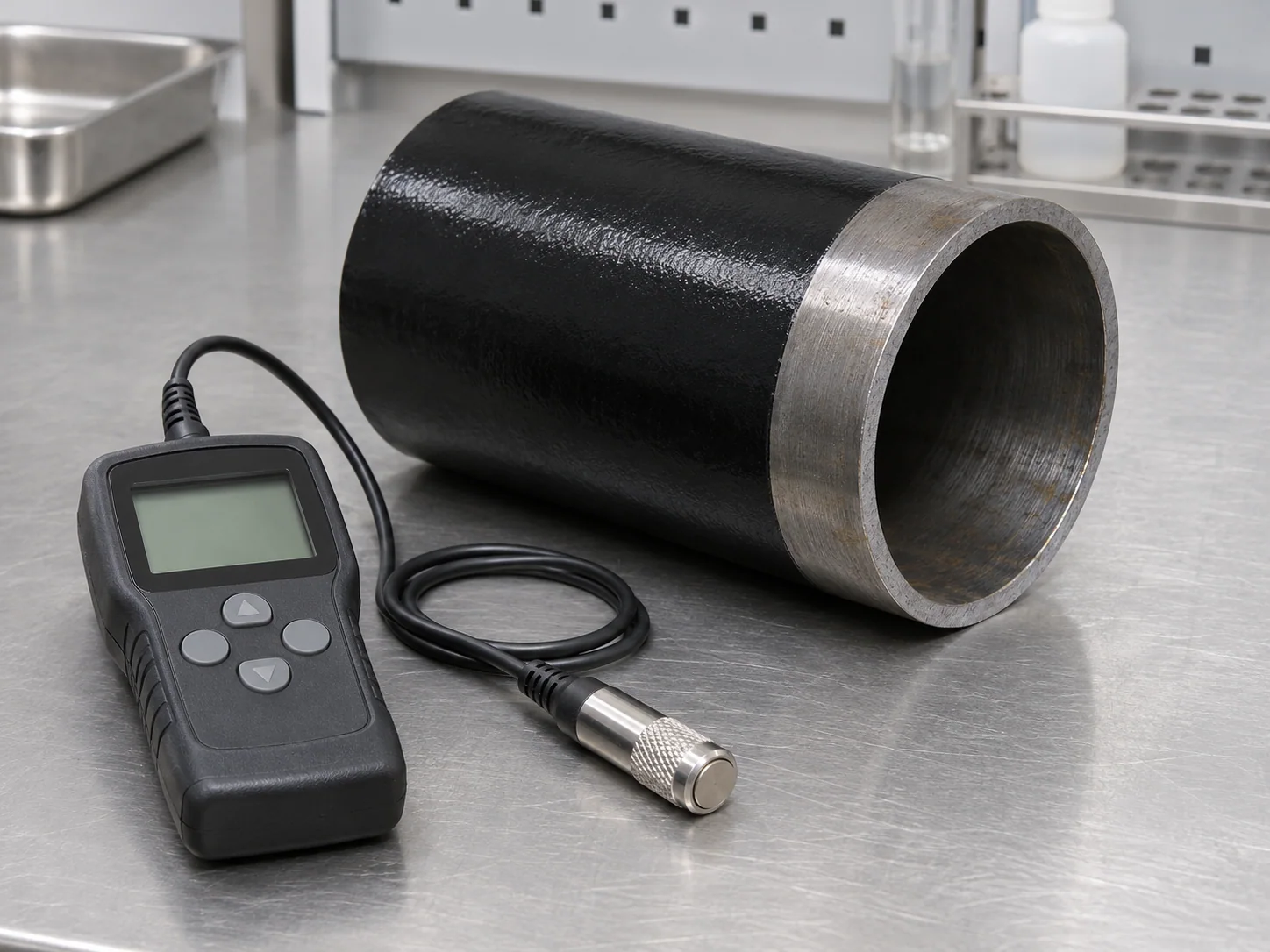
Coated pipe section beside a thickness meter and probe

Thickness around the pipe

Inspection records the required total build and its distribution around the pipe, including the weld seam where applicable. Pipe identity links the readings to the released coating lot.

Holiday detection

The agreed holiday test checks coating continuity using the applicable procedure and settings. Test voltage is selected for the adopted specification and thickness.

Adhesion and system tests

Peel adhesion, impact, indentation and other required tests address different coating properties. Their methods, temperatures and acceptance criteria follow the approved inspection plan.

Coating ends and repairs

Cutback geometry, exposed steel preservation and repaired areas are checked before release. A repair retains its qualified material and acceptance record.

3LPP coating release documents

Base-pipe material recordsApplication procedure and inspection planRequired coating test reportsPipe identity and coating release list

Storage and packing for PP-coated pipe

Non-damaging supports

Suitable pads and lifting arrangements protect the coating from sharp contact. Bundle restraints and stacking supports avoid concentrating handling loads at a coating edge.

Protected bare ends

The exposed cutbacks and weld ends receive the specified temporary protection. End caps protect the bore without hiding the need to inspect the coating transition.

A defined coated-pipe offer

Our quote identifies the base pipe, coating system, selected thickness class, cutback, inspection and destination terms. Field-joint materials or additional installation protection are separate inclusions when required.

3LPP Coated Pipe purchasing questions

Does 3LPP include the same outer polymer as 3LPE?

No. 3LPP uses polypropylene and 3LPE uses polyethylene as the outer layer. Their qualified material systems and service envelopes are separate.

How is a coating thickness selected?

The purchaser selects the class using the adopted specification, pipe mass and installation conditions. The Class C table provides a standard reference; the project requirements establish the actual purchase minimum.

Can thicker PP coating replace temperature qualification?

No. Thickness and material qualification address different requirements. The selected FBE, adhesive and PP combination must be qualified for the specified temperature and duty.

Why does the coating stop before the pipe end?

The bare cutback allows end preparation, welding and field-joint installation. Its length and edge profile need to match the field-joint procedure and project detail.

Does a holiday test prove adhesion?

No. Holiday detection checks discontinuities. Adhesion is evaluated by its own test method, alongside other required system properties in the inspection plan.

Can 3LPP be supplied over welded steel pipe?

Yes, within the specified base-pipe and coating scope. Weld-seam profile, pipe identity and the applicable seam-thickness allowance remain part of the procedure and acceptance requirements.

Get a 3LPP coated-pipe quote

Attach the base-pipe schedule and coating specification, including class, total thickness, design and handling temperatures, cutbacks and required tests. Add quantity and destination. We return the defined steel-pipe, coating and release-document scope together.

Metdax
Get a quote
Search Metdax

Language

Get a factory quote

Send your specifications or attach a material list.

3LPP Coated Pipe

Your information is used to respond to this inquiry. Privacy policy

sales@metdax.com

+86 177 7599 6440