Home » Products » Solar Mounting Systems » Standing Seam Solar Mounting

Standing Seam Solar Mounting Manufacturer

Roof-specific seam attachments, rail connections and module hardware

Standing-seam racking starts at the roof profile, not a generic clamp size. We supply the rails, feet and module-retention parts around the accepted seam attachment, with specialist clamp supply identified separately in the package.

Roof interface
Identified standing-seam profile
Attachment route
Profile-matched seam grip
Racking package
Rails, feet and module hardware
Order basis
Roof zones and attachment schedule

Parts in a standing-seam racking order

Roof attachmentNamed clamp/model and roof profile; included or buyer-supplied as itemized
Rail connectionMatching foot, adapter, bolt and rail-slot interface
RailsScheduled profile, lengths, splices and roof-zone positions
Module retentionEnd and interior parts for the actual module frame and approved mounting zone
Contact materialsSpecified metal, finish and isolating pieces at the mating faces
System documentsApplicable attachment, roof, module and bonding records for the supplied combination

Standing-seam roof heights used for profile identification

The Maxima family illustrates why a roof name and profile drawing are useful order inputs. The published heights below identify roof profiles, not interchangeable clamp sizes.

Published roof profileSeam height (in.)Seam height (mm)
Maxima family — 1.5 in. seam1-1/238.1
Maxima family — 2 in. seam250.8
Maxima family — 3 in. seam376.2

No matching specification. Clear the search to see every row.

Scroll sideways to see every column.

Roof-profile reference: McElroy Metal Maxima technical information. Inch dimensions converted at 25.4 mm/in. Clamps also follow seam width and fold, material and the accepted attachment record, all of which decide compatibility.

Roof attachment records and mounting-system scope

Holding strength belongs to the actual connection

Clamp performance depends on the roof profile, metal, thickness, fastening arrangement and load direction. The capacity record covers the supplied seam and clamp combination.

Roof responsibility stays explicit

The accepted mounting detail preserves the roof supplier's requirements for attachments and panel movement. Roof warranty, roof-clip capacity and the supporting structure stay with the roof supplier and the project design.

Mechanical fit and electrical bonding

The metal-to-metal joint and an evaluated bonding path are separate requirements. Where mounting or bonding records are specified, the item list identifies the investigated components and assembly conditions.

Seam contact, rail feet and movement details

Clamping faces follow the fold

A set-screw or two-piece seam clamp bears against a particular part of the profile. The installed orientation and fastening detail keep that contact on the intended seam faces, away from an improvised position on the flat panel pan.

The top connection must fit the rail foot

Clamp top threads, adapter holes and foot height need to match the selected rail assembly. A roof clamp that grips the seam correctly can still be the wrong part for the rail or bolt arrangement above it.

Panel movement and rail breaks

Standing-seam panels can move on their roof clips as temperature changes. The mounting arrangement accounts for that movement and for rail expansion breaks, keeping the panels free to move as the roof design intends.

Tool access at the installed height

The seam screws, top bolt and module clamps need access in the assembled position. Low module clearance can leave a bolt physically present but inaccessible after the rail and module are fitted.

Standing-seam racking packages for commercial roofs

New arrays on an identified roof

The roof profile and attachment schedule set the clamp positions; the module layout sets rails, row ends and interior clamps. Our parts list keeps those quantities separate so the quote describes the actual array.

Extensions across more than one roof area

Different roof wings can use different seam or attachment details. Components are grouped by their roof area, even where module size and rail appearance repeat.

Checks at the roof-to-rail interface

Dimensional fit check of a seam clamp, roof-profile coupon and rail adapter

Clamp seating on the profile

The selected clamp is compared with the intended roof profile and contact detail. A dimensional fit check identifies the physical part, while attachment strength comes from the test record.

Top bolt and adapter fit

Thread identity, adapter-hole position and bolt access are checked as one mating assembly. Finish buildup or a different supplied bolt can affect the fit even where the parts have matching nominal names.

Zone quantities and component identity

Packing references distinguish seam clamps, feet, rails and module-retention hardware. Any specialist or buyer-supplied attachment remains identified so the bundle shows whether the roof interface is included.

Records for the identified mounting package

Roof and profile identityAttachment part referencesRail and foot interfaceSpecified system recordsRoof-zone quantity list
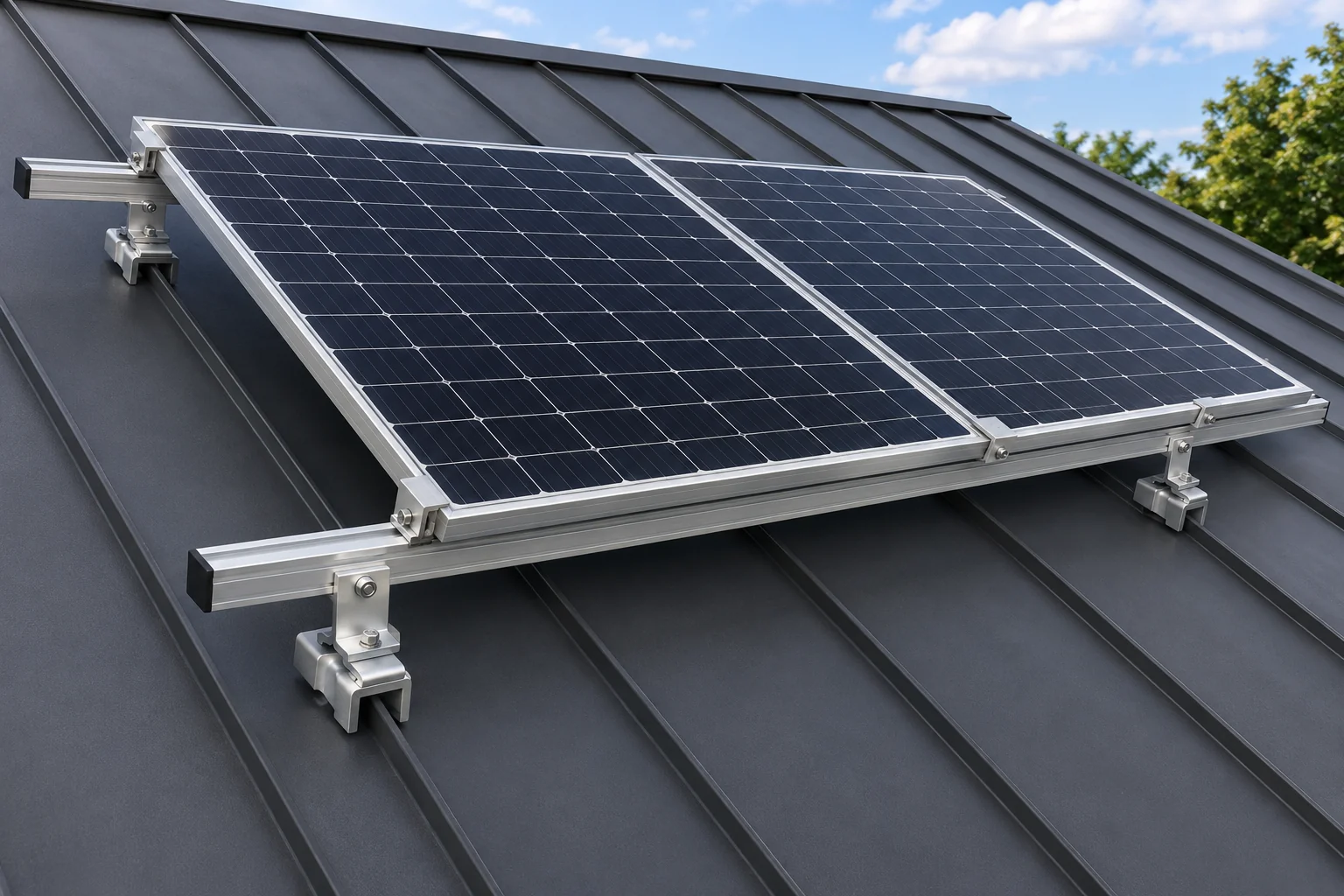
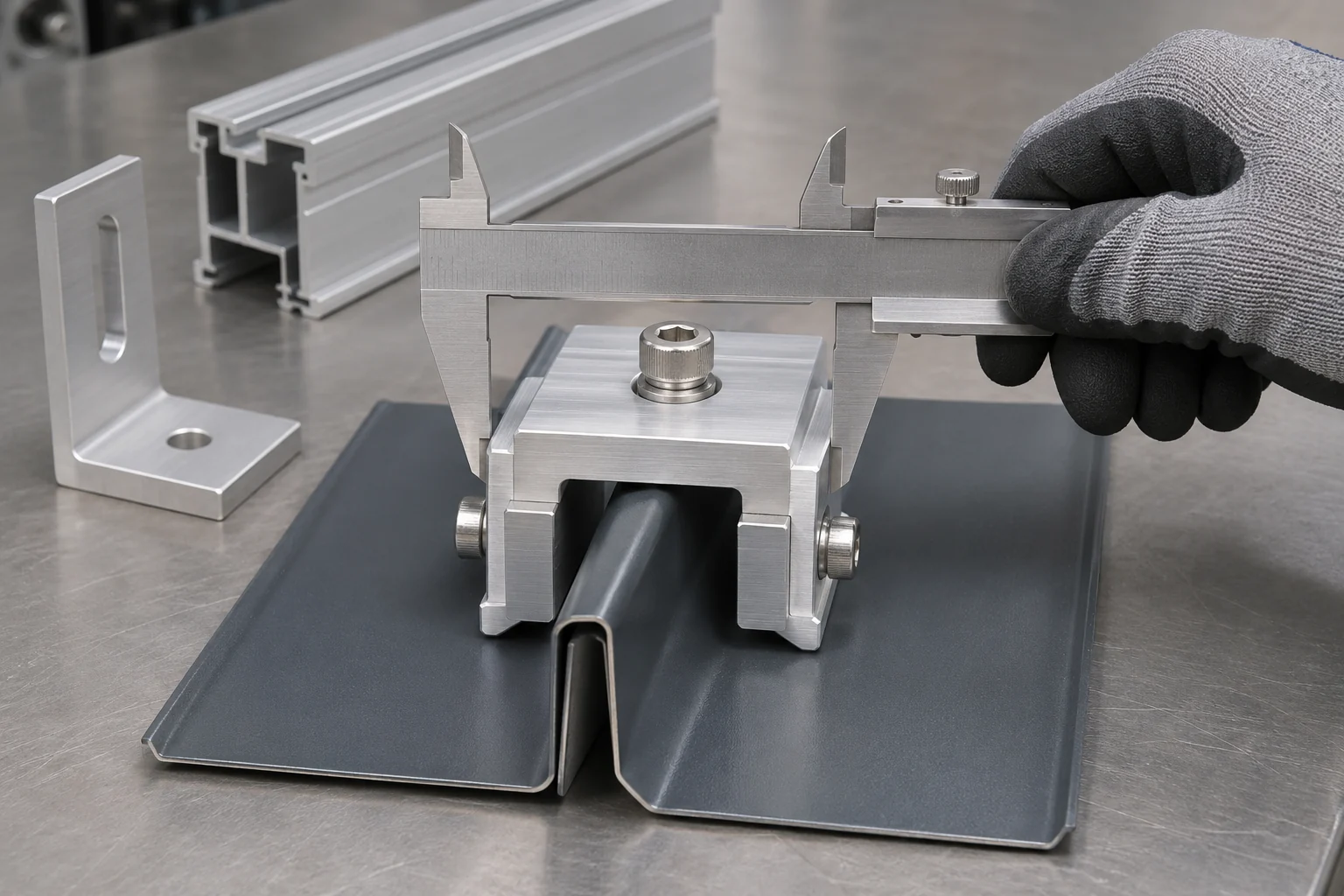
Itemized supply from seam attachment to module rail

Named parts and supply responsibilities

Our quotation separates the roof clamp, foot or adapter, rail and module hardware. Specialist clamp items can be quoted within the package or identified as buyer-supplied parts, according to the agreed scope.

Protected contact faces

Small clamps and adapters are packed separately from long rails. Mating faces and threaded parts are protected from impact and loose debris during the shipment.

Receiving by roof zone

A roof-zone parts list keeps different seam interfaces and rail assemblies apart. Piece counts identify the complete mating sets instead of treating the shipment as one mixed box of clamps.

Standing-seam solar mounting purchasing questions

Can one clamp fit every standing-seam roof?

No. The roof profile, fold, metal and thickness determine the connection, together with the particular clamp and its fastening arrangement. Matching the seam height alone does not establish the fit or holding strength.

Is there one tightening torque for all seam clamps?

No. Torque belongs to the selected clamp, fastener and roof combination. The installation record for that attachment provides the requirement; a value from a similar-looking clamp is not transferred to another model.

Are the same clamp quantities used at the roof edge and center?

The project attachment schedule determines those quantities. Roof wind zones, module layout and the accepted connection capacity can produce different support patterns; a roof-area average does not replace that schedule.

Can we provide the seam clamps and buy the rails and feet from you?

Yes. The clamp's top connection and the accepted rail arrangement define the mating foot or adapter. Our quotation identifies the supplied rail-side components separately from your roof attachments.

Does the racking quotation include PV modules and electrical equipment?

The standard package covers the identified mounting parts. PV modules, inverters and other electrical equipment are separate items unless named in the offer. Module model information is still needed to match the frame and permitted attachment detail.

Can a seam clamp cover a dented or corroded section of roof?

A clamp does not repair the underlying seam. The affected roof area needs the roof supplier’s condition review and any required repair before it becomes an attachment location. The accepted detail then identifies a suitable fixing position and roof condition.

Quote a standing-seam mounting package

Share the roof profile, module layout and identified attachment detail. We will itemize the rails, feet, retention parts and clamp supply for the roof zones in your order.

Metdax
Get a quote
Search Metdax

Language

Get a factory quote

Send your specifications or attach a material list.

Standing Seam Solar Mounting

Your information is used to respond to this inquiry. Privacy policy

sales@metdax.com

+86 177 7599 6440