Home » Products » Steel Sections, Coils & Plates » Cold Rolled Steel Coil

Cold Rolled Steel Coil Supplier

Annealed and full-hard coils for wholesale processing orders

Uncoated cold-rolled strip from 0.12 to 2.0 mm is available in commercial and drawing grades, with annealed and full-hard delivery conditions. Forming behavior depends on that grade-and-condition combination, alongside the thickness and surface needed for cabinets, formed parts or later coating.

Strip thickness
0.12–2.0 mm
Strip width
600–1,500 mm
Material condition
Annealed / full hard
Coil ID options
508 / 610 mm

Cold-rolled coil supply specifications

Dimensions and conditions for our uncoated cold-rolled range
ParameterSupply range or optionOrdering detail
Thickness0.12–2.0 mm0.0047–0.0787 in.; rounded conversion
Width600–1500 mm23.62–59.06 in.; rounded conversion
Coil inside diameter508 or 610 mmSelect the bore for the receiving mandrel
Material choicesSPCC; SPCD; DC01; DC03; ASTM A1008 CS / DSFull designation and delivery condition stay on the order
Hardness conditionsAnnealed; 1/8, 1/4, 1/2 and full hardGrade, temper and applicable acceptance tests defined together
Delivery formatFull-width coils; requested slit or cut-length preparationProcessing and finished dimensions priced separately

Millimeter dimensions are the catalog basis. The quotation states the accepted grade, temper and thickness-width combination, coil geometry and dimensional tolerance. Maximum outside diameter and individual coil weight follow the receiving line limits.

Annealed coils and cold-rolled tempers

Annealed material for forming

Annealing restores ductility after cold reduction. Commercial or drawing material in the specified annealed condition is the starting point for bent cabinets, pressed panels and similar parts. The required grade then follows the forming severity; annealing alone does not make every steel a deep-drawing grade.

Full hard for further processing

Full-hard strip retains the work-hardened condition from cold reduction. It suits orders whose next operation is specified for that condition, including suitable downstream annealing or coating routes. Tight bends and drawn shapes need their own formability assessment; full hard is not a drop-in replacement for annealed stamping material.

Find a JIS temper or hardness range.

JIS G 3141 temper reference
TemperJIS symbolRockwell B (HRB)Vickers (HV)
1/8 hard850–7195–130
1/4 hard465–80115–150
1/2 hard274–89135–185
Full hard1≥85≥170

No matching temper. Clear the search to restore the table.

Scroll sideways to see every column.

These are JIS temper reference values, rather than test results for a particular coil or equivalents for ASTM and EN grades. The test scale and force must suit the strip thickness. Thin-gauge material requires a suitable agreed hardness method; the HRB and HV columns are separate test scales.

SPCC, DC01 and ASTM cold-rolled grades

Material choices by specification
DesignationSpecificationMaterial identityPurchase decision
SPCCJIS G 3141Commercial-quality cold-rolled steelSpecify the temper; tensile strength and elongation guarantees need an explicit agreement
SPCDJIS G 3141Drawing-quality cold-rolled steelUse the specified annealed condition and the applicable forming acceptance
DC01EN 10130Cold-rolled low-carbon flat productRetain the EN designation, delivery condition and surface requirements
DC03EN 10130Drawing-grade low-carbon flat productSelect for the required drawing operation, with the applicable mechanical requirements
CS Type A / BASTM A1008/A1008MCommercial steelInclude the type and required delivery condition on the US material line
DS Type A / BASTM A1008/A1008MDrawing steelInclude the type, forming requirements and applicable test basis

Material Grade and Delivery Temper

SPCC, DC01 and ASTM CS coils are quoted to their specified standards and delivery conditions. Proposed alternatives are listed separately for approval, with their forming properties and acceptance requirements.

Surface finish, oil and coating preparation

Matte and bright finish requirements

Surface texture affects appearance, lubrication and subsequent finishing. Matte and bright are finish descriptions; neither establishes a specific roughness or exposed-panel surface quality. A defined finish, surface class or roughness requirement is treated as an order condition and matched to the selected material.

Protective oil and cleaning

Bare coils are supplied with the agreed oil or oil-free condition. Painting, plating and adhesive operations use the cleaning and pretreatment required by the receiving process.

Uncoated steel and coated products

Our uncoated cold-rolled range supplies the steel substrate. Galvanized and prepainted coils add a specified coating mass or paint system; those finished surface requirements belong to the separate coated product order.

Strip tolerances and coil fit

Decimal thickness and acceptance

A decimal thickness establishes the steel entering the tooling. The order defines nominal or minimum thickness, its tolerance and the measurement basis. A gauge label accompanies that value rather than replacing it. Thickness variation matters at a forming die, a seam or a stacked assembly.

Strip width, edges and feeding

For a slit-strip request, finished width and its tolerance are paired with burr, edge condition and camber requirements. These control how the strip tracks through rolls and locating guides. Full-width coils and prepared strip remain separate quotation lines; the accepted slit dimensions and edge scope are stated before processing.

Bore, outside diameter and coil weight

The 508 and 610 mm bore options identify different mandrel fits. Outside diameter and maximum individual weight complete the receiving limits, while winding direction and coil-head orientation affect feeding. Cut-length requests add leveling, finished length and flatness requirements instead of coil feed limits.

Cold-rolled material for formed parts and coating lines

Cabinets, enclosures and furniture

Bent doors, equipment housings and furniture parts combine dimensional fit with a finished visible surface. Material selection follows the bend radius and forming sequence; the surface and oil condition follow the planned painting or plating process. Commercial-grade annealed material belongs to this selection route.

Pressed and drawn components

A drawn cup or recessed panel stretches the material beyond a simple bend. The drawing-grade specification and annealed condition therefore matter alongside thickness and tool geometry. Required mechanical or forming tests are part of the material acceptance.

Feedstock for downstream coating

A coating line may require full-hard or annealed feedstock depending on its thermal and forming sequence. The material schedule identifies that incoming condition, chemistry and surface preparation.

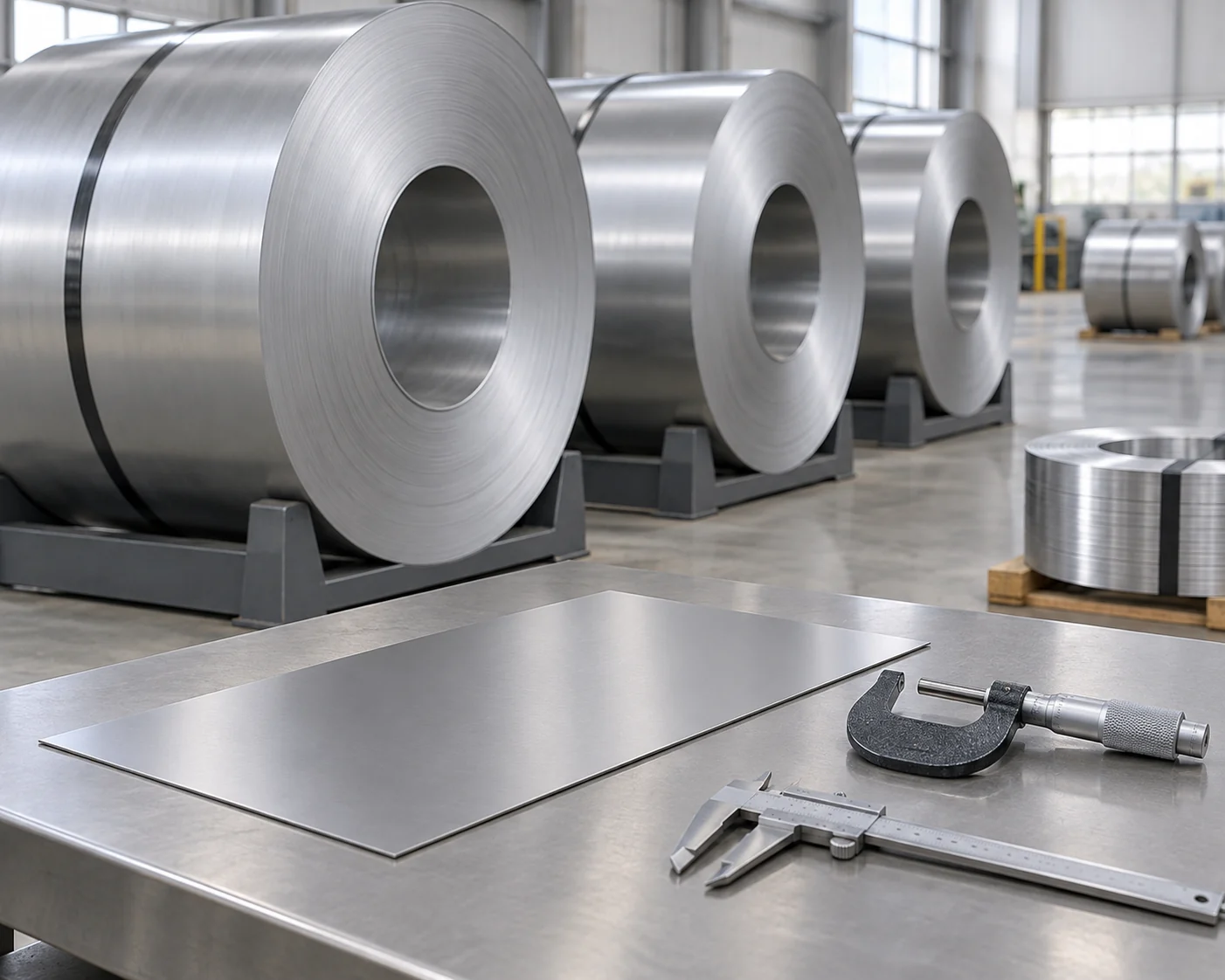
Cold-rolled strip inspection

Thin cold-rolled steel strip coupon beside a resting micrometer and caliper

Thickness, width and edge condition

Checks follow the ordered decimal thickness and strip width. For prepared strip, the inspection scope also includes the specified edge condition, burr and camber. Measuring positions and acceptance limits are retained in the dimensional record.

Temper and material tests

The material record identifies the specified grade and delivery condition. Required hardness or tensile checks use the applicable method, sampling basis and thickness conditions. A temper label alone does not replace a requested mechanical test result.

Surface and winding condition

Inspection considers scratches, corrosion, handling marks and the specified oil or finish condition. Winding checks cover aligned wraps and damage at the strip edges or coil eye. The accepted surface requirement is evaluated on the specified side of the strip.

Coil Identification and Test Records

The coil number on each packing-list line connects the delivered strip to its grade, temper and required inspection records.

Cold-rolled coil receiving records

Grade & temperStrip dimensionsCoil identityRequired test results
Cold-rolled coil pricing and export packing

Bulk Prices by Grade, Temper and Strip Size

Bulk prices identify the grade, temper, strip size and net-weight unit. Slitting, leveling, surface preparation, packing and freight are itemized; one metric tonne equals 1,000 kg.

Protection for bare thin strip

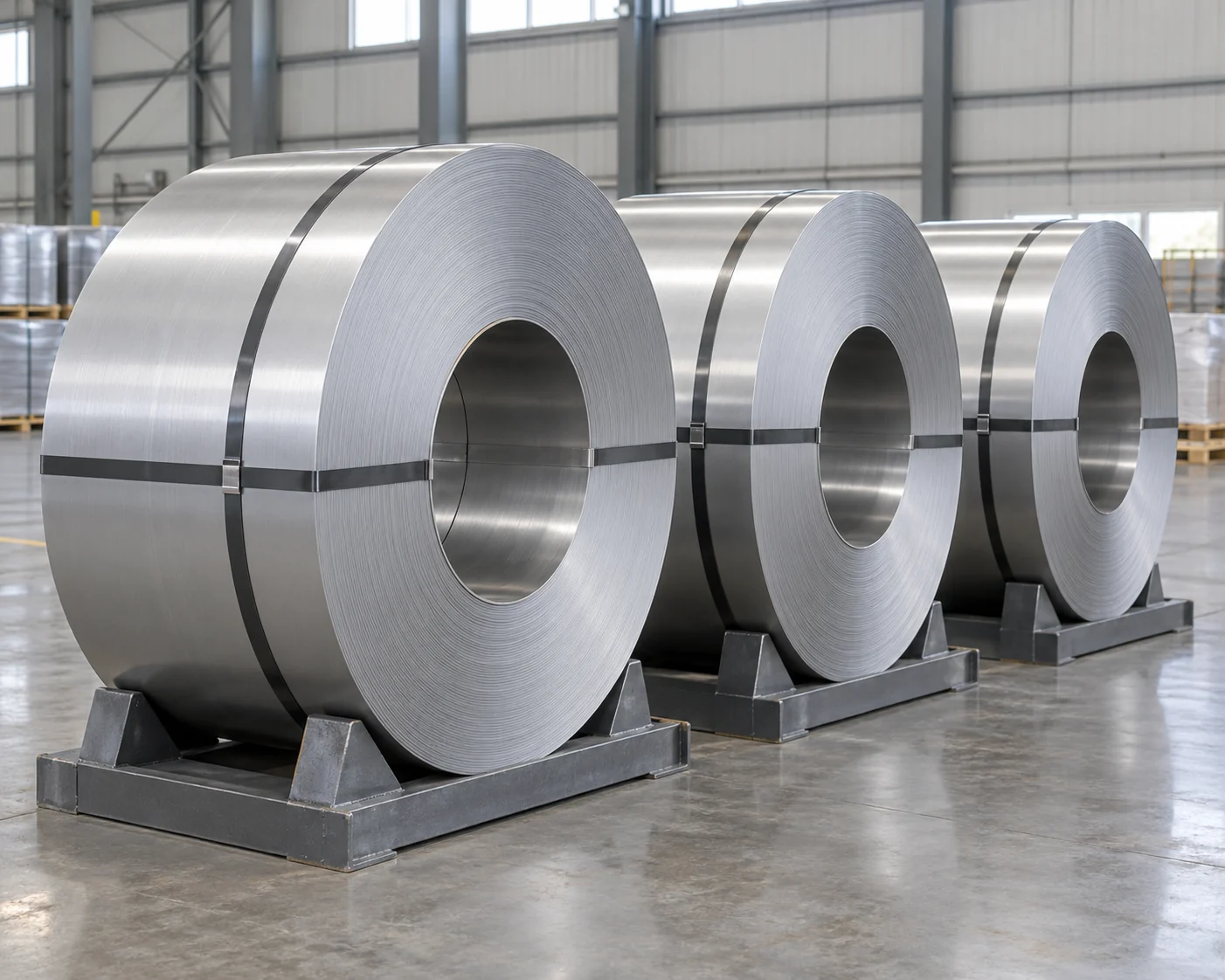
Cold-rolled steel needs dry protection through shipment and storage. Packing combines secure bands and supports with the agreed moisture barrier, edge protection and coil-eye protection. The oil condition is coordinated with that packing scope; packaging does not replace suitable dry storage after the coil is opened.

Lots, coil identification and shipment

Different thicknesses, grades and tempers form separate supply lines. Each line carries the accepted minimum lot and production or dispatch terms. The packing list identifies the coil number, strip size, condition and individual net and gross weights, with the unloading orientation defined for the shipment.

Cold-rolled coil purchasing questions

Is black-annealed coil suitable for a bright exposed finish?

Black-annealed describes a delivery and surface condition; it does not promise a bright visible face. For an exposed part, the order uses the required surface class or approved finish sample and the planned cleaning and finishing process. Black-annealed material is quoted as its own condition rather than substituted for a bright-surface request.

What should a forming trial reproduce?

A useful trial uses the intended grade, temper, thickness, rolling direction and surface or oil condition with the production tooling and lubrication. Its acceptance criteria become part of the approved material requirement. A sample with a different condition cannot establish the forming performance of the proposed production coil.

Can the supplied strip contain welded joints?

The order defines whether joints are permitted, their marking and the treatment of any affected strip length. Continuous-feed operations with a no-joint requirement retain that condition on the quotation and receiving specification.

How do I identify the surface that will be visible after forming?

Identify the exposed face on the part drawing or material requirement, with its surface class, finish and acceptance criteria. For direct coil feeding, the winding and feed orientation connects that face to the receiving line. The agreed face requirement stays with the coil inspection scope.

Is cold-rolled coil protected against corrosion after unwrapping?

The bare steel remains dependent on its specified oil condition and dry handling. Shipping barriers protect the packed coil; the receiving shop maintains suitable storage and the planned surface preparation after opening.

Get a quote for your cold-rolled coil order

Send your cold-rolled coil schedule, surface requirements and receiving-line limits. We quote the selected grade and temper with strip dimensions, preparation, packing and dispatch terms.

METDAX
Get a quote
Search METDAX

Language

Get a factory quote

Send your specifications or attach a material list.

Cold Rolled Steel Coil

Your information is used to respond to this inquiry. Privacy policy

ruofan1901@gmail.com