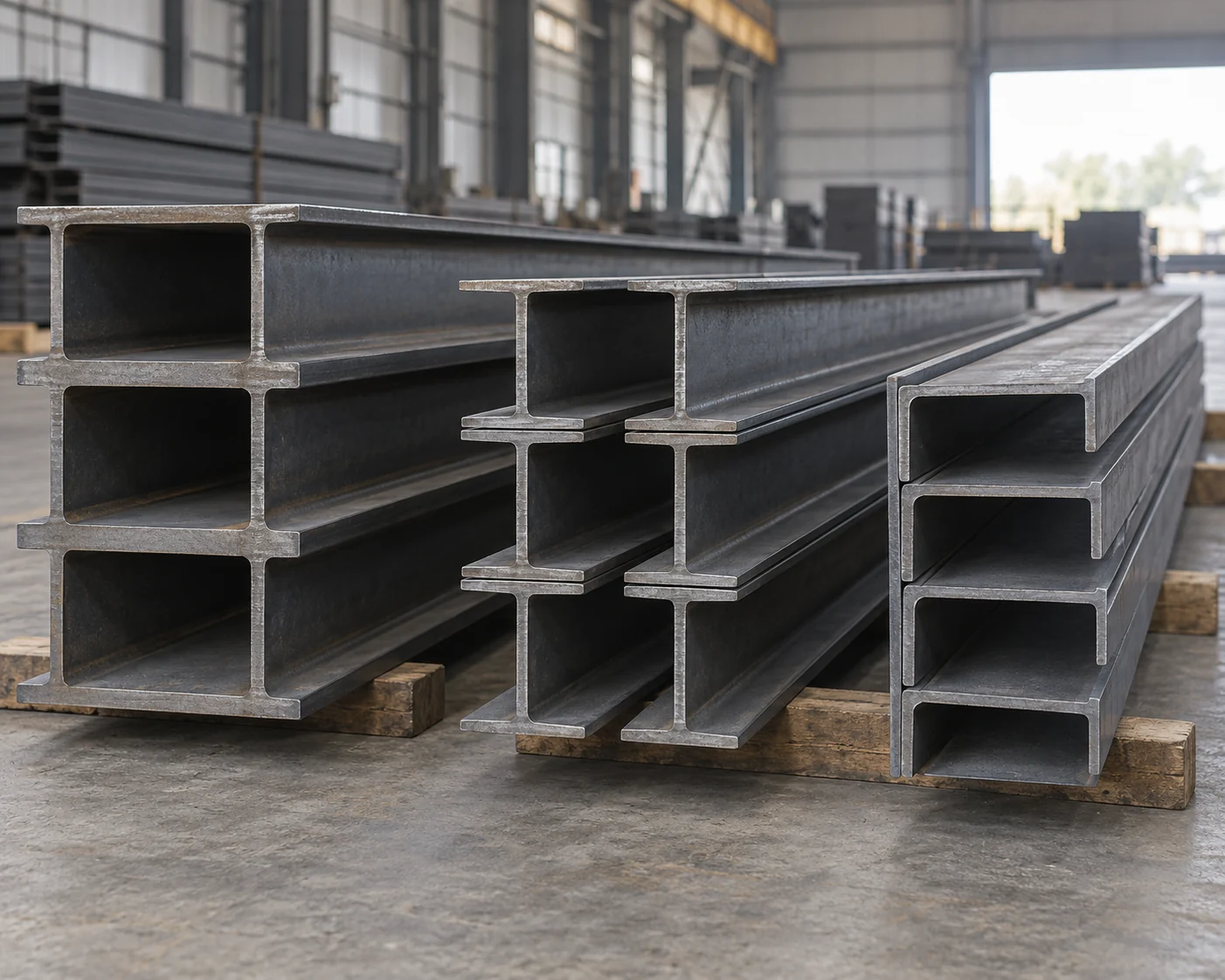
Steel Sections
Compare H, I, C and other rolled shapes by their complete section designation, dimensions and unit mass.
Compare H, I, C and other rolled shapes by their complete section designation, dimensions and unit mass.

H- and I-section beams for frames and support steel, with ordered length, grade and fabrication details.
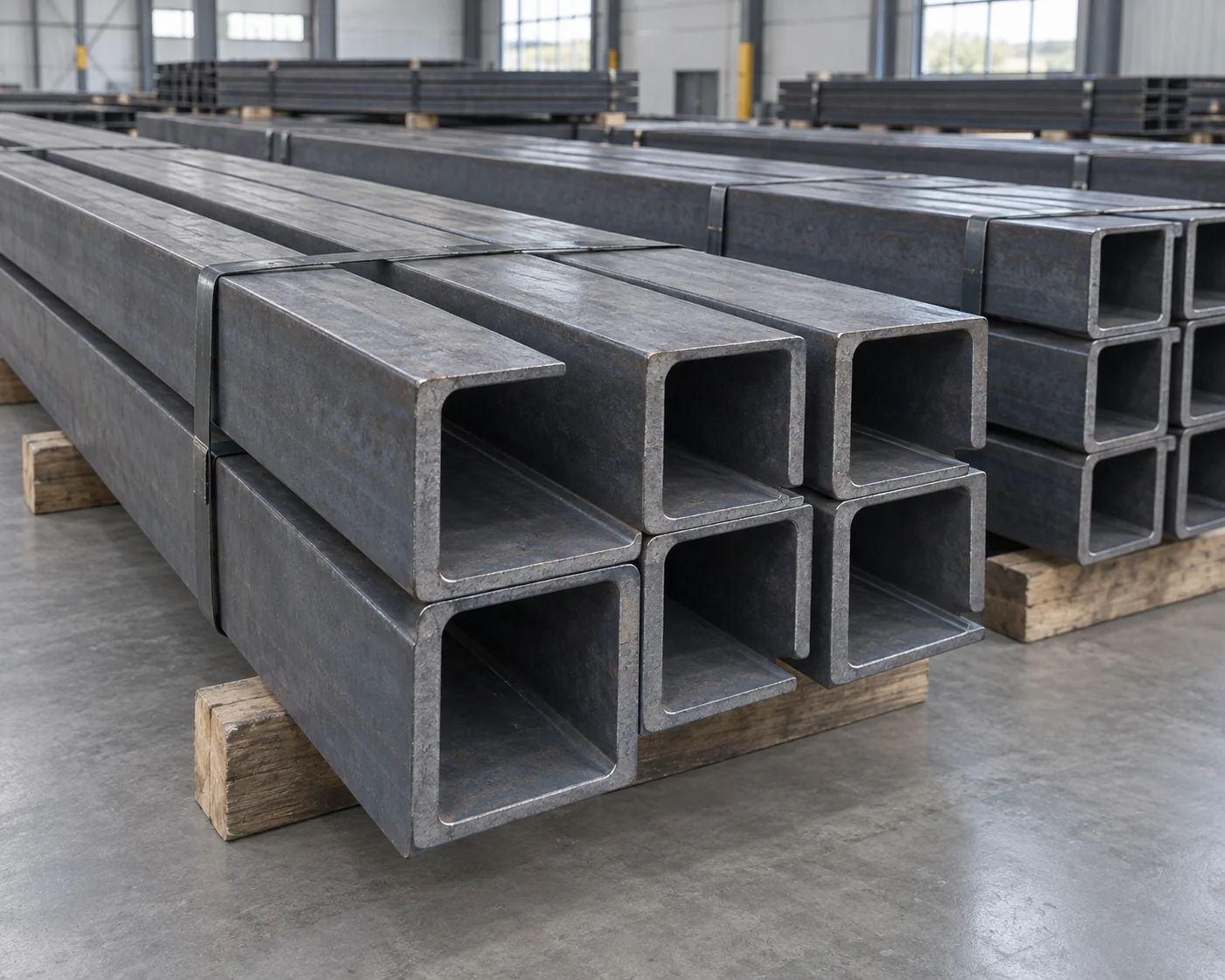
Rolled channels for support frames and fabricated components; distinguish section series from overall depth.
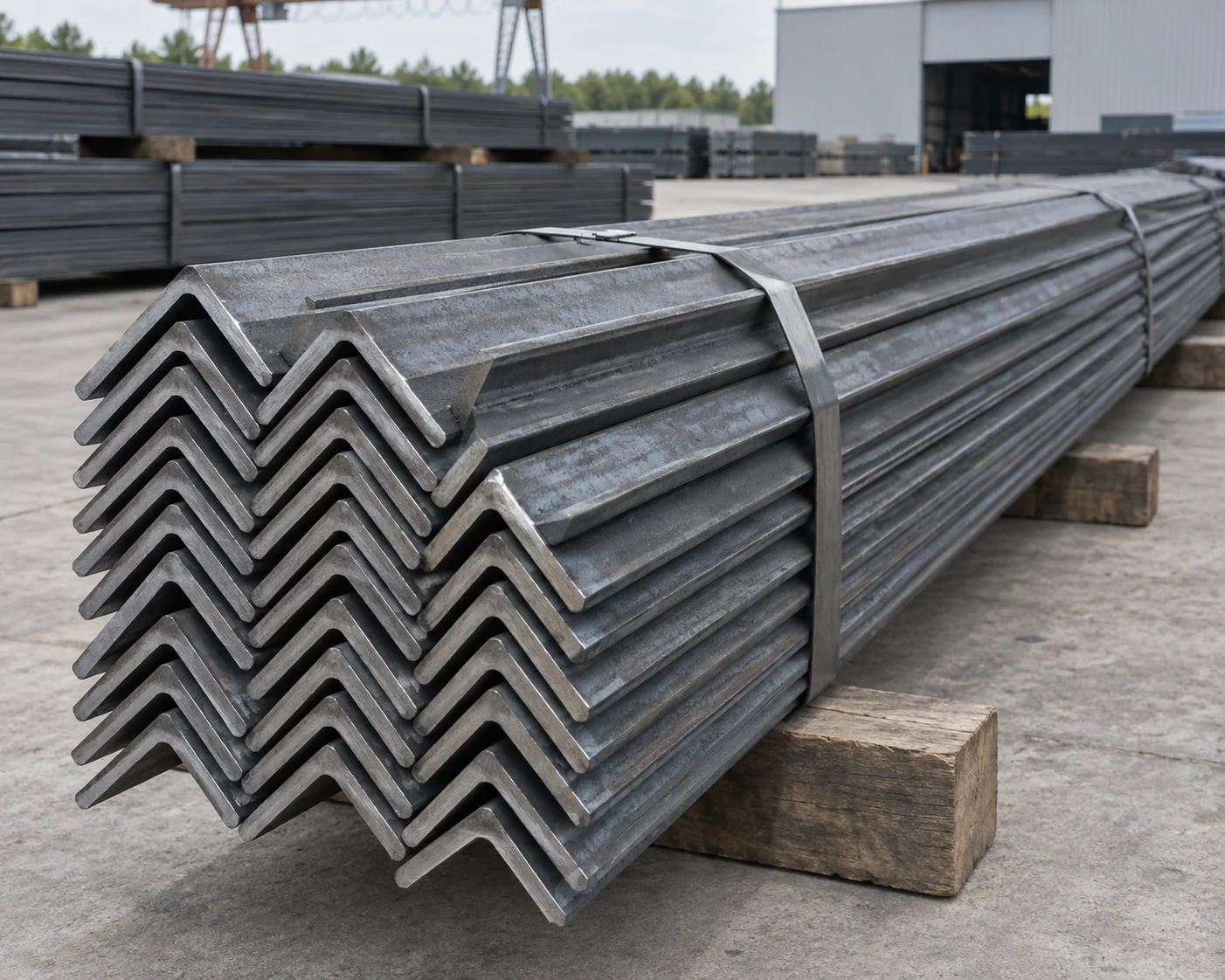
Equal and unequal leg angles for braces, connections and frames, ordered by both leg dimensions and thickness.
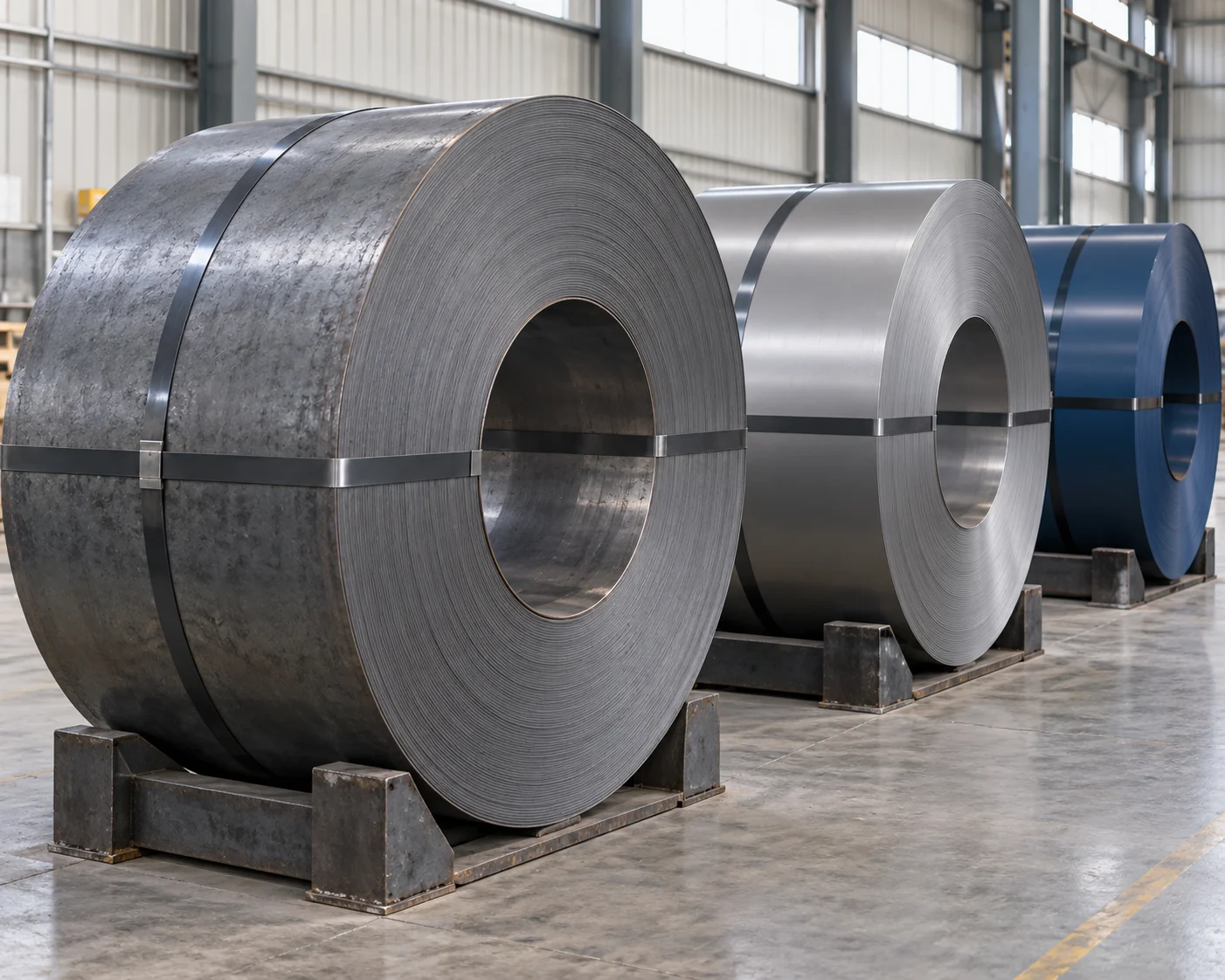
Compare hot rolled, cold rolled, galvanized, aluminum-zinc and painted coil before choosing the strip for your line.

Hot rolled carbon coil for tube production and fabrication, with strip geometry and surface condition on the order.
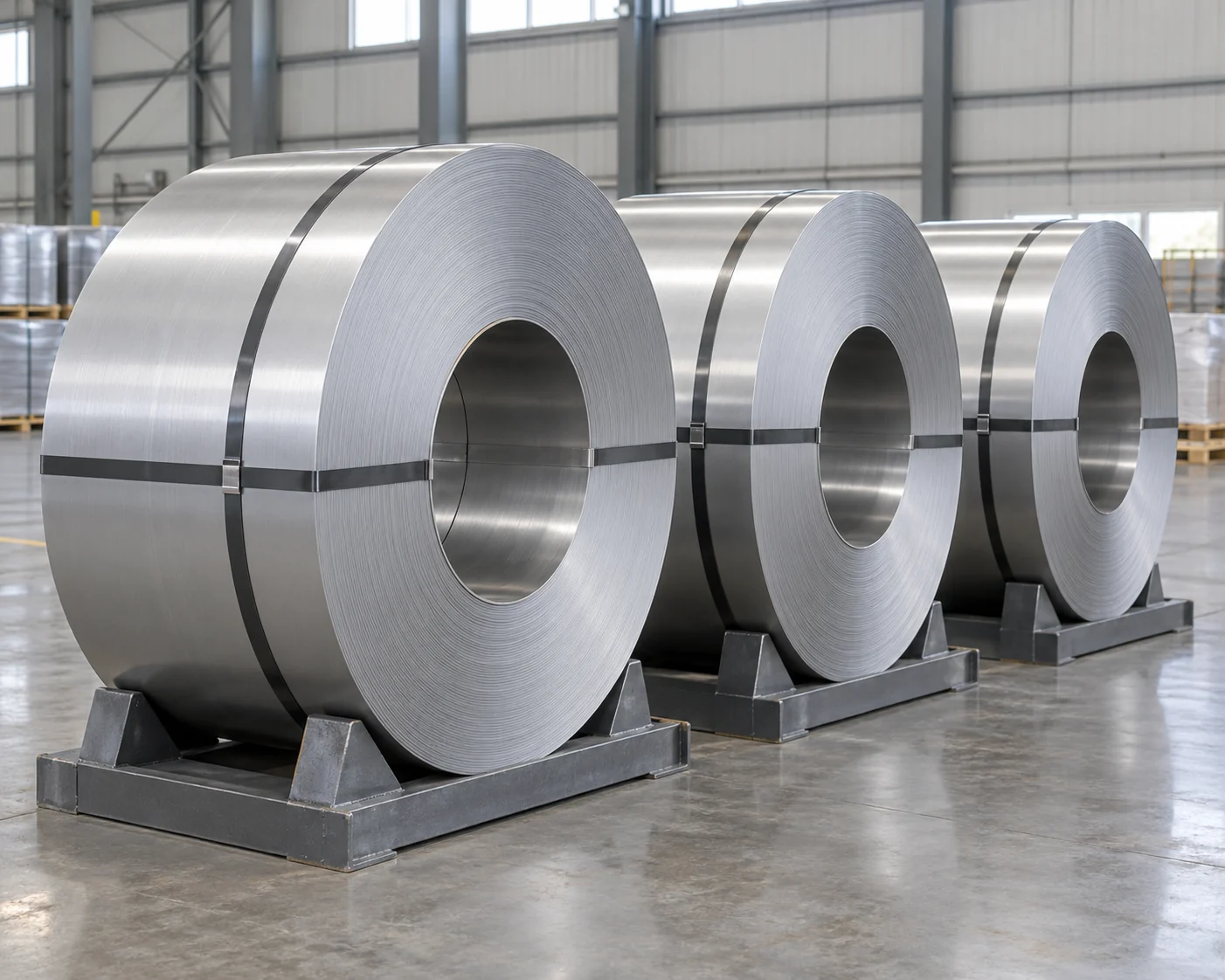
Uncoated cold rolled coil for forming and surface-critical parts; select grade, temper and oil condition together.

Zinc-coated coil for profiled sheets and manufactured parts, with coating designation and forming condition.
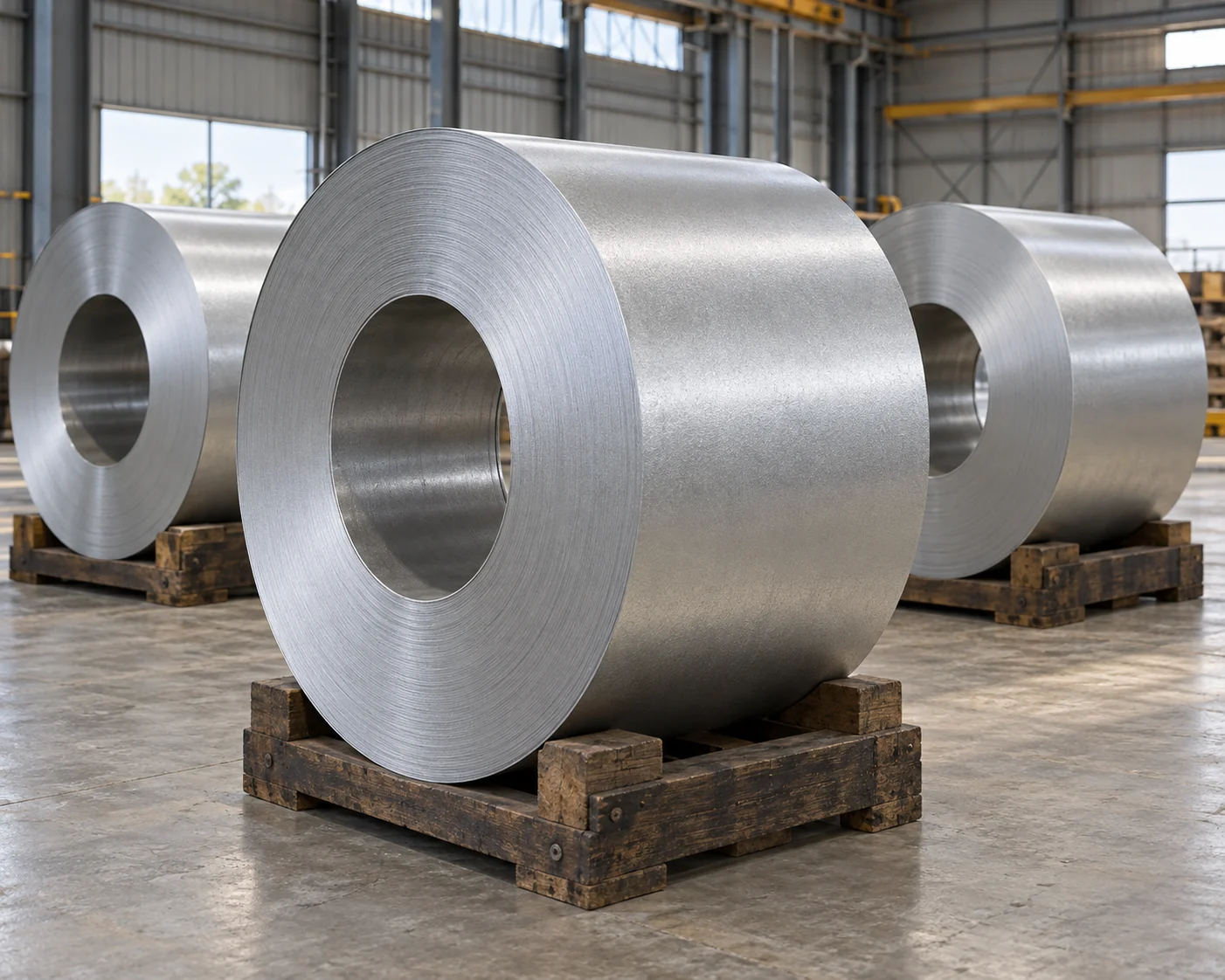
Aluminum-zinc coated coil for profiled building products, with the substrate and coating identified separately.
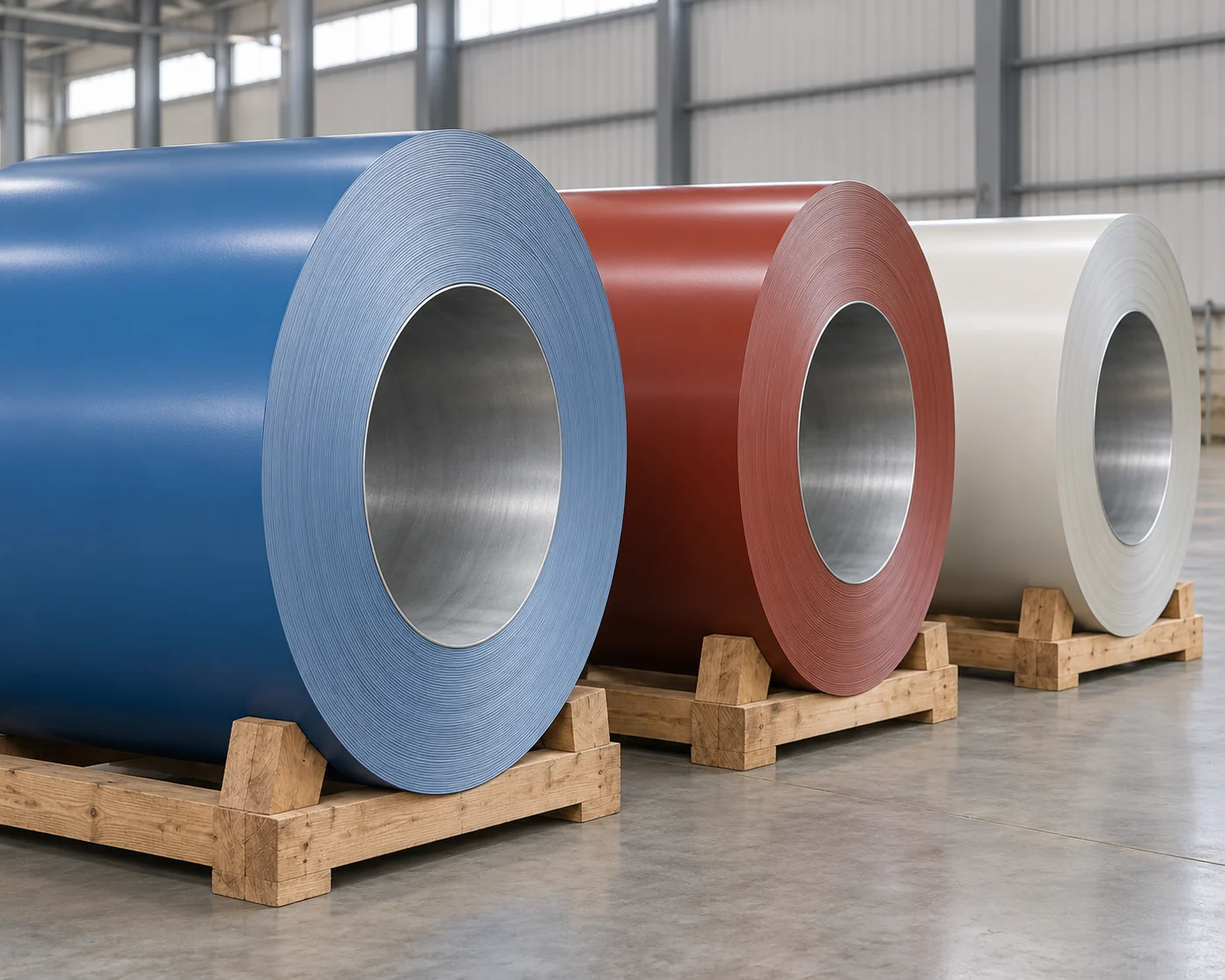
Factory-painted coil for roof, wall and formed products; identify paint system, color and reverse-side finish.
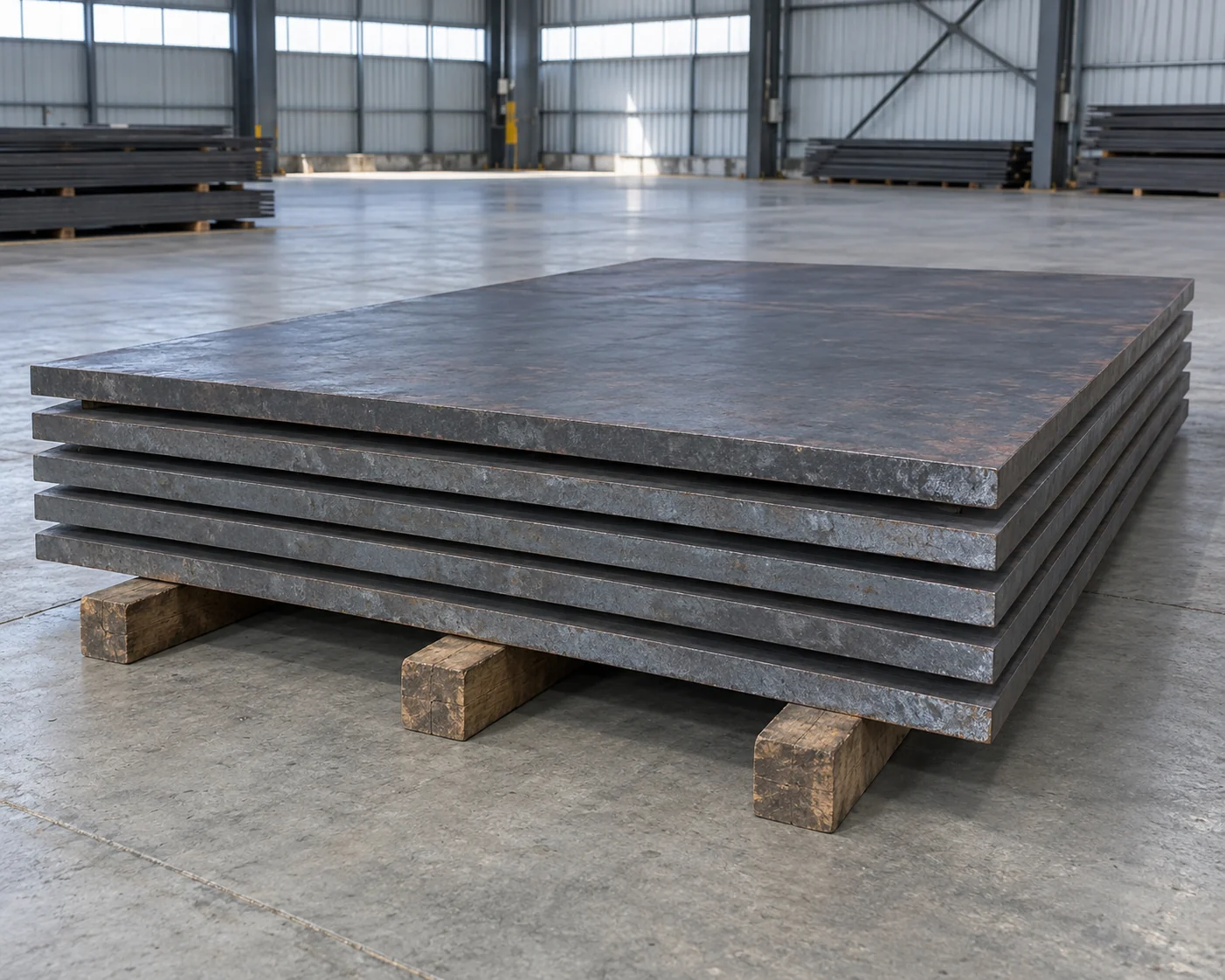
Hot rolled steel plate and prepared blanks for structures and equipment, with thickness, grade and cutting scope.
No products match this search. Clear the filters to see the full range.
The full shape designation identifies the section series. H and I beams, channels and angles retain their own depth, flange or leg geometry and mass per length. A similar overall depth does not establish the same cross-section.
Hot rolled and cold rolled products differ in their surface and delivery condition. Strip thickness and width must fit the processing line, while the specified grade and temper determine the material requirement for the formed part.
A galvanized, aluminum-zinc or painted finish adds its own order requirements to the steel substrate. The coating designation, paint system and surface condition belong with the selected thickness and width. Coil identity follows the material through slitting and forming.
Plate thickness, width and length define the starting material. Cutting, holes and edge preparation define the delivered blank. Fabrication drawings retain their grade and tolerance requirements when the quotation separates the plate from its preparation.
| Material form | Primary dimensions | Receiving basis | Product route |
|---|---|---|---|
| Rolled sections | Full section designation and length | Lengths or pieces; theoretical or actual weight | Steel Sections, Beams, Channels and Angles |
| Uncoated coil | Thickness, width, ID, OD and coil weight | Individual coils and net mass | Hot Rolled or Cold Rolled Coil |
| Metallic or painted coil | Base thickness, width, coating and paint system | Coil identity and protected surfaces | Galvanized, Al-Zn and Prepainted Coil |
| Sheet and plate | Thickness × width × length; cut drawing if needed | Sheets, finished blanks or plate weight | Steel Plates |
Scroll sideways to see all table columns.
Fixed lengths, miters and part references follow the section schedule. The quote identifies cutting and any retained offcut requirements.
Strip width, edge condition and coil handling limits define the slit order. These requirements stay with the original material and coil identity.
Sheet or plate blanks follow the ordered dimensions, cutting method and allowance. Finished-part tolerances are distinct from the starting plate dimensions.
Hole positions, slots, bevels and mating surfaces come from the part drawing. Preparation is itemized beside the supplied material.
Coated faces and exposed edges need a handling and packing arrangement suited to the product. Paint, zinc and bare steel retain different finish identities.
Compare actual section codes and dimensional tables.
Define strip width, eye diameter, outside diameter and handling weight before accepting a coil offer.
Compare full plates, cut blanks and prepared pieces using the same finished-part requirement.
The exact product standard and delivery condition determine the match. A cut sheet retains the parent coil identity, while plate supplied under a plate specification has its own ordered thickness and acceptance requirements.
An alternative retains its complete designation, dimensions, mass and grade in the revised offer. The project designer or buyer approves the substitution before the material schedule changes.
Section tables give nominal steel mass before coating and packing. The quote names the material billing basis, while the packing list separates the shipment’s net and gross weights.
Send your section or flat-steel schedule with dimensions, grades, quantities and destination. Include any cutting, slitting or finish requirements. We will separate the material and preparation scope in the quote.