
Ground Mount Solar Racking
Order fixed-tilt ground racking by array layout, module arrangement and the connection to the foundation.
Order fixed-tilt ground racking by array layout, module arrangement and the connection to the foundation.
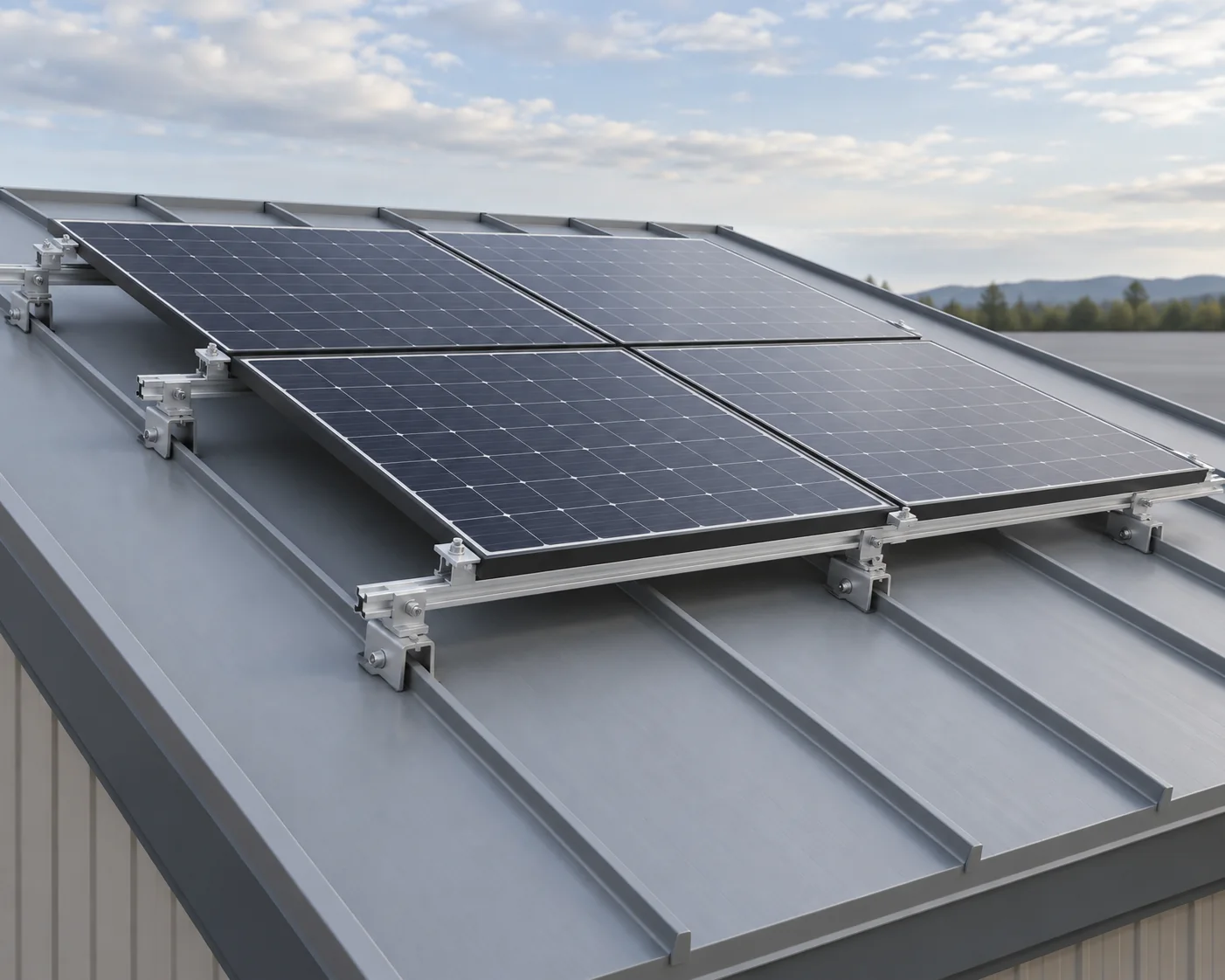
Select the roof attachment or ballast route with the roof type, structural capacity and module layout identified.

Coordinate parking clearances, column positions, module supports and drainage in one carport steelwork package.

Define building-integrated support details with the envelope, module system and weathering interfaces.
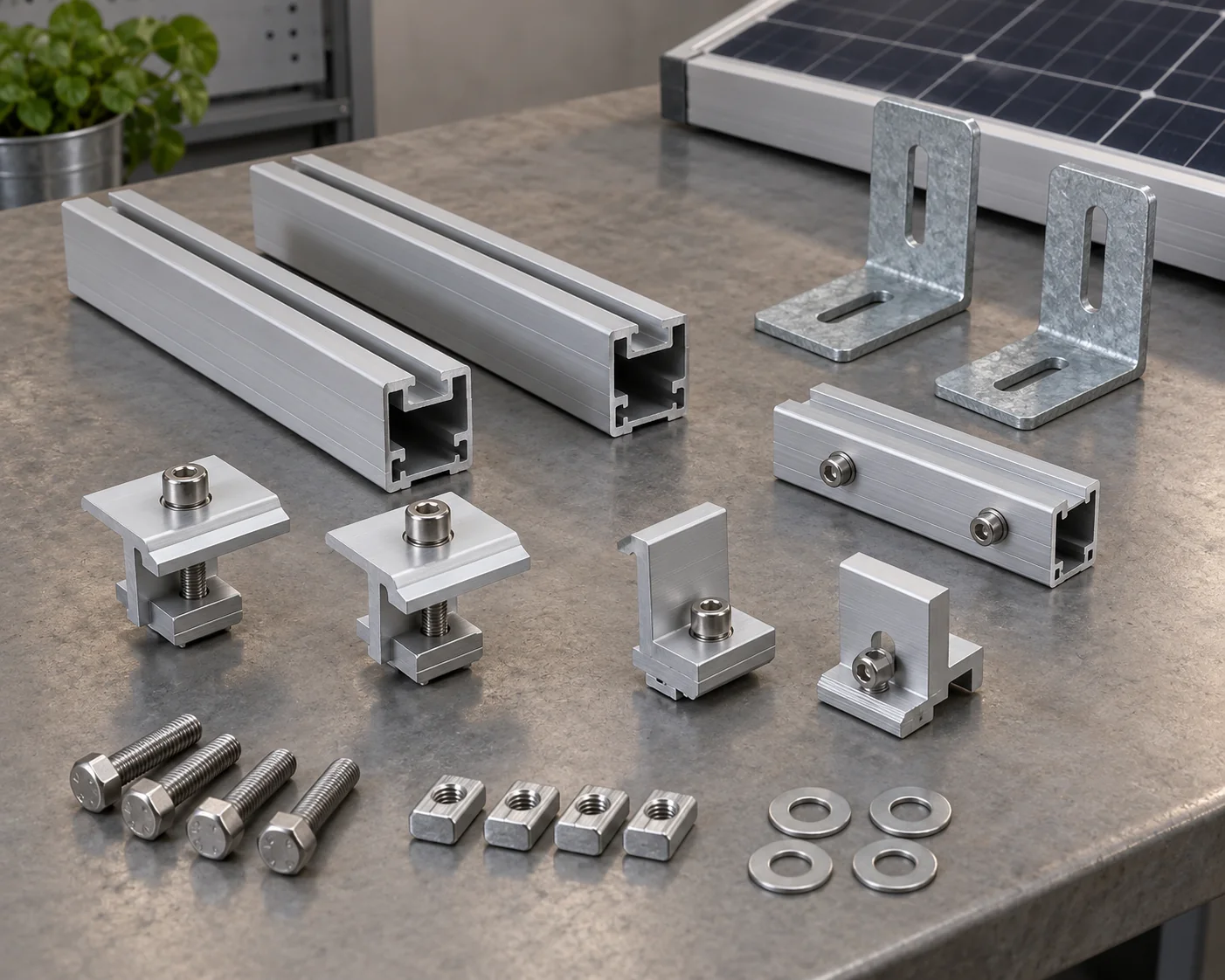
Match rails, clamps, brackets and fasteners to the specified module frame and mating mounting parts.

Connect the ground screw head to the racking detail, with the soil, reactions and installation criteria on the foundation schedule.
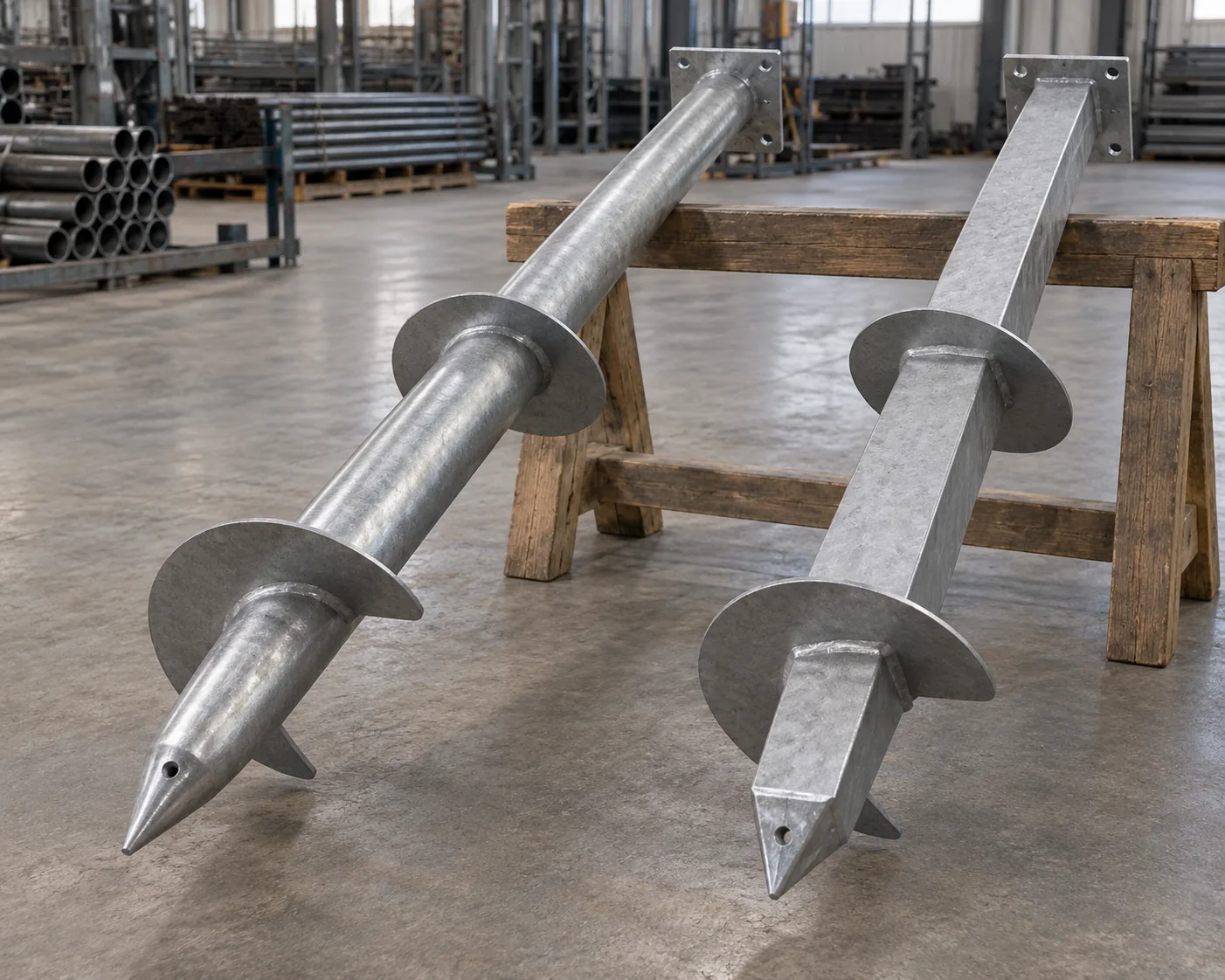
Lead sections with discrete helix plates and a defined shaft, selected with installation, structural, and geotechnical criteria.

Pile caps, plates, and brackets that connect the shaft to a post, beam, or supported frame through an agreed load path.
No items match this search. Clear the filters to see the full range.
Ground surveys and the foundation design set support positions and head levels. Racking variants then follow the accepted array layout rather than a single nominal project capacity.
Roof geometry, attachment locations and access need to agree with the building structure and roofing detail. The module layout must leave the required service and drainage routes.
Carports add vehicle clearances and foundation positions; BIPV adds building-envelope connections and drainage. These interfaces determine which structural and mounting parts belong in the purchase.
| Project stage | Decision to settle | Working information | Supply grouping |
|---|---|---|---|
| Site planning | Ground, roof, carport or building-integrated arrangement | Site and building constraints, module layout | Separate mounting locations |
| Interface release | Foundation heads, roof attachments and module zones | Approved interface drawings and module details | Mating parts kept together |
| Component order | Member variants and hardware quantities | Current bill of materials and drawings | Array blocks and roof areas |
| Construction delivery | Foundation work before racking and module installation | Site sequence and delivery access | Identified phases and receiving groups |
Scroll sideways to see all table columns.
Record the module make and model, frame dimensions, permitted clamp zones and attachment detail. Those references identify the rails, clamps and fastening arrangement.
The base or pile-head detail fixes the mating holes, bracket geometry and adjustment range. Ground reactions, soil conditions and installation verification determine the foundation purchase.
Keep the roof fastener or clamp detail with the roof type and attachment position. Flashing, seals and drainage must match the building interface.
Our order list separates support members, rails, clamps, brackets and fasteners. Part numbers and row or roof-zone references carry through to the cartons and bundles.
Module-specific mounting, clamping and bonding requirements in UL 2703.
ASCE/SEI 7 information on design loads for buildings and other structures.
American Galvanizers Association guidance on material categories and measured steel thickness.
They can be quoted together, with separate area and assembly references. Roof attachments remain linked to their roof-zone details, while ground-rack parts retain their foundation interfaces. Common module hardware is grouped only where its part identity and mounting requirements match.
Yes. We quote replacement parts from the original component drawing or an identifiable part reference. A material or geometry change is priced as a separate part; any effect on the mounting system's listed configuration is reviewed before that change is accepted.
Yes. Each location keeps its own structural and attachment details, module interfaces and component counts. The quote separates roof-area parts from the canopy members and mounting hardware.
Start with the site location, module layout and quantities you have. We will identify the support members, mounting hardware and foundation components to include in the offer.