Home » Products » Pipe Fittings, Valves & Pumps » Concentric Reducers

Concentric Reducer Supplier

Aligned-axis steel transitions with both weld ends specified

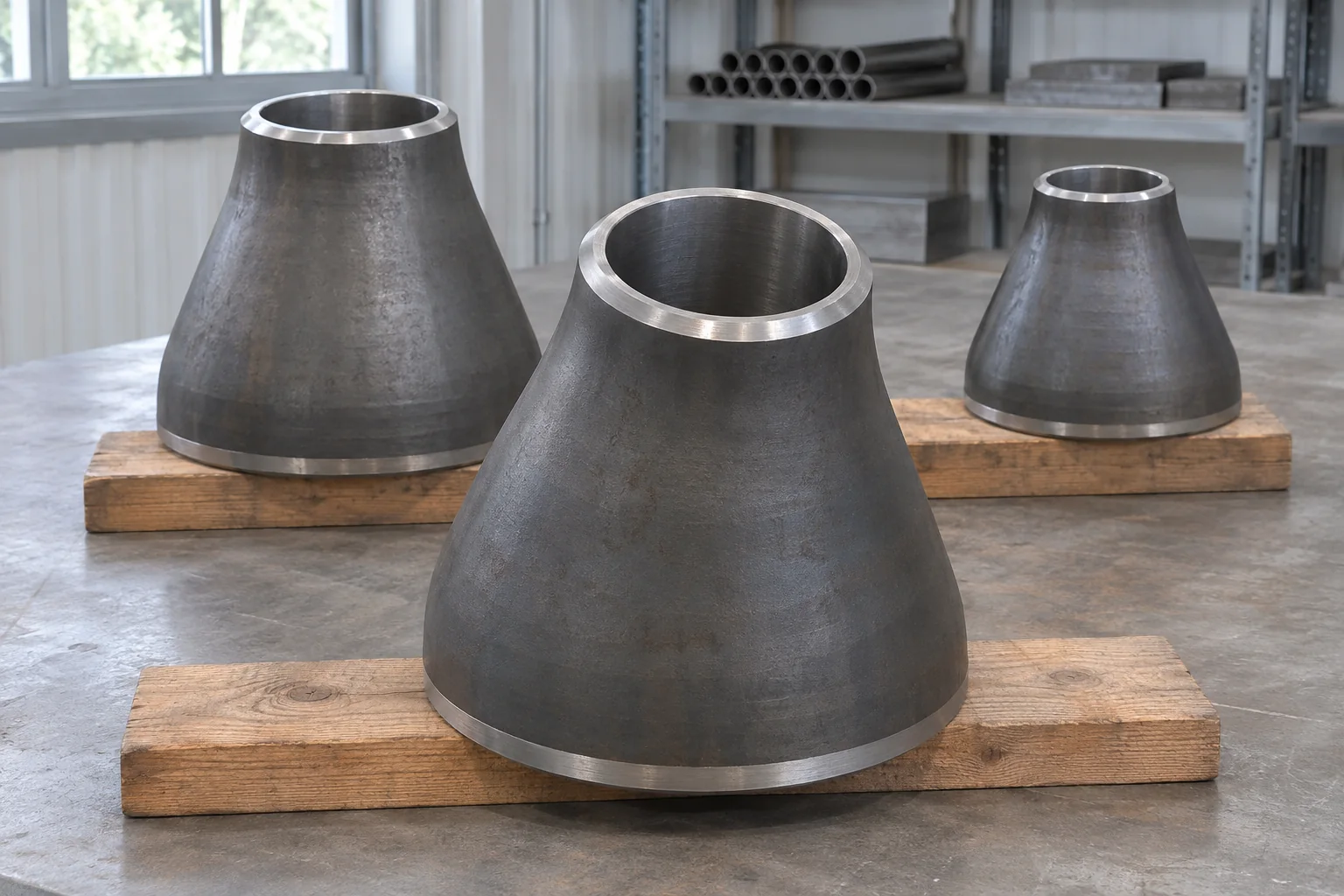
We supply carbon steel concentric butt weld reducers for two-size pipe connections. Both openings share one centerline, preserving the aligned-axis transition shown on the spool drawing. Each item identifies the large and small pipe sizes, end walls and required length.
Transition geometry
Common centerline
Connection
Butt weld
Size notation
Large × small NPS
End walls
Specified at both ends

Concentric reducer supply and end designation

Size orderLarge-end NPS × small-end NPS
MaterialRequired carbon steel grade, including A234 WPB orders
ConstructionSpecified seamless or welded fitting route
Large-end connectionRequired OD, wall and weld-end preparation
Small-end connectionRequired OD, wall and weld-end preparation
Length and alignmentAdopted B16.9 row or approved special fitting drawing

Concentric reducer end sizes and length

Check the two opening diameters and end-to-end length against the adjoining pipework.

Large × small NPS (in.)Large-end OD (mm)Small-end OD (mm)End-to-end length H (mm)
2 × 160.333.476
2-1/2 × 273.060.389
3 × 288.960.389
4 × 3114.388.9102
6 × 4168.3114.3140
8 × 6219.1168.3152

No matching specification. Clear the search to see every row.

Scroll sideways to see every column.

ASME B16.9 layout reference, cross-checked in the Weldbend metric reducer tables. Concentric and eccentric patterns can share these end sizes and lengths while having different centerline alignment. Wall thickness and pressure rating stay on the fitting line.

Reducer material, geometry and weld-end requirements

Material grade remains a separate designation

ASTM A234 WPB identifies a carbon steel fitting grade. The fitting material and required delivery condition are retained alongside the dimensional standard and manufacturing route.

B16.9 and special transitions

Standard reducer dimensions provide defined weld-end sizes and length. A longer taper or different size combination is a special fitting item, with its own drawing and acceptance basis.

End walls and the piping design

Reducer wall and bore fit follow the required joint and service design. Neither a schedule number nor the nominal reducer size supplies a standalone working-pressure rating.

Common-axis geometry and bore transitions

Two openings on one axis

The smaller opening remains centered relative to the large end. That geometry preserves the specified pipe centerline; a reducer with one straight side is a different pattern.

A weldable transition at both ends

End machining addresses the required bore and wall at each pipe connection. The internal step and transition are checked against the weld detail.

Length fixes the connection locations

A change in reducer length shifts the smaller pipe or adjoining equipment connection. A two-size match is therefore checked with the end-to-end dimension before the fitting replaces an existing item.

Concentric transitions in aligned piping layouts

Vertical pipe size changes

A common-axis reducer can retain the vertical centerline through a size change. The process and piping design still determine whether that geometry is appropriate for the service.

Aligned process and utility spools

The reducer locates two different pipe sizes on one axis. Adjacent elbows, flanges and supports are coordinated from the required end positions, not from the taper’s appearance.

Concentric reducer dimensions and weld ends

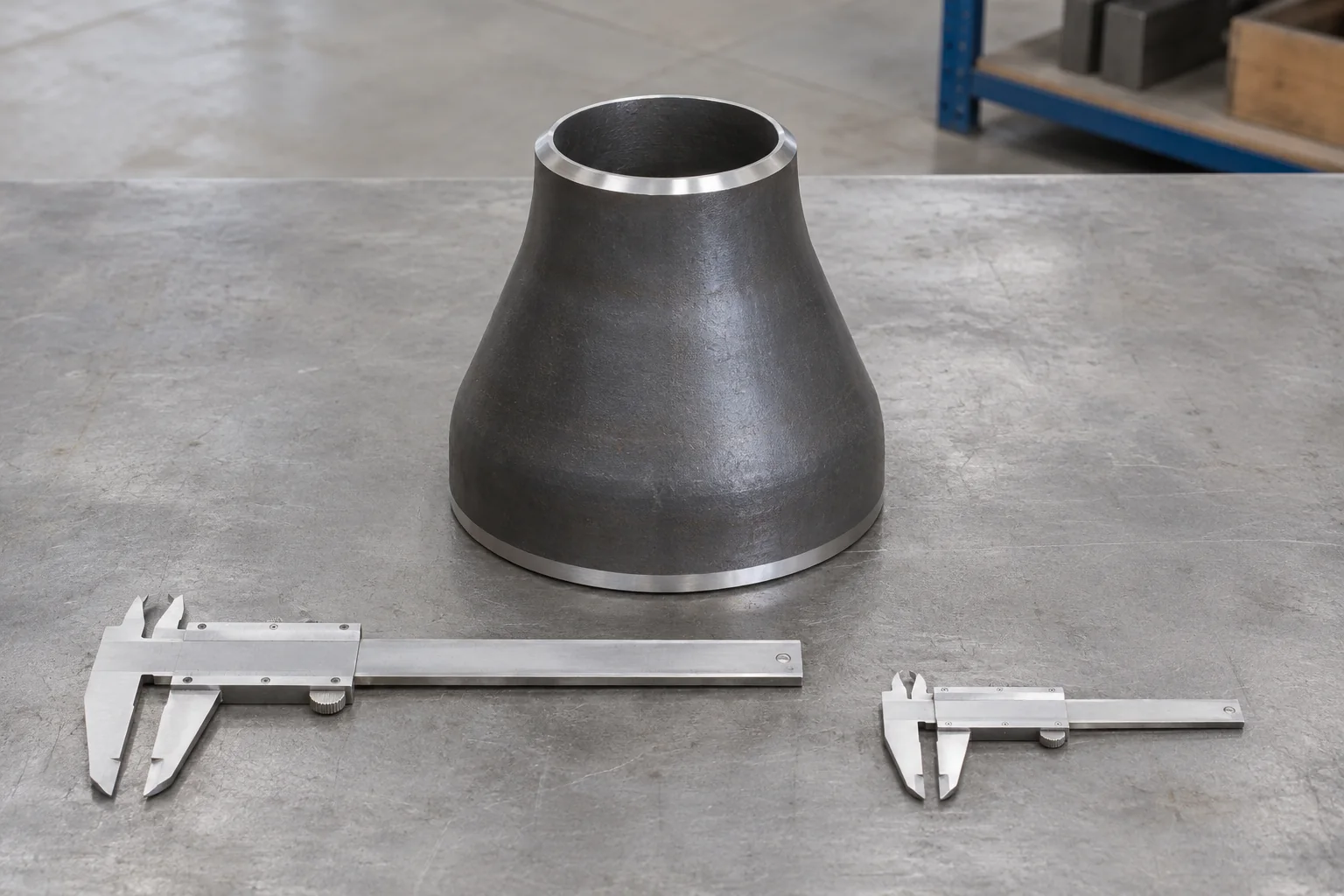
Concentric reducer beside calipers for checking both openings

Both openings measured separately

The large and small end diameters and walls are checked against their individual requirements. Each end is measured on its own.

Length and opening alignment

The end-to-end dimension and common-axis relationship are checked to the selected pattern. Special transitions retain the drawing revision used for those measurements.

Bevels and traceability

Finished edges, visible surface condition and required material identity are checked before packing. Any specified examination follows the fitting’s construction and order requirements.

Fitting release records

Material and heat identityBoth end dimensionsLength and alignmentRequired examination reports

Concentric reducers priced by complete size pair

Both connections on the same line

Our quotation identifies the large and small NPS, their required walls, material, construction and end-to-end length. The concentric designation stays with that item.

Protected openings and separate patterns

Separators protect both bevels and keep different wall or reducer patterns distinguishable. Common-axis pieces remain identified separately from eccentric fittings of the same nominal size pair.

The supplied fitting and document scope

Required material records, dimensional results, special coating and packing are listed with the supply. Site welding and complete spool assembly are separate work unless included in the offer.

Concentric reducer purchasing questions

Can a reducer be installed with the flow going from small to large?

The process and piping design determine the flow direction and fitting selection. A concentric reducer is a geometric size transition; its name alone does not establish the pressure loss or operating conditions for an expanding flow.

Is a cone rolled from plate automatically a B16.9 reducer?

No. The fabrication route, material, end dimensions and required acceptance must identify the supplied fitting. An externally similar cone does not establish compliance with the adopted wrought-fitting specification.

Can a reducer connect pipes that use different dimensional standards?

The actual end ODs, walls and weld details must be reconciled. Nominal DN or inch labels can refer to different diameter series; a transition between those series needs its own identified end geometry.

Does a smooth taper mean the fitting has no manufacturing weld?

No. The surface finish does not establish the construction. Seamless or welded manufacture is identified in the supply description and required records.

Can the small end be cut shorter to fit an existing spool?

Shortening changes the end diameter or wall position along the taper and the finished length. That modification needs an approved fitting detail and end preparation before the altered piece can replace the specified reducer.

Do reducers include the two matching pipe lengths?

Loose reducer supply covers the fitting and its stated end preparation. Matching pipe lengths, flanges and spool fabrication are separate items when included in the material order.

Working through this order

We wrote these for buyers specifying and receiving exactly this kind of package.

Quote the concentric transition on your piping schedule

Provide both pipe sizes and end walls, material, construction, required length and quantities. Add the destination for an itemized fitting supply quote.

Metdax
Get a quote
Search Metdax

Language

Get a factory quote

Send your specifications or attach a material list.

Concentric Reducers

Your information is used to respond to this inquiry. Privacy policy

sales@metdax.com

+86 177 7599 6440