Home » Products » Steel Sections, Coils & Plates » Steel Plates

Steel Plate Supplier

Cut-to-size structural plate and a separate A516 Grade 70 program

Structural plate and pressure-vessel plate follow separate material programs. A36/A283 selections use the published 4–60 mm and 60–115 mm thickness bands, with finished-piece dimensions specified for the order. A516 Grade 70 plate uses the inch-based range shown below.

Medium-thick catalog
4–60 mm
Thick plate catalog
60–115 mm
Supply format
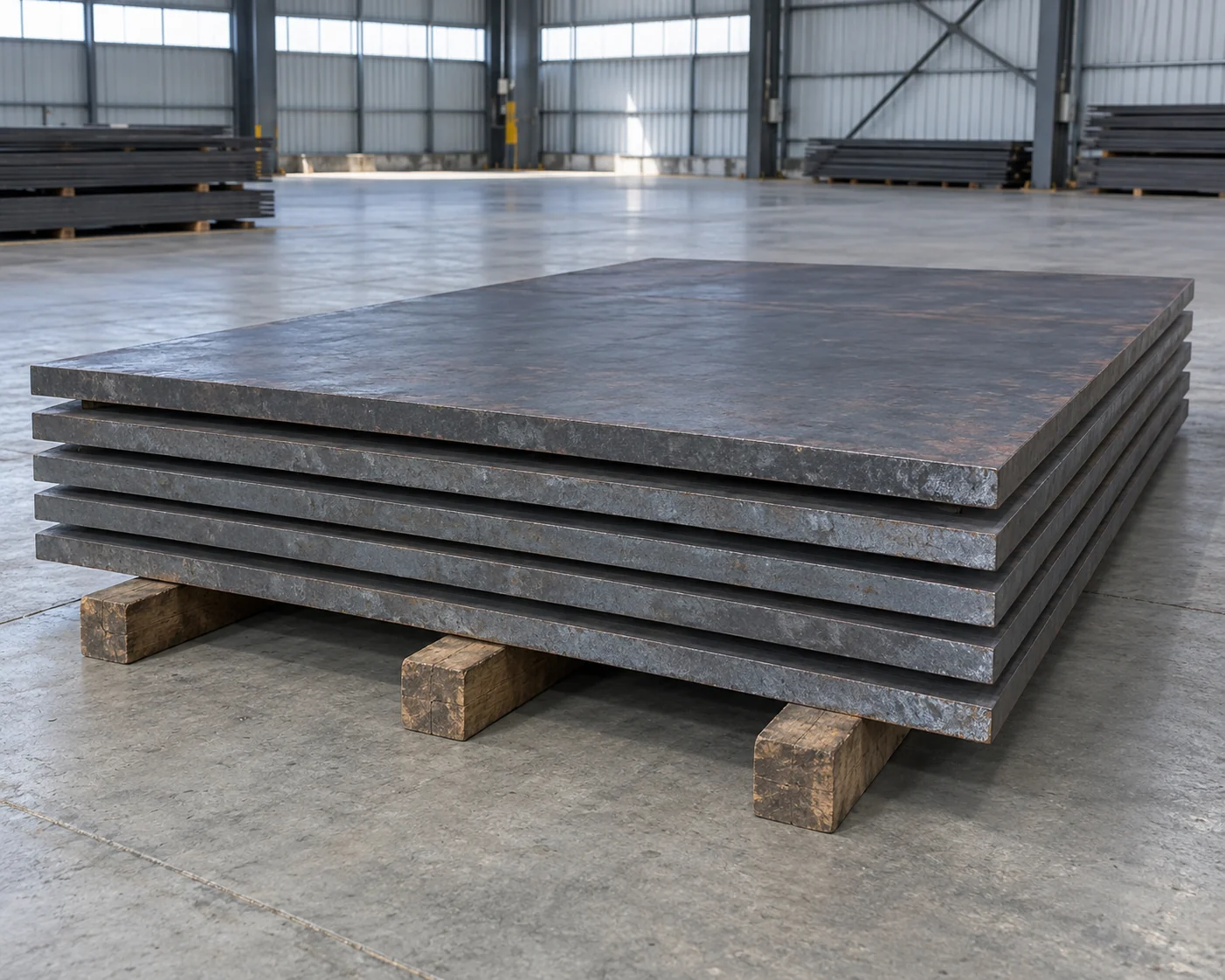
Flat rectangular plates
Separate program
A516 Grade 70

Hot-rolled steel plate supply specifications

Catalog scope by plate family; grade and dimensions confirmed together
Product / dimensionCatalog scopeOrder basis
Medium-thick structural plate4–60 mm thicknessPublished A36/A283 catalog band
Thick structural plate60–115 mm thicknessPublished A36/A283 catalog band
Structural plate width × lengthCut-to-size quotationAvailable parent-plate size and cutting allowance returned for the selected grade and thickness
A516 Grade 70 thickness3/16–6 in.Separate pressure-vessel plate catalog
A516 Grade 70 width48–120 in.Same A516 Grade 70 program
A516 Grade 70 length96–480 in.Same A516 Grade 70 program

For A36/A283 cut blanks, the quotation returns the proposed parent-plate size, finished dimensions and preparation scope for each grade and thickness. A516 Grade 70 retains its separate width, length and delivery-condition requirements shown above.

Plate thickness, width and finished length

Finished Plate Dimensions

A plate schedule needs three dimensions and a piece count. Thickness × width × length defines the delivered rectangle; a shaped blank also needs its drawing revision. Inch dimensions stay in inches on the order rather than being rounded into a different metric size.

Discrete Plate and Coil-Cut Formats

Plate can be mill-rolled or produced from coil after the required processing and qualification. Coil-derived structural plate must meet the finished plate specification and applicable ASTM A6 requirements, including additional testing where required. A route restriction belongs on the accepted material line.

Find a dimension or acceptance requirement.

Dimensions and acceptance stages for a plate schedule
RequirementWhat is specifiedAcceptance basis
ThicknessNominal, minimum or another specified basisDecimal value, unit and applicable thickness tolerance
Finished widthPlate width or final blank widthSpecified dimension and permitted variation
Finished lengthFinished plate or cut-piece lengthExact ordered length and permitted variation
SquarenessRelationship between adjacent edgesDrawing datum and accepted squareness criterion
FlatnessDelivered parent plate before further cuttingProduct standard, measurement stage and required limit
Edge conditionMill edge or requested cut edgeBurr, edge allowance and any specified edge preparation

No matching requirement. Clear the search to restore the table.

Scroll sideways to see every column.

Steel plate grades and delivery condition

Our structural catalog lists A36, A283 Grades C/D and A572 Grades 42/50. A588 Grades A/B/K are weathering-steel options with their own quoted dimensions. The exact specification, grade suffix, thickness and delivery condition identify the material; alternatives appear as separate offers.

Reference strength criteria from SSAB grade data; not our stock dimensions or shipment test results
GradeReference thickness scopeMinimum yield (ksi)Tensile strength (ksi)
ASTM A360.100–6.00 in.3658–80 range
ASTM A572 Grade 500.100–4.00 in.5065 minimum
ASTM A516 Grade 70Grade 70; condition per specification3870–90 range
ASTM A588 Grade A0.188–2.00 in.5070 minimum

Thickness scopes above belong to the reference data. They do not expand our catalog ranges. Yield and tensile strength serve different design checks; the governing specification and delivered material records establish acceptance for the ordered plate.

A516 Grade 70 is a separate material order

Pressure-vessel plate follows its A516 specification and ASTM A20 general requirements. The purchase line identifies any required impact testing or supplementary inspection. The delivery condition must meet the governing specification for the ordered thickness and be stated on the material line. Any ASME SA516 dual certification or vessel-code requirements need explicit order acceptance.

Plate surfaces and corrosion protection

As-rolled mill scale

Hot-rolled carbon plate has a mill-scale surface. Scale condition and surface defects are considered against the selected product specification and the intended exposed face. A bare plate order does not include a paint-ready preparation standard.

Prepared surfaces for coating

Blast cleaning or another requested preparation has its own cleanliness, surface-profile and coating requirements. The accepted preparation scope identifies the faces and edges to be treated. Primer or another coating is priced separately from the bare material.

Weathering plate exposure

A588 develops its protective patina under suitable atmospheric exposure and wet-dry cycling. Persistent moisture, trapped debris and salt exposure affect that protection. The project’s exposure and detailing determine whether weathering steel is appropriate or a coating system is required.

Rectangular cuts and drawing-defined blanks

Rectangular Blanks and Cut Datums

Finished rectangle width and length are measured from the specified edges. Direct fit-up uses the accepted dimensional and squareness limits, with a defined cut-edge condition. A clear datum keeps the delivered rectangle aligned with the assembly drawing.

Profiles, holes and bevel requests

A profile drawing defines the outline, hole positions and any weld bevel. Drawing revision, datum and final-versus-rough dimensions keep those features consistent. Cutting, drilling and beveling requests are reviewed and priced as separate preparation items.

Allowance for thick machined parts

A finished component and its starting plate blank have different dimensions. Machining allowance covers the material removed during facing and edge finishing; the blank also needs the thickness and condition required by the planned operation. The accepted preparation drawing governs the supplied piece.

Plate for structural and fabricated parts

Base and connection plates

Base plates and beam connection plates need the design grade and thickness, together with the hole pattern and edge distances on the fabrication drawing. Hole location is tied to a common datum so the prepared piece can align with the member or anchor layout.

Equipment and machine blanks

A mounting plate’s contact face determines how equipment seats against its support. The part drawing defines the bearing area, surface finish and flatness required after machining. Acceptance at that finished stage addresses the actual contact, rather than the rough blank’s appearance.

Folded plate parts

A bent bracket or channel-shaped part needs a material suitable for the specified thickness, bend radius and direction. The bend drawing sets the inside radius and finished leg dimensions. Grade strength alone does not establish that a tight fold will form without cracking.

Plate dimensions and material records

Unmarked steel plate samples beside an idle caliper and straightedge on a bench

Dimensions at the accepted stage

Thickness, finished width and length are evaluated against the ordered basis and tolerance. Delivered-plate flatness, squareness and edge checks use the specified stage and measurement method. A later machining operation has its own finished-part criteria.

Material and delivery-condition records

Required grade, chemistry, mechanical results and delivery-condition records accompany the plate order. General requirements follow ASTM A6 for structural plate and ASTM A20 for pressure-vessel plate.

Specified ultrasonic or impact tests

Ultrasonic inspection needs a method, coverage and acceptance level. Impact testing needs the required temperature, specimen orientation and acceptance criteria. These are named requirements on the order rather than a blanket test claim for all plate.

Receiving identification

Plate and cut-piece marks carry the agreed material identifiers and part numbers. Document cross-references and piece groups remain on the packing list for receiving.

Material and Inspection Documents

Material identityFinished dimensionsDelivery conditionRequired records
Bulk plate pricing and shipment preparation

Actual and Theoretical Steel Weight

Our quotations state whether the price uses actual weighed steel or an agreed theoretical weight. Estimated schedule weight is calculated from dimensions, piece count and the selected density; it is not automatically the invoiced tonnage. Packing weight is separate from net steel.

Plate Material and Processing Prices

Plate material, cutting, surface preparation, packing and freight are itemized. The quote includes lot quantities and delivery terms for the actual grade-size mix.

Stack Weights and Unloading Limits

Wide and heavy plates need supported stacks, suitable securing and protected contact points. Required stack dimensions and weights follow the transport plan and unloading limits. Grouping by size and material keeps piece counts clear against the packing schedule.

Steel plate purchasing questions

Does plate flatness stay the same after cutting?

Cutting can release residual stress, and thermal cutting also introduces heat. A parent plate that meets its delivered flatness requirement can move after it is divided. A required flatness limit for the finished cut blank is a separate acceptance criterion at that later stage.

Can a plate order mix sizes and piece counts?

Yes. A mixed schedule lists each grade, thickness, width, length and quantity separately. The quote identifies the accepted lines, minimum lots and packing groups. Separate schedule lines keep a small blank quantity from being mistaken for a full-plate quantity.

Can cut parts retain our part numbers?

Part numbers and required material cross-references can be specified in the marking request. The accepted marking method and locations determine how each prepared piece is identified. A drawing number alone does not define the heat-number or material-report link after cutting.

Can a higher-strength grade replace the specified plate?

A substitution needs approval against the part’s complete material requirement. Yield strength is only one factor; chemistry, toughness, delivery condition, welding and forming requirements can differ. We identify a proposed alternate as a separate material offer rather than changing the specified grade silently.

Can plate blanks include an allowance for final machining?

Yes. The blank drawing identifies the delivered dimensions and machining allowance separately from the finished part. Cutting and any accepted preparation are quoted against that drawing and its material requirement.

Get a quote for your plate schedule

Send your plate schedule or drawings and destination. Our quote covers the exact grade, delivery condition, finished dimensions and quantities, with processing, inspection documents and weight basis itemized.

METDAX
Get a quote
Search METDAX

Language

Get a factory quote

Send your specifications or attach a material list.

Steel Plates

Your information is used to respond to this inquiry. Privacy policy

ruofan1901@gmail.com