Home » Products » Solar Mounting Systems » Solar Mounting Components

Solar Mounting Components Supplier

Drawing-based rails, clamps and bracket kits for OEM and project orders

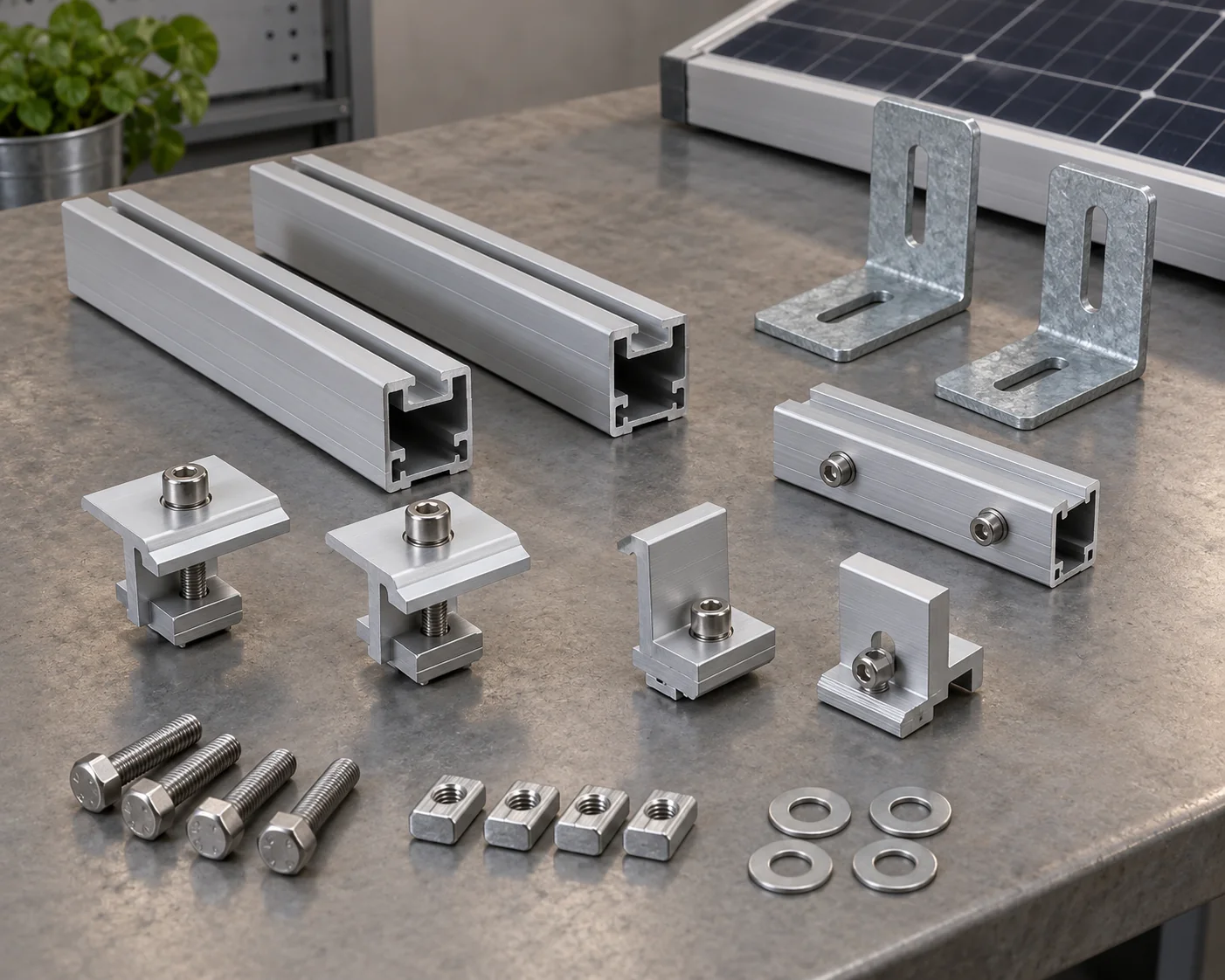
Aluminum rails, clamps and splices combine with steel brackets and fasteners to form the selected solar mounting connection. Drawing-based components are supplied individually or in counted kits, with mating rail profiles and module interfaces defined for each part.

Order type
Wholesale component batches
Clamp selection
Module frame and rail interface
Supply form
Bare parts or counted kits
Order basis
Component drawings and BOM

Mounting parts and kits in our wholesale supply

Choose individual components or counted fastening kits. The quotation returns the supplied part or drawing reference, material and finish, piece quantity and hardware included with each line.

Ordering details by component family
ComponentPart detailHardware and quantity
Mounting railsAluminum rails in full or specified cut lengthsProfile, finish, end preparation and separately listed splices
Mid clampsClamp bodies or kits with the specified bolt and rail nutInterior-joint quantity; module bearing and rail-channel fit
End clampsOuter-frame clamp bodies or complete fastening kitsRow-end quantity; frame height, bearing face and rail connection
Rail splicesConnectors matched to the selected rail sectionSplice pieces and included joining hardware
Brackets and platesDrawing-based steel bends, plates and slotted partsMaterial, finish, handed variant and piece count
FastenersSpecified bolts, nuts and washersThread, grade, finish and count by component or kit

Scroll sideways to see every column.

PV modules, roof penetrations, foundations and the complete rack design sit outside this component order. Steel frames and project racking are supplied through their separate product ranges.

Module frame height and clamp selection

The full module model identifies its frame geometry and permitted retention detail. A 30 mm clamp-height description is only one part of the match: the bearing face, clamp location, rail slot and captive nut also need to agree with the chosen assembly.

Module datasheet examples for custom clamp selection
Module referenceFrame heightLength × widthDatasheet identity
Jinko JKM600N-72HL4-BDV30 mm2278 × 1134 mmF30R-F3-US
Canadian Solar CS6.2-66TB-600HP35 mm2382 × 1134 mmV1.2_F83_L9_TX, July 2026
Canadian Solar CS6.2-66TB-610H40 mm2382 × 1134 mmV1.1_F68_L3A_TX, May 2026

Scroll sideways to see every column.

These examples show why the module model stays with a custom clamp request. Final bearing geometry and mounting zones follow that model’s installation manual, while the rail drawing defines the mating channel and fastening parts.

Mid clamps, end clamps and fastening groups

Mid clamps at module joints

A mid clamp bears on the two adjacent module frames at an interior joint. Its bridge geometry and fastener position serve that arrangement. The supplied kit identifies its bolt, rail nut and any specified bonding element, keeping the joining hardware attached to the clamp’s part identity.

End clamps at outer frames

An end clamp retains the frame at the end of a row or at a break in the array. Its height and bearing shape match that outside position. The component takeoff counts these ends separately from interior module joints, including ends created by access gaps.

Rail nuts and bolt engagement

A channel nut or T-bolt seats within a specific rail profile. Nut width, insertion route, thread and bolt length follow that profile and clamp arrangement. A bolt can have the correct diameter while its head or nut cannot seat in the selected channel.

Canadian Solar US manual v3.3, July 2026: bolting accessory dimensions
Manual accessoryMetric threadWasher ODWasher thickness
M8 bolt and washerM8 × 1.2516 mmAt least 1.5 mm
M6 bolt and washerM6 × 112–16 mmAt least 1.5 mm

Scroll sideways to see every column.

This accessory table applies to the Canadian Solar modules and mounting methods covered by the named manual. Clamp-kit bolts and rail nuts follow their selected hardware instructions. Thread designation, grade and assembly torque remain tied to that hardware; metric and imperial thread forms are separate specifications.

Materials and finishes at the mating surfaces

Aluminum rails and clamp bodies

The parts schedule states the aluminum material and finish for each rail and clamp. Profile surfaces, clamp bearing faces and the required appearance remain identifiable on the drawing. An anodized or specified colored finish carries its own description, including the contact treatment required by the chosen mounting arrangement.

Steel brackets and connection plates

Our factory prepares steel bracket and plate geometry to the component drawing. The order states the steel grade and galvanized or painted finish, including holes, cut edges and bends. Coating preparation and finished mating dimensions are reviewed together for parts that seat against a rail or support.

Fastener coating and contact pieces

Bolts, nuts, washers and any isolating pieces retain their specified materials and finishes. A fastener coating is recorded separately from the bracket finish. That part-level identity preserves the intended connection where aluminum, steel and stainless hardware meet.

Rail splices and bracket mating geometry

Splices matched to the rail section

Rail height and width do not fully identify a splice. Its seating profile, engagement, fixing holes and supplied fasteners meet the actual rail cross-section. The order retains the rail and splice drawing revisions together, including any system-defined movement or bonding role.

Brackets with the correct fixing face

Hole centers, slot direction, bend orientation and bearing faces locate a bracket between its mating parts. Handed or offset brackets retain separate part codes. A dimensioned drawing fixes that geometry more reliably than a product-family name or a photograph of the installed assembly.

Prepared rail ends and cut pieces

The rail schedule distinguishes full lengths from cut pieces and identifies the end preparation. Splice locations and any end fittings stay with the selected joining detail. Burrs, blocked slots and damaged mating edges are checked before the parts are grouped for the order.

Parts orders for OEMs, distributors and replacements

Repeat OEM component batches

An OEM order uses its own component codes and released drawings for recurring rail, clamp and bracket lots. Each code retains its material, finish and kit contents. A change to a rail slot or clamp interface creates an identified revision before the next batch is supplied.

Distributor parts assortment

A wholesale assortment can combine several clamp heights, rail profiles and bracket types. The quote and packing list keep those variants separate by piece count. Bare clamps and fastening kits use distinct lines, making the received quantity clear for later resale.

Identified replacement parts

A replacement order starts with the retained rail and module arrangement, then identifies the missing or changed component. Its geometry and required system records remain part of the selection. The order covers those counted pieces without turning a spare-parts purchase into a complete racking package.

Component fit, kit contents and system identity

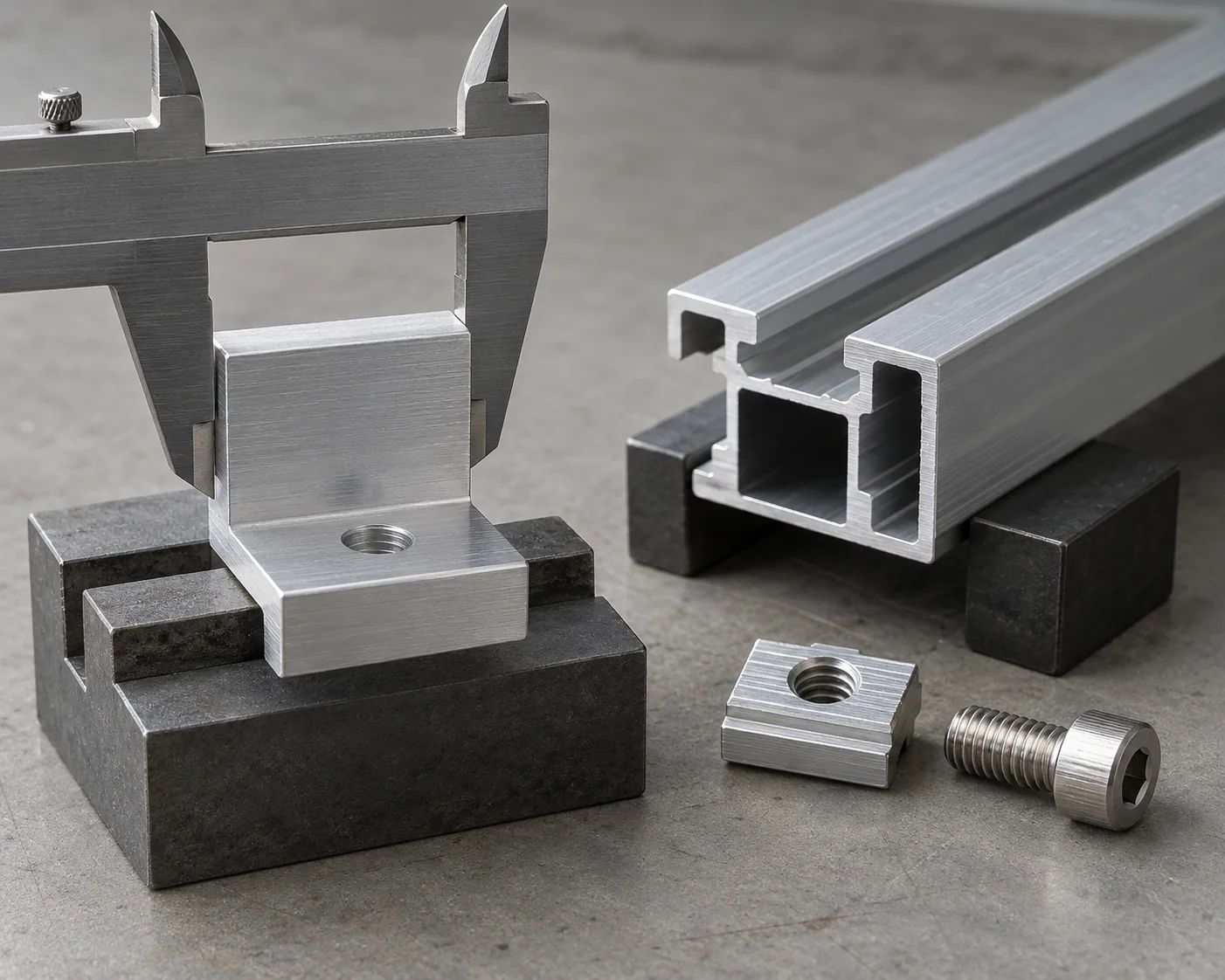
Solar clamp and rail profile in bench fixtures with a caliper and separate mounting hardware

Drawing dimensions

Part checks compare rail channels, clamp bearing faces, splice seats and bracket fixing centers with their drawings. The checked part code and revision identify which mating interface the dimensions belong to. Similar-looking profiles remain separate inspection items.

Fastener and kit completeness

Kit checks identify the bolt thread and length, nut form, washer arrangement and included piece count. Loose fasteners and assembled kits have distinct quantities. The rail nut or bolt head is matched to the intended channel instead of being selected by thread size alone.

Finish and contact condition

Surface checks cover the specified finish, deburred edges and the faces that bear on the module, rail or support. Packing protection keeps clamp lips and rail slots from being damaged by adjacent pieces. Mixed finishes retain their separate part identities.

The actual mounting configuration

Where listed mounting or bonding components are specified, the order identifies the required system, part and module combination. The applicable listing and installation instructions determine allowed substitutions. Dimensional fit alone does not establish a replacement part’s bonding or fire approval.

Component order records

Part code and revisionInterface dimensionsFinish identityKit counts
Wholesale parts pricing and separated packing

Bare Parts and Complete Kit Prices

Component prices identify the drawing revision, finish and quantity. Clamp kits list their fastening pieces; rail lines state the supplied length and any joining hardware. Packing and shipment terms are itemized.

Protected rails and small components

Rails are supported and separated at their contact faces, with cut lengths kept identifiable. Clamp bodies, splice pieces and brackets use divided packing or grouped containers. Nuts, bolts and washers are packed against their kit or component codes so they are not mixed among similar variants.

Repeat lots and partial BOM orders

A repeat lot names the previous part code and current drawing revision. A partial order retains the quantities of the selected BOM lines and the interfaces to buyer-supplied pieces. The offer states the minimum batch by part, production schedule and shipment terms for those actual quantities.

Solar component purchasing questions

Can a photograph identify the replacement part?

A photograph helps identify the part family and visible connection. Final selection uses the rail cross-section, mating dimensions and module model or component drawing.

Can one order include different clamp heights and rail profiles?

Yes. We quote each height, profile and drawing revision as an identified line. Their quantities and fastening kits remain separate through packing, so variants can be received and stocked without mixing mating parts.

Can we provide the bolts or rail nuts ourselves?

Yes. The parts list identifies your hardware and the bare components we supply. Bolt thread and length, nut shape and seating geometry are retained in the assembly detail. The selected hardware instructions govern tightening and any required bonding arrangement.

Can you quote components without a full rack layout?

Yes. We quote standalone components from their drawings and item quantities. Each line states the part identity, finish and the hardware included in a requested kit.

Get a quote for your mounting components

Send your component drawings or BOM and destination, with the module model and rail profile. We quote the selected parts, quantities and finishes with kit contents and buyer-supplied hardware identified.

METDAX
Get a quote
Search METDAX

Language

Get a factory quote

Send your specifications or attach a material list.

Solar Mounting Components

Your information is used to respond to this inquiry. Privacy policy

ruofan1901@gmail.com