Home » Products » Construction & Infrastructure Products » Guardrail Offset Blocks

Steel Guardrail Offset Block Supplier

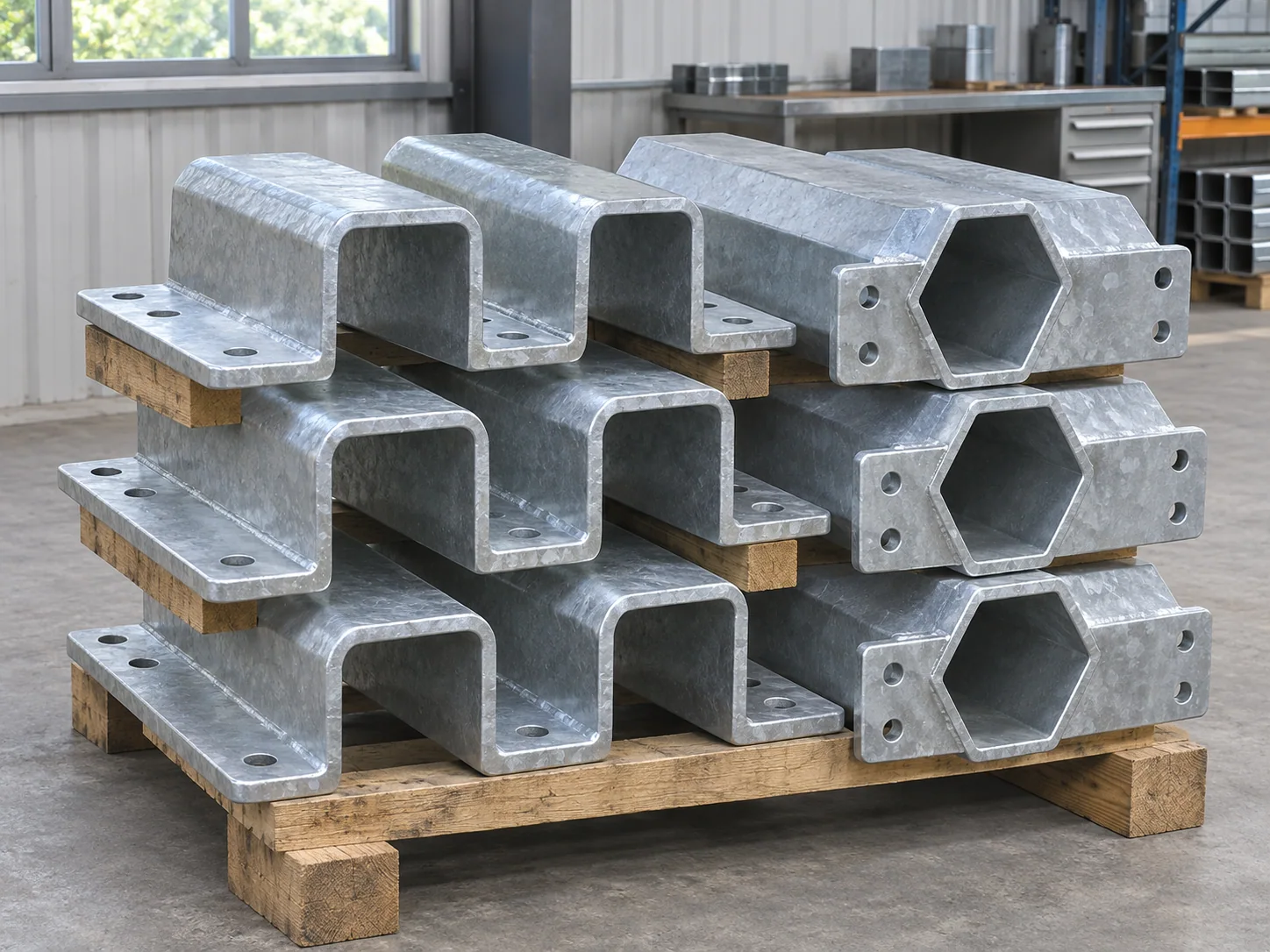
U, C and hollow block forms with the rail and post interfaces kept together

Steel offset blocks connect a specified guardrail profile to its post at the required stand-off. Our range includes U-section, C-section and hollow formed blocks in the published 3–8 mm thickness band, with custom lengths and attachment patterns. Each block follows its component drawing and accepted barrier configuration.

Published thickness
3–8 mm
Forms
U, C and hollow blocks
Steel options
Q235 / Q345
Length and offset
Drawing-defined

Steel block forms and attachment details

Block formU, C, hexagonal hollow or the specified formed section
MaterialSelected Q235/Q345 callout or accepted project material
ThicknessPublished 3–8 mm band; actual thickness retained with the part drawing
Offset and lengthPost-to-rail stand-off and finished block dimensions
Holes and slotsPattern, orientation and mounting faces matched to rail and post
FinishHot-dip galvanized or specified coating route
HardwarePost/rail fasteners and any required backing parts listed separately

Published steel-block dimensional scope

Our dedicated steel-block catalog lists a 3–8 mm thickness band. Section, length, offset and attachment dimensions follow the selected rail/post assembly.

ParameterPublished valueOrder detail retained
Steel thickness, lower catalog limit3 mmSelected component thickness
Steel thickness, upper catalog limit8 mmSelected component thickness
Finished block lengthCustom drawingLength and datum
Rail-to-post offsetCustom drawingReference mounting planes

No matching specification. Clear the search to see every row.

Scroll sideways to see every column.

The first-party steel-block catalog lists 3–8 mm thickness. The quoted component drawing identifies the supplied form, material, actual thickness, length, rail-to-post offset and attachment pattern as one selected configuration.

Block form, material and barrier identity

U and C sections

Open-section blocks have their own flange, web and mounting-face details. The released orientation locates the rail and post contact faces for the selected connection.

Hollow formed blocks

A hollow hexagonal or other closed form retains its bend and contact geometry. Plate thickness, end faces and attachment positions are specified on that form’s component drawing.

The accepted barrier controls substitution

The accepted barrier configuration identifies its rail, post, steel block, backing parts and hardware. Required crash-test or agency records apply to that complete arrangement, while our offer identifies the supplied block component.

Offset, slots and finished mounting faces

Stand-off measured between defined planes

The drawing states overall block depth and installed rail-to-post offset as separate dimensions where applicable. Contact planes, nested profiles and backing parts define the finished connection stack.

Holes located from the installed orientation

Round holes, slots and end offsets follow the rail/post detail. Opposite-hand or different-height blocks retain separate marks so their attachment pattern remains identifiable after coating.

Forming and protection kept compatible

Bends and cut edges remain part of the finished section. The selected coating specification covers the block form, drainage and accessible contact surfaces, with its protection requirements recorded alongside the finish appearance.

Block lots for guardrail packages and identified repairs

New component packages

Blocks are counted against the selected post and rail arrangement. Double-sided runs, transitions and other special details keep their own quantities and component marks.

Replacement blocks for retained systems

The replacement request identifies the retained rail profile, post and approved block detail. Photographs help show the form, while measurements and drawings establish the hidden contact and hole geometry.

Block geometry and finish inspection

Offset geometry inspection

Offset and attachment checks

Finished dimensions, contact planes, bends and hole positions are measured from the block drawing. A flat mounting face and a correct hole pattern are both needed for the intended connection.

Coating on formed parts

Thickness and coverage checks follow the selected protection specification and component category. Zinc at holes and contact faces is included in the finish inspection; barrier crash-test records retain their separate system scope.

Part marks and hardware groups

Block marks retain form, revision and finish identity. Fasteners and backing pieces keep their own material and dimensional requirements on the receiving list.

Offset-block records

Component drawingMaterial and thicknessOffset and hole dimensionsFinish checksOrigin and hardware scope

Block prices and separated packing groups

Block and hardware lines

We quote the selected block form, dimensions, finish and quantities, with fasteners or backing parts itemized. Different offsets or attachment patterns remain separate items even when the steel thickness matches.

Mounting faces protected

Packing follows the block geometry and finish. Suitable nested groups or dividers protect contact faces and projecting flanges; boxed bolts have their own counted packing group.

Receiving by barrier-run schedule

Packing groups connect each block mark to its post and rail schedule. Installation quantities, spare blocks and loose hardware have separate counts for receiving.

Guardrail Offset Blocks purchasing questions

How is a different rail-to-post offset ordered?

The changed offset is accepted as part of the barrier configuration and its connections. The component drawing then records the required depth, contact planes, hole pattern and permitted block form.

What governs a proposed steel-block substitution?

The selected barrier detail and purchasing authority govern acceptance of the material, geometry and complete barrier response. A proposed steel, timber or composite alternative is identified for that system review.

Does the 3–8 mm range cover every block form?

It is the published catalog thickness envelope. The quotation identifies the actual form, material and thickness combination, with the remaining dimensions fixed by the selected component drawing.

Is a guardrail splice bolt the same as the block-to-post bolt?

They serve different joints and can have different head forms, lengths and fastening arrangements. The hardware schedule identifies the required bolt for each rail, block and post connection.

Can the same block be used on both sides of a double-faced barrier?

A double-faced order follows the accepted two-sided component and attachment detail. Post holes, fastener stack and block orientation are checked for that assembly.

Which approval records belong with the steel-block order?

Our offer identifies the steel component and required supply records. Crash-test and agency acceptance records address the specified complete barrier configuration, including the actual rail, post, block and hardware.

Get a steel offset-block quote

Send the block and rail/post detail with form, thickness, offset, hole pattern, finish, quantities and destination. Include the accepted barrier reference and source requirements for an itemized block-and-hardware offer.

Metdax
Get a quote
Search Metdax

Language

Get a factory quote

Send your specifications or attach a material list.

Guardrail Offset Blocks

Your information is used to respond to this inquiry. Privacy policy

sales@metdax.com

+86 177 7599 6440