Home » Products » Steel Sections, Coils & Plates » Equal Steel Angles

Equal Steel Angle Supplier

Equal-leg rolled angles with thickness, hole faces and cut marks defined

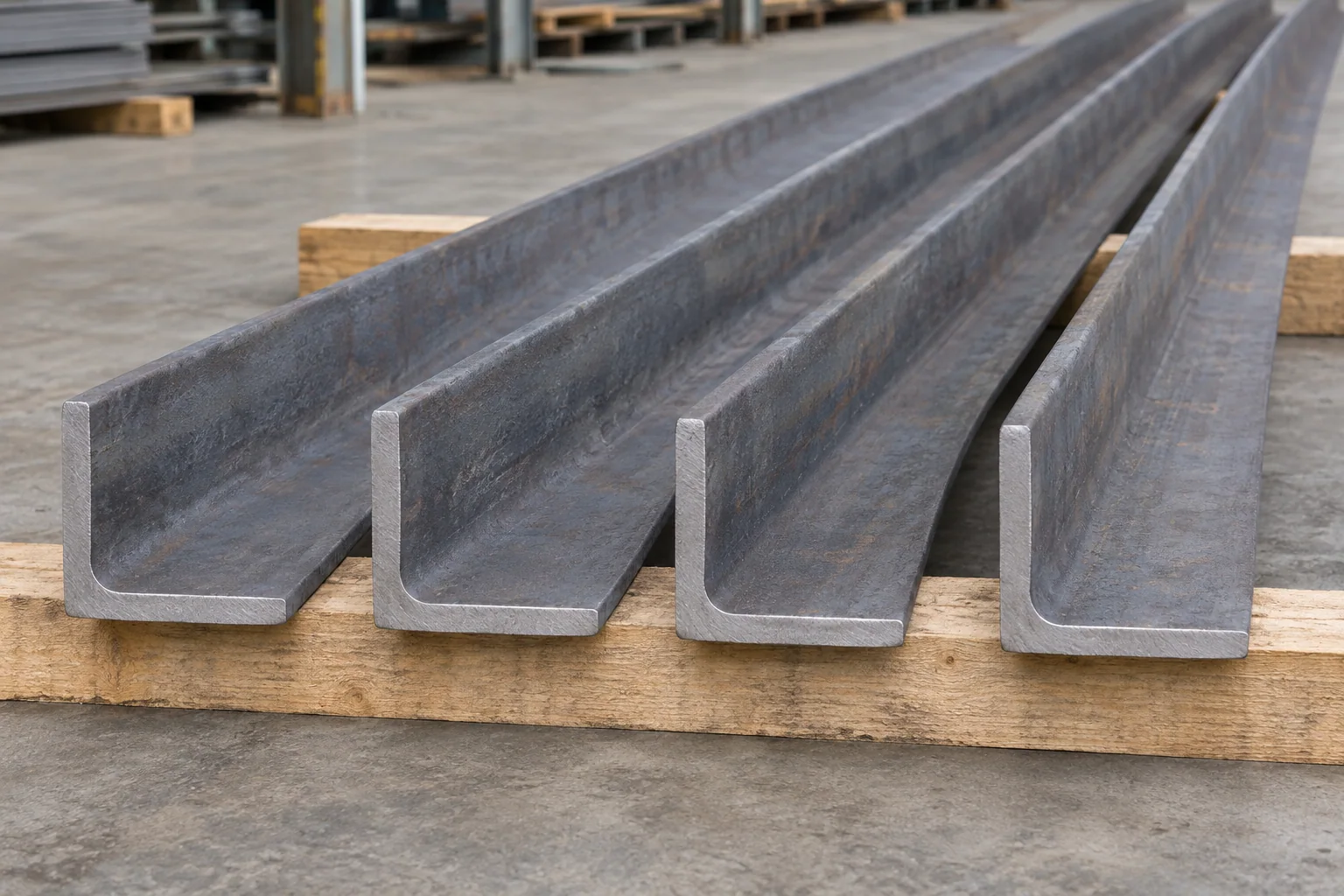
We supply hot-rolled equal steel angles for bracing, connection parts and general fabrication orders. Equal leg lengths provide the same nominal fixing width on both sides, while thickness determines a separate section size and mass. Full lengths and drawing-prepared pieces are quoted with their material grade and surface requirement.
Leg form
Equal-leg L section
Production form
Hot rolled
Supply
Full lengths or cut pieces
Finishes
Bare, painted or galvanized

Equal-leg angle supply options

DesignationBoth leg dimensions and nominal thickness
MaterialASTM, EN or JIS grade named with its standard
Product formHot-rolled L section with rolled root radius
PreparationPlain cut lengths or drawing-defined holes and ends
Surface treatmentBare, painted or specified hot-dip galvanizing
IdentificationAngle size, material reference and part mark

Equal-angle thicknesses and nominal mass

The selected 100 × 100 mm reference group shows how thickness changes the section.

Angle designationLong leg (mm)Short leg (mm)Thickness (mm)Nominal mass (kg/m)
L100 × 100 × 610010069.26
L100 × 100 × 7100100710.7
L100 × 100 × 8100100812.2
L100 × 100 × 101001001015.0
L100 × 100 × 121001001217.8
L100 × 100 × 161001001623.2

No matching specification. Clear the search to see every row.

Scroll sideways to see every column.

Selected EN equal-angle nominal dimensions and steel masses from the ArcelorMittal reference. The table shows complete rolled-profile selections. The quotation identifies the supplied sizes and quantities; inch-series requests retain their own complete dimensional designations.

Equal-angle shape and material specification

The rolled heel is part of the section

Hot-rolled angles have an internal root radius. A sharp-cornered bent plate of the same outside dimensions is a different product and can have different section properties.

Material grade carries its own requirements

The material line identifies A36, A572 Grade 50 or the specified EN grade alongside the angle dimensions. The corresponding material record establishes the supplied steel identity.

Metric and inch series remain distinct

Metric and inch series retain their own dimensional designations. The order identifies that system before thickness, hole gauges and mating parts are finalized.

Cut angles and gusset-connection details

Two leg faces need clear references

Equal legs look interchangeable before preparation. Once holes or notches are added, the marked face and reference end establish the hand of the part.

Gusset and heel clearance

The connection drawing sets the plate’s clearance from the rolled heel, together with hole gauge and end distance. These dimensions use the actual angle and mating part.

Built-up angle pairs

Double-angle members need their spacing, separators and connecting arrangement defined. Two loose angles and a completed fabricated pair remain separate order scopes.

Equal angles for bracing and connection packages

Bracing members

Brace schedules identify the angle size, member length and end attachment. Hole preparation can follow the gusset detail while preserving the member marks needed at assembly.

Cleats and short connection parts

Short angle pieces can have different hole patterns on each leg. The cut list keeps those part drawings separate from full-length material supplied for later shop work.

Equal-angle material and cut-part checks

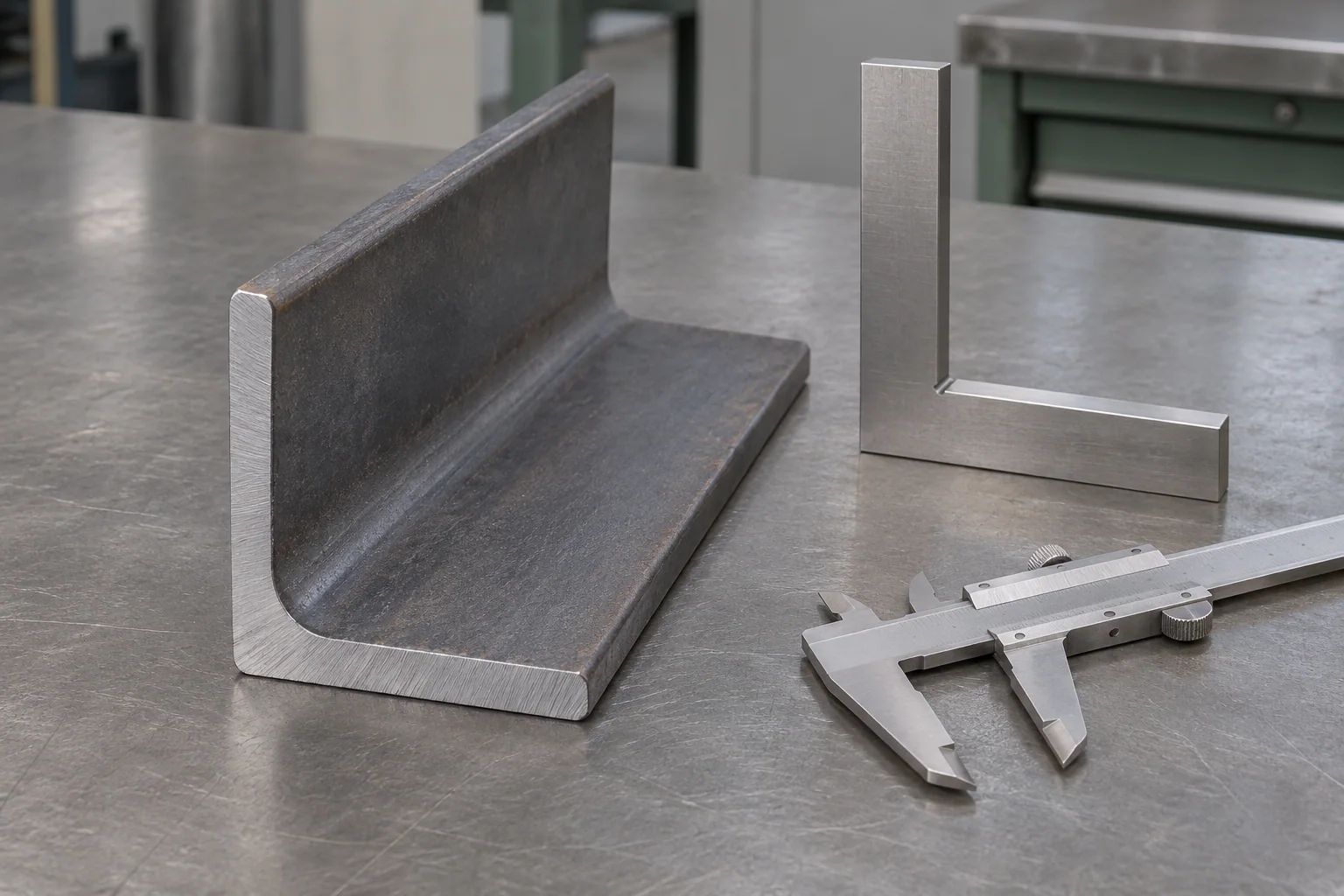
Equal-leg angle sample beside a square and caliper

Both legs and thickness

Profile checks cover both leg dimensions, thickness and rolled geometry. Recording all three size dimensions distinguishes angles that share the same outside widths.

Holes and end details

Prepared-part checks identify the drawing datum and the leg carrying each feature. The inspection retains handed orientation, hole position and diameter together.

Traceability through surface work

Material references and member marks remain linked when angles are cut or coated. Small parts use an agreed identification method suitable for their size.

Equal-angle release records

Legs and thicknessMaterial and heat referencePart and hole scheduleBundle and piece count

Equal-angle quantities and packing

Full lengths and short pieces

Our quote separates full material lengths from cut-part quantities and preparation. Usable remnants are treated according to the agreed commercial arrangement.

Nested material with lifting access

Nested bundles are supported and separated for handling. Prepared angle parts are grouped by their actual mark so similar-looking pieces can be reconciled at receiving.

Nominal weight and shipment quantity

Reference kg/m supports the theoretical steel total. Piece counts, cut lengths, coatings and packing remain visible where they affect the final quantity or shipment mass.

Equal Steel Angles purchasing questions

How is a bent 90-degree part specified separately from a rolled equal angle?

A bent part follows its forming route, corner geometry and material drawing. A hot-rolled equal angle follows its complete rolled-section designation and the applicable product requirements.

How does the orientation of an equal angle affect its use?

An open L section has different stiffness about its axes. The structural design uses the member’s orientation, load case and connection arrangement to establish its resistance.

Can a hole be located from the outside heel instead of the free edge?

Yes, when that datum and the hole position are defined on the drawing. The detail retains the relevant rolled corner, leg thickness and access needed for the connection.

How are angles from different dimensional series handled in one order?

Each scheduled profile retains its exact leg dimensions, thickness and corner geometry. The project requirements identify which profiles belong in each member group.

How are very short cut cleats identified after coating?

The order agrees a usable mark, tagged group or controlled container reference for the small parts. That reference links each cleat group to its drawing revision and material record.

How is a double-angle quantity stated?

The schedule states whether the quantity counts individual lengths or assembled pairs. A pair also identifies its spacing, connectors and fabrication scope, keeping material and assembly counts clear.

Get an equal-angle quotation

Send both leg dimensions, thickness, material grade, lengths and quantities. Attach the cut-part drawings for holes or built-up pairs so our offer separates material from preparation.

Metdax
Get a quote
Search Metdax

Language

Get a factory quote

Send your specifications or attach a material list.

Equal Steel Angles

Your information is used to respond to this inquiry. Privacy policy

sales@metdax.com

+86 177 7599 6440