Home » Products » Steel Sections, Coils & Plates » Cut-to-Size Steel Plate

Cut-to-Size Steel Plate Supplier

Plate blanks and profiles prepared to your finished-part schedule

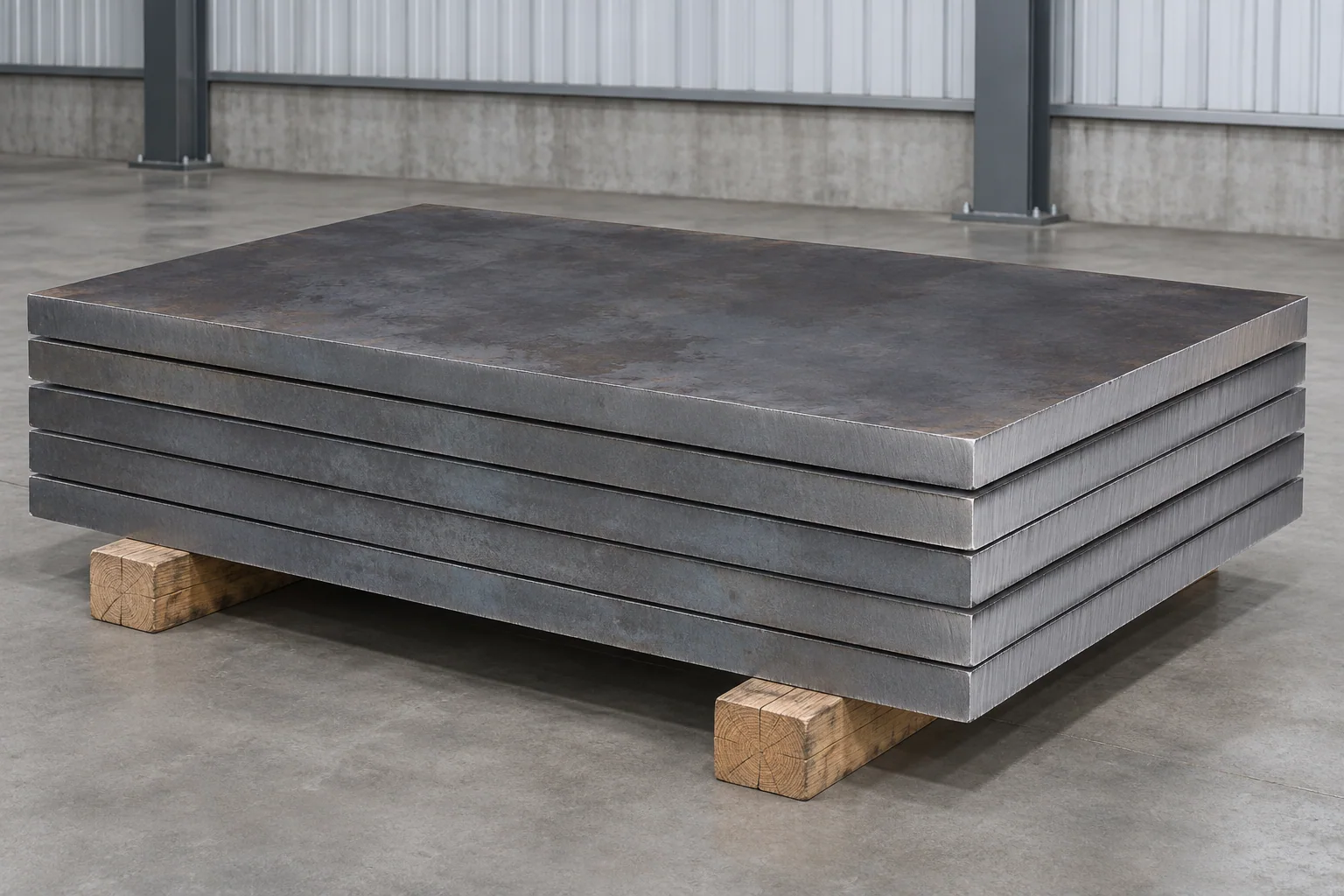
We supply steel plate cut into rectangular blanks and drawing-based profiles for fabricators and OEM orders. Each part keeps its grade, thickness, net dimensions and quantity. Cutting allowance, holes, edge preparation and any later machining are identified separately so the delivered blank matches the next production step.
Supply format
Rectangles and profiles
Order basis
Part drawing / cut list
Material identity
Grade and heat reference
Price breakdown
Plate, cutting and agreed work

Cut plate order and acceptance details

MaterialNamed steel grade, product standard and delivery condition
Rectangular blanksThickness × width × length with units and piece count
ProfilesClosed outline, holes and datum dimensions on released drawing
Dimension basisAs-cut size or finished machining size stated explicitly
EdgesAs-cut, cleaned or specified bevel/machining preparation
IdentificationPart mark tied to material or heat reference where required
AcceptanceCut dimensions, squareness, edge condition and flatness stage
Quantity basisPiece count and agreed theoretical or weighed mass

Carbon-steel blank mass per square meter

Use area and nominal thickness to compare the net material in a cut list. For a rectangular blank, mass equals length × width × thickness × density.

Thickness (mm)Theoretical mass (kg/m²)Mass for 0.5 m² blank (kg)
647.1023.55
862.8031.40
1078.5039.25
1294.2047.10
16125.6062.80
20157.0078.50

No matching specification. Clear the search to see every row.

Scroll sideways to see every column.

Calculated at a conventional carbon-steel density of 7,850 kg/m³, consistent with the SSAB hot-rolled plate reference. These calculation thicknesses are a reference; the stock list and cutting capacity are quoted separately. Actual mass can differ with dimensions and grade; holes, profiles, scrap and packing are accounted for separately.

Grade and delivery condition stay with the blank

Plate material specification

Cutting changes the part outline, not its material grade or delivery condition. Strength, toughness and any special examination requirements belong to the plate specification before the nesting plan is released.

Cutting and later fabrication

The cutting route and edge acceptance are selected for the material, thickness and later welding or machining. Required heat-affected-edge treatment is a fabrication requirement, not a consequence to leave unspecified.

Dimensional acceptance

Plate mill tolerances and cut-part tolerances describe different stages. The order identifies the datum, allowed dimensional variation and condition in which the blank will be measured.

From parent plate to identified parts

Rectangular cut lists

Thickness, width, length and count define each blank mark. Repeated sizes can share a cutting layout while retaining the quantities needed by each assembly.

Profiles and internal features

A profile drawing fixes the outside contour, hole locations and any slot orientation. A PDF drawing carries dimensions and notes; usable CAD geometry can support nesting without replacing the released drawing.

Cut edge or machined edge

An as-cut edge may need cleaning, beveling or machining before the next operation. Those tasks remain separate quoted work with their own final dimension and surface requirement.

Orientation and handed parts

Rolling direction, visible face and mirrored profiles matter where the design or downstream forming calls for them. Left- and right-hand pieces keep distinct marks instead of sharing one ambiguous outline.

Plate blanks for fabrication and OEM production

Welded assemblies

Base plates, gussets and stiffeners need their actual outline and weld-edge detail. Holes and bevels are included only where scheduled, keeping a blank order distinct from a finished welded assembly.

Machining feedstock

A machining blank carries the specified stock outside the finished dimensions. The cut list distinguishes nominal plate thickness from any final machined thickness or face treatment.

Blank dimensions and material traceability

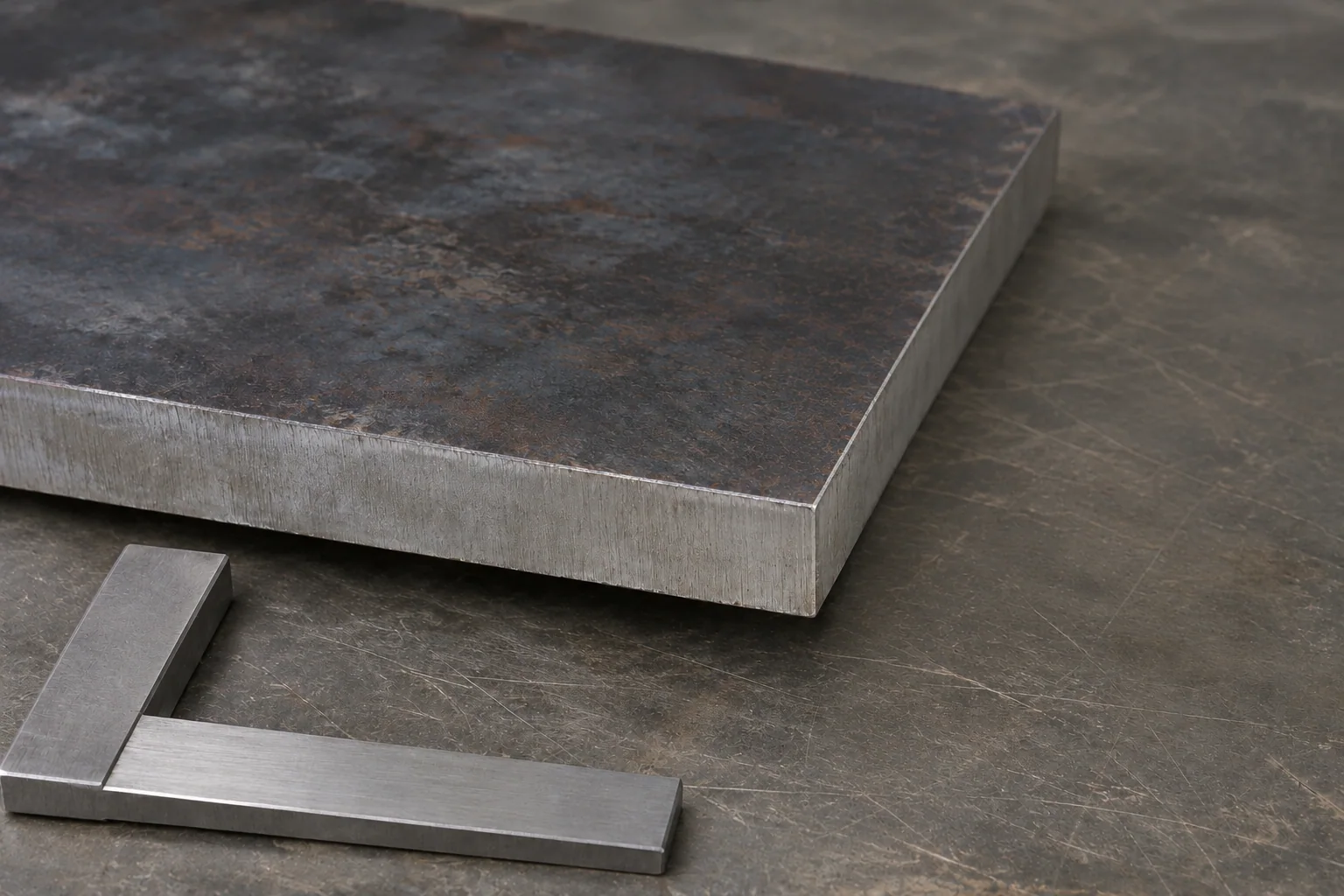
Cut steel plate blank beside a loose engineer square on an inspection bench

Part size and datum

Checks use the stated cut or finished dimension, including squareness and hole positions where ordered. A profiled part is checked at its stated dimensions.

Edges and flatness

Edge condition, burrs and permitted thermal effects are checked at the agreed acceptance stage. Residual stress released during cutting can change the shape of a smaller blank after it leaves the parent plate.

Material identity after nesting

Part marks and material cross-references are carried through cutting where traceability is required. Heat identity comes from the material record.

Cut plate release records

Part and drawing revisionMaterial/heat cross-referenceSpecified dimensional checksPiece count and mass basis

Sorted plate blanks and a clear price basis

Keep part marks together

Blanks are grouped by part, grade and thickness. Separators and dunnage preserve lifting access and keep small profiles from disappearing between larger plates.

Net part mass and purchased material

The net cut-part mass differs from the parent plate consumed by nesting. Our offer identifies the material and cutting basis, with any scrap or remainder arrangement stated separately.

Packing and dispatch quantities

The packing list retains the number of each part and the bundle identity. Packaging and shipment mass are separate from the theoretical net steel figure used to compare a cut list.

Cut-to-size steel plate purchasing questions

Can a mill certificate alone prove the flatness of a cut blank?

A mill record describes the supplied parent material. Cut-blank flatness needs its own acceptance stage and measurement requirement because cutting can release residual stress and change the smaller part shape.

Should the drawing include cutter kerf in the finished part dimensions?

Dimension the required part and identify any machining allowance. The nesting and cutting preparation accounts for the selected process kerf; adding an unexplained kerf allowance to the finished drawing can change the supplied outline.

Can unused parent-plate remnants be shipped with the blanks?

Remnants are a separate commercial and packing item. The offer states whether usable remainders are retained, included or excluded; their weight is not automatically part of the finished-blank quantity.

Can heat traceability be kept when many small parts come from one plate?

Yes, when the marking and cross-reference method is included before cutting. Very small parts may use controlled batch packing or an agreed identification method rather than individual stamping.

Does a CAD file override a different dimension on the PDF drawing?

Conflicting geometry and dimensions need to be resolved before cutting. Use one released drawing revision as the acceptance basis and a matching digital file for production preparation.

Are profiled blanks priced only by their theoretical weight?

No. Material utilization, cutting length, internal features, setup, edge work and quantity can change the price. The quotation states its actual material and processing basis instead of treating net part weight as the complete cost.

Quote your plate cut list

Send the steel grade, thickness and drawing or dimensional cut list with quantities. Identify machining stock, edge work, traceability and destination so the offer covers the required blanks.

Metdax
Get a quote
Search Metdax

Language

Get a factory quote

Send your specifications or attach a material list.

Cut-to-Size Steel Plate

Your information is used to respond to this inquiry. Privacy policy

sales@metdax.com

+86 177 7599 6440