Compare the Delivery Condition First
As-Rolled Hot Coil and HRPO
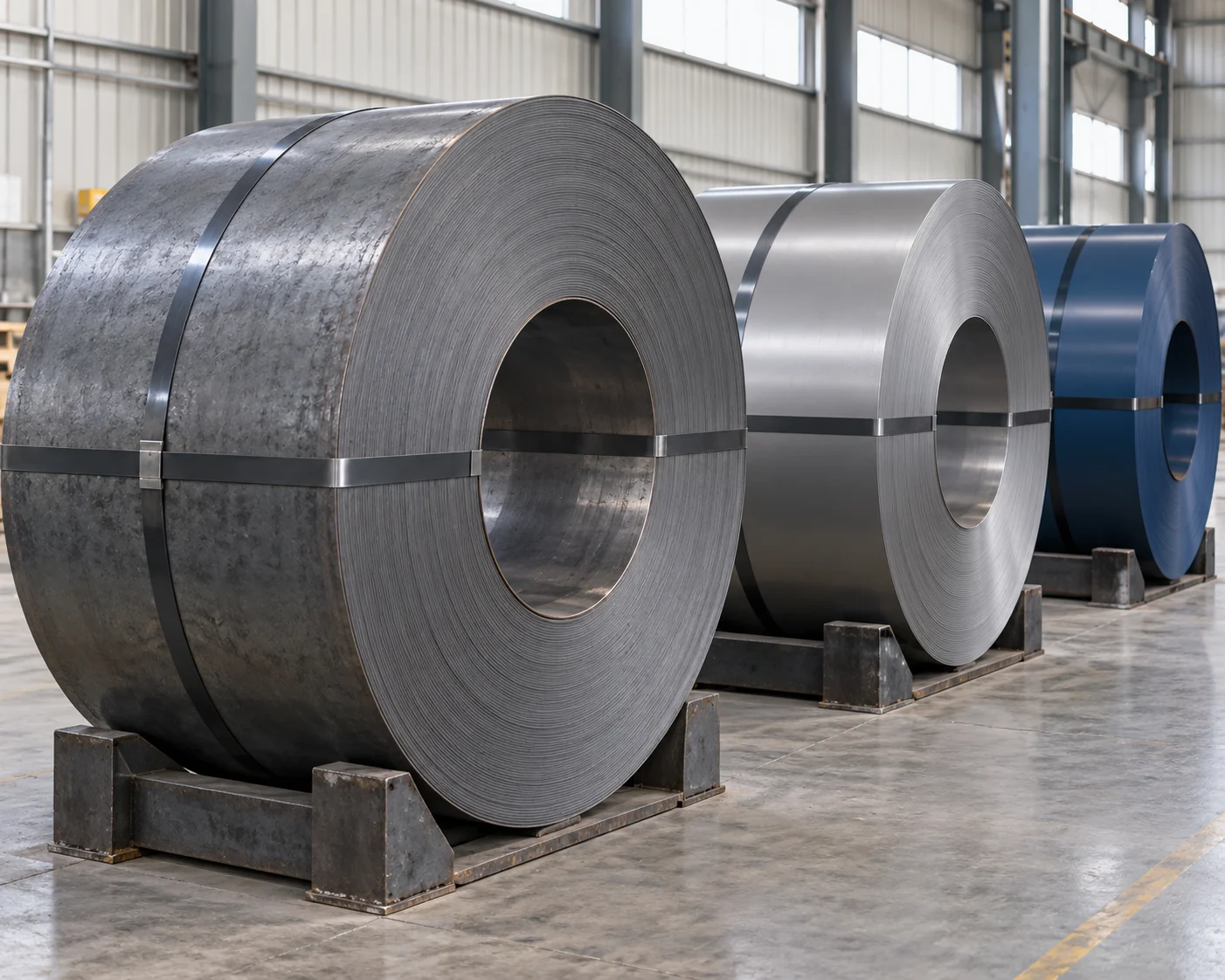
As-rolled hot coil can carry mill scale, the oxide layer produced during hot processing. Pickling removes that scale; HRPO is the pickled product supplied with oil. It remains hot-rolled steel. Removing scale does not, by itself, give it the dimensions or mechanical properties of a cold-rolled product.

Annealed Cold-Rolled and Full-Hard Coil
Cold rolling further reduces the strip and can impart a chosen surface texture. A common finished cold-rolled sheet route includes annealing and temper rolling. Full-hard material is a different delivery condition. For a housing with folds, hems or drawn features, name the required grade and condition instead of ordering “cold-rolled steel” alone.
This comparison concerns uncoated carbon-steel substrate that will be fabricated and finished. Galvanized, prepainted and stainless coil introduce different coating or material choices. Select them separately if the service environment or housing specification requires them.
Let the Finished Panel Set the Requirements
Visible Faces and Painted Appearance
A visible door and a concealed rear cover may need different appearance limits even when both are painted. State which faces will be seen, the coating system and the acceptable finished sample. Cold-rolled is worth evaluating first for appearance-sensitive panels, but a bright-looking coil is not proof that a coated housing will meet that sample.
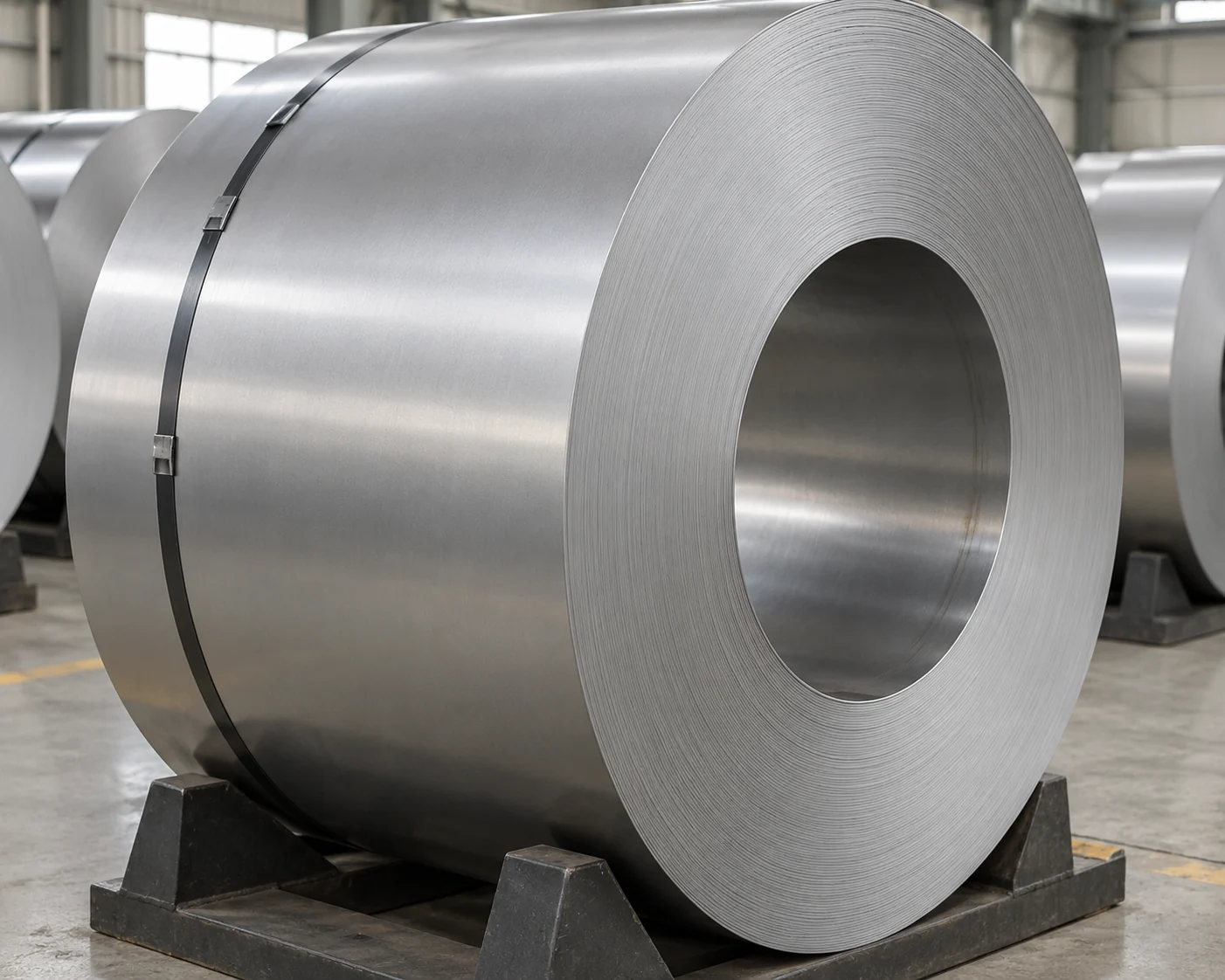
Ask the fabricator to compare finished panels after the actual cutting, bending, joining and coating sequence. Check surface texture, dents and marks where they will remain visible. A thicker paint film is not a general remedy for an unsuitable substrate. HRPO can be suitable when its finished result meets the agreed appearance and coating requirements.
Thickness, Flatness and Assembly Fit
For fit, specify thickness in millimeters or inches, its permitted variation, and the flatness needed after leveling and blanking. Check the features that use those dimensions: folded returns, door gaps, mating flanges and fastener engagement. Compare the offered tolerances rather than assuming that every cold-rolled coil is tighter than every processed hot-rolled coil.
Coil surface quality and completed-part flatness are separate. The fabricator must show that the chosen leveling, cutting and joining process can deliver the required panel. A material certificate alone does not demonstrate a flat welded enclosure.
Match the Grade to the Hardest Forming Operation
Test the Feature That Matters
Identify the most demanding feature on the drawing before choosing the coil: a tight return bend, a closed hem, a drawn recess or a louver. Agree the grade, delivery condition and required mechanical properties with the fabricator, then check that feature with the intended tooling and material orientation. A simple flat test coupon cannot demonstrate every feature on the housing.
Strength and Formability Belong to the Specification
Do not rank the two families by saying “cold-rolled is stronger” or “hot-rolled bends more easily.” Cold reduction, annealing and the selected grade affect the delivered condition. Compare the specified yield and tensile properties, ductility requirements and actual forming result. Full-hard cold-rolled must not be substituted for an approved annealed product merely because the nominal thickness matches.
Once both candidates form the part successfully, compare the remaining production differences: tooling adjustments, surface conditioning, handling marks and the work needed to keep panels within the accepted finish and fit. These differences can decide the purchase even when neither material has a technical disqualification.
What Work Remains Before Coating?
Scale Removal Is Not the Same as Cleaning
For an as-rolled hot product, identify how the selected coating process will deal with mill scale. For HRPO and oiled cold-rolled products, identify the cleaning needed for oil and other contamination. Pickled does not mean ready to paint, and a clean-looking cold-rolled surface does not remove the need for the coating system’s preparation requirements.
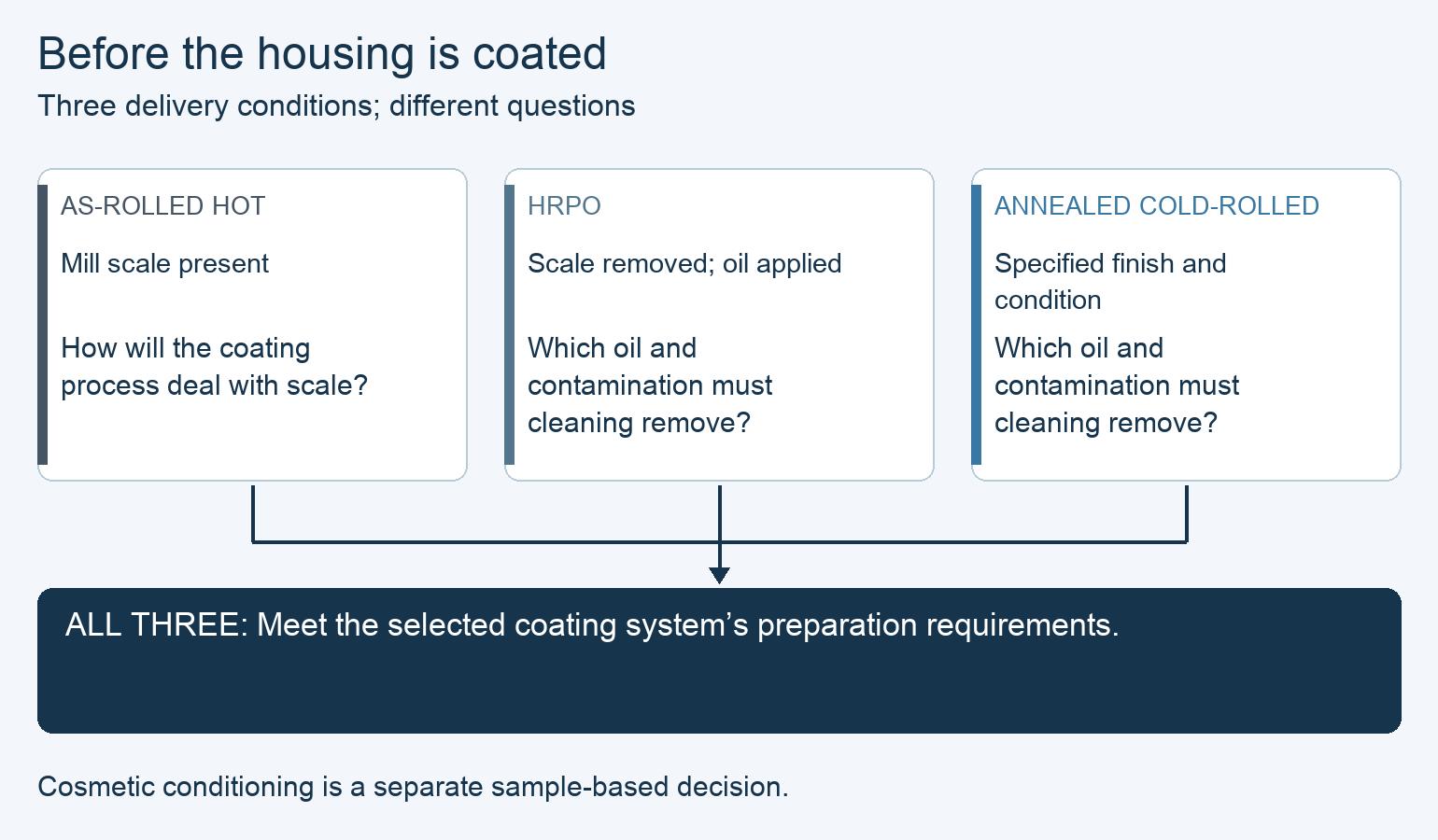
Keep scale removal, cosmetic surface conditioning and coating pretreatment separate in the quote. They solve different problems. Ask which operations the coil supplier has completed, which the fabricator will perform and which are included in the finishing price. Follow the selected coating supplier’s current process requirements for the actual substrate and exposure.
The Service Environment Still Matters
Neither the hot-rolled nor cold-rolled name specifies corrosion protection for service. Agree the finished coating system and its acceptance requirements for the housing’s environment, including edges and joined areas. Temporary oil used during storage is not that finished protective system.
A Housing Example: Both Materials Pass, but One Needs Less Finishing
The Conditions Before the Comparison
Consider a hypothetical indoor machine housing with bent side panels and a visible painted service door. Both proposed grades meet the drawing’s strength, thickness, fit and forming requirements. Both suppliers can meet the quantity and date. Trial parts pass coating-performance and appearance acceptance using the same specified paint system, but the accepted preparation routes differ. These are assumed trial findings, not METDAX customer results.
The cold-rolled route reaches the approved appearance after the normal fabrication cleanup and coating preparation. The HRPO route needs an additional cosmetic surface-conditioning operation before that same preparation. The shop can carry out either route on time, but wants to preserve finishing capacity for other work. No total-price comparison has been supplied.
The Choice and What Would Change It
Choose the approved cold-rolled route for this order’s stated production priority: it avoids the additional conditioning operation. HRPO has not failed the housing specification; it needs more work in this assumed process. This choice establishes a simpler finishing route, not a measured saving or a universal cold-rolled advantage.
If an HRPO trial reaches the approved appearance without that extra operation, the stated reason for preferring cold-rolled disappears. If the owner instead prioritizes cost, compare complete prices including conditioning before choosing a winner. A move to a concealed panel or a different finish can also change the appearance requirement and calls for a fresh comparison.
Swipe to view the complete table.
| Requirement or task | Annealed cold-rolled offer | HRPO offer |
|---|---|---|
| Grade, forming, thickness and fit | Accepted | Accepted |
| Finished appearance and coating performance | Accepted with stated route | Accepted with stated route |
| Extra cosmetic conditioning before shared coating preparation | Not needed in this trial | Needed in this trial |
| Delivery and shop feasibility | Meets date | Meets date |
| Complete cost | Not yet compared | Not yet compared |
Turn the Choice into a Comparable Coil Order
Specify the Delivered Material
Send the same housing revision, quantity, required grade and condition, thickness tolerance, width, edge condition, coil-size limits and delivery date to both sources. Include the appearance sample and the fabrication or coating requirements that affect the supplied surface. If a vendor proposes a different grade or finish, identify the changed requirement before treating the offer as equivalent.
Compare Cost at the Finished-Housing Stage
Compare delivered coil plus the processing still needed to obtain the same accepted housings: leveling or blanking, forming and joining, surface preparation, coating, and any demonstrated scrap or rework difference. Mark each item as included, separately priced, buyer-performed or unresolved. Add an included operation only once; leave unresolved costs open rather than entering zero.
Keep the accepted trial sample, material grade and delivery condition with the order so production receives the same starting material used in the comparison. Resolve any changed condition or finishing requirement before treating a revised offer as equivalent.
Frequently asked questions
Can I order by gauge number instead of thickness?
Use an explicit thickness and unit, with the applicable tolerance. Gauge numbers can be interpreted through different tables; a bare gauge number does not settle the purchase dimension. Keep the same dimensional basis on the drawing, quotation and inspection record.
Can the housing body and door use different coil products?
Yes, if each part meets its own material, forming, fit and finish requirements. A visible door may justify a different supplied surface from a concealed body panel. Keep the part-specific material schedule clear so a production substitution does not transfer the concealed-panel finish to the door.
Does pickling remove scratches or dents?
Pickling removes oxide scale; it is not a general repair process for damaged or marked steel. Agree the surface-defect limits and inspect samples after the planned finishing process. Reject or resolve defects that the accepted process cannot accommodate.
Can higher-strength coil make the housing thinner?
Only after the housing design is reassessed. Strength is not the only requirement: panel stiffness, local shape, fastener details, forming and handling can limit a thickness reduction. Do not change the gauge from a strength comparison alone.
What should I do if a trial panel passes but production panels do not?
Compare the delivered grade and condition, thickness and surface records with the trial material, then compare the tooling and finishing settings. Identify the changed input before changing the material specification. Keep the accepted trial and production traceability linked so the cause can be investigated.
Can I substitute prepainted coil to eliminate painting after fabrication?
That changes the manufacturing route. Check whether the coating can tolerate the planned forming and how cut edges, joints and any welding will be finished. Evaluate a completed sample and the required service performance; prepainted coil is not a direct equivalent of an uncoated coil order.
Technical Basis and Source Scope
USITC, Hot-Rolled Steel Products, Publication 3956, October 2007, Part I, pages I-34–I-35, especially notes 53–55 and “Subsequent Operations”: hot processing, pickling, cold reduction and downstream treatments. Used for manufacturing distinctions, not present-day market prices or a purchase specification.
US EPA, Surface Coating of Miscellaneous Metal Parts and Products, EPA-450/2-78-015, Volume VI, June 1978, Section 1.2: cleaning and pretreatment before coating. Used only for the distinction between substrate cleaning and coating; current process chemistry and regulatory requirements must come from the applicable current documents.
Steel Dynamics, Butler Division, Products, sections “Hot Rolled Pickled Sheet” and “Cold Rolled Sheet,” checked October 15, 2026: examples of pickled, annealed and alternative hardness delivery conditions. This manufacturer’s product descriptions do not establish METDAX grades, dimensional ranges or capabilities.