Home » Products » Construction & Infrastructure Products » Ringlock Scaffolding

Ringlock Scaffolding Manufacturer

Coordinated standards, ledgers, diagonals and access parts in one component schedule

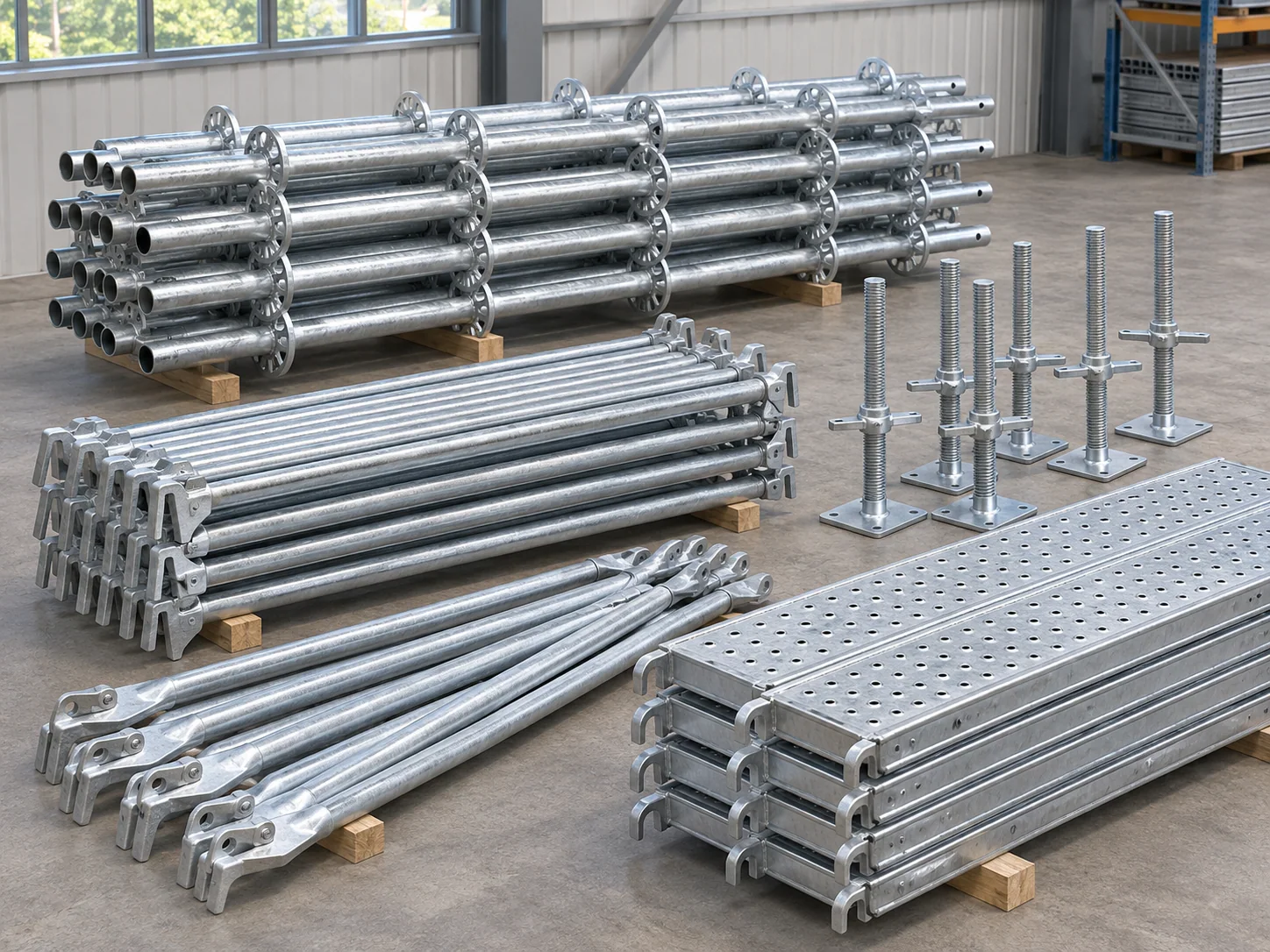
We supply ringlock standards, horizontal ledgers, diagonal braces, base parts and steel platforms as individual items or scheduled kits. The rosette and member heads belong to one identified connection family. A bay takeoff keeps the horizontal layout, lift arrangement and access pieces together, with a separate count for every part.
Main connection
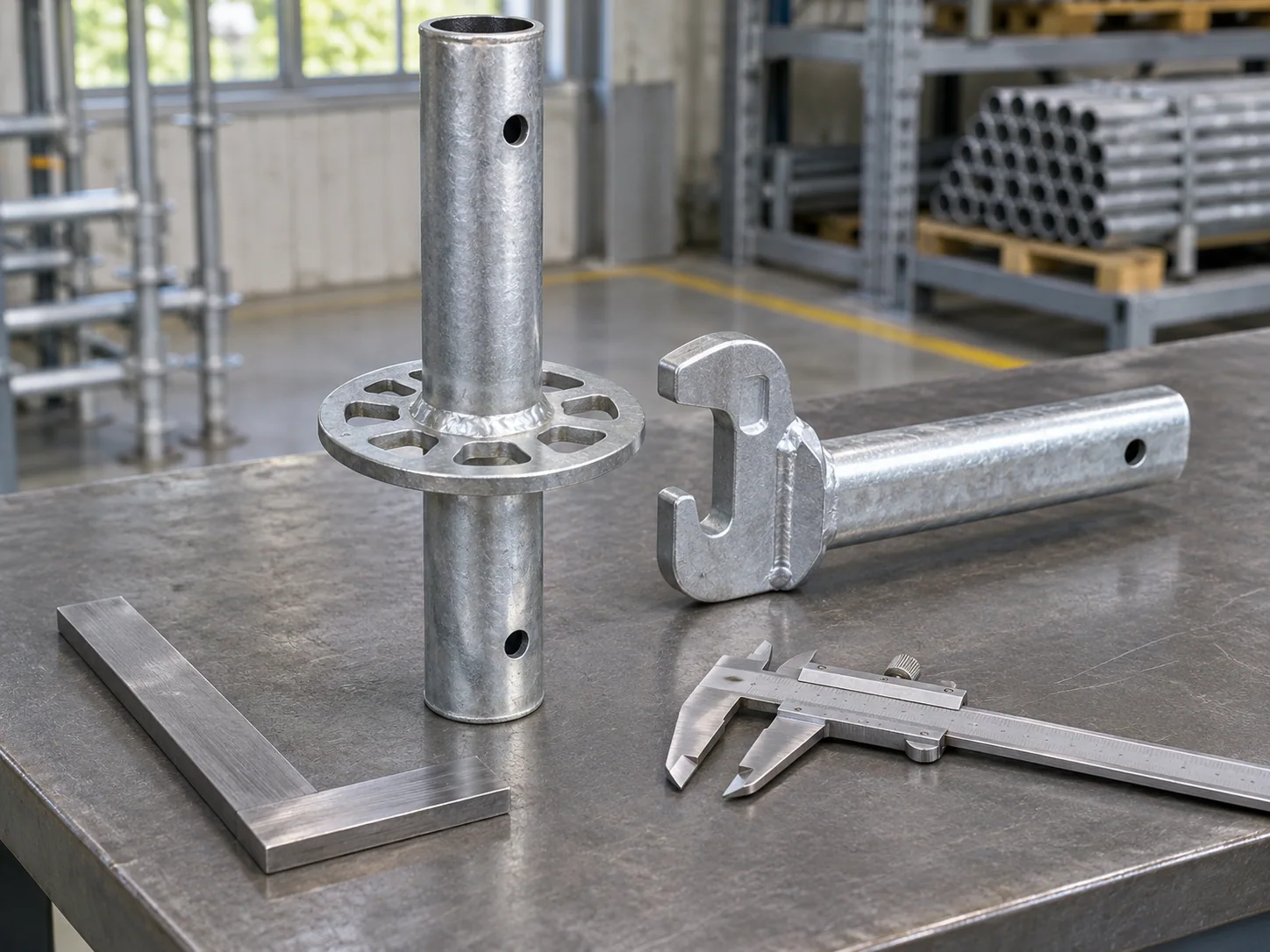
Rosette, head and captive wedge
Standard tube OD
48.3 mm
Nominal standard lengths
0.5–3.0 m
Order format
Component BOM or defined kits

Parts that make up a ringlock package

Vertical membersStandards with the selected rosette positions and spigot detail
Horizontal membersLedgers and transoms to the bay layout and head drawing
Diagonal bracesMember ends and rise/run pairing for the selected bays
Base partsBase jacks and starting components listed by their mating detail
Working levelsDecks, toe boards and edge-protection parts from the takeoff
AccessStair, landing and opening components listed explicitly

Published standard dimensions for kit selection

The vertical members below belong to our published ringlock range. Ledger and diagonal drawings then establish the matching horizontal and bracing members for the selected layout.

Nominal standard length (m)Standard tube OD (mm)Published wall range (mm)
0.548.33.0–4.0
1.048.33.0–4.0
1.548.33.0–4.0
2.048.33.0–4.0
2.548.33.0–4.0
3.048.33.0–4.0

No matching specification. Clear the search to see every row.

Scroll sideways to see every column.

First-party ringlock-standard catalog selections. The part drawing identifies the actual wall, material, rosette and spigot for each item. The scaffold design and its stated configuration establish the assembled system’s permitted load.

One connection family throughout the kit

Rosette and head seating

A ledger head bears against the standard and locks through the rosette with its wedge. Rosette shape, head contact and wedge engagement are checked together as the selected joint family.

Standards, ledgers and diagonals use their own grades

The material schedule identifies tubes, heads, pins and base-jack spindles separately. Each component keeps the grade and connection detail required for its role in the supplied package.

System evidence follows the assembled configuration

The scaffold design and required system tests identify the actual arrangement, component family and duty requirements. Component-fit checks and system evidence support acceptance of that specified configuration.

Bay, lift and platform coordination

The diagonal matches both directions

A diagonal pairs a horizontal bay with a vertical rise. The selected ledger length and lift arrangement determine the matching diagonal geometry and end detail.

Deck support belongs in the takeoff

Deck hooks, transoms and end retention are matched to each working level. Openings and changes in bay width have their own platform pieces and quantities on the takeoff.

Access consumes real components

Stair flights, landings, opening guards and associated supports have separate counts. The access takeoff is itemized alongside standards, ledgers and working-level parts.

Coating and moving interfaces

Painted or galvanized supply follows the component specification. Finished wedges, sockets and deck hooks are checked for seating, movement and retention after coating.

Wholesale kits and fleet extensions

Repeated bay packages

The component BOM groups repeated bays and retains the end-bay, corner and opening details. Standard-length bundles stay linked to the ledger and diagonal counts for each layout.

Fleet additions with retained components

The retained rosette, head and spigot details identify replenishment parts. OSHA requirements for mixed-manufacturer use include force-free fit and maintained structural integrity; these conditions accompany the selected component family.

Ringlock member and joint acceptance

Ringlock connection checking

Connection fit on finished parts

Checks use the matched rosette, ledger head, diagonal end and wedge. Seating, wedge travel and retention follow their component detail, including any required test or sampling plan.

Lengths and welded feature positions

Member measurements distinguish axis spacing from finished part length. Rosette and spigot positions are checked from the standard datums; head orientation stays with each horizontal or diagonal member.

Component and lot identity

The record set links material, weld and finish checks to the supplied parts. Deck and base components retain their own identities and quantities alongside the member schedule.

Ringlock package records

Component drawingsJoint-fit checksMember dimensionsWeld and finish recordsComplete BOM and kit counts

Component prices and receiving groups

Prices for the defined component quantities

Our quotation itemizes members, platforms, access parts and loose fittings. Any price by kit refers to its exact contents and configuration; extra bays or working levels change those quantities.

Rosettes and heads protected in bundles

Standards, ledgers and diagonals travel in separate groups with support under their steel sections. Protruding heads and rosettes are protected from straps and adjacent bundles.

Small parts linked to the member shipment

Base jacks, loose pins and other small fittings are counted in labeled packing groups. The receiving list reconciles kit items and spare pieces separately.

Ringlock Scaffolding purchasing questions

Which details identify a replacement ringlock ledger?

The replacement reference combines bay spacing, finished member length, head geometry, end offsets and the accepted connection family. Those details identify the horizontal member ordered for the existing layout.

How are rosette connection positions selected?

The component design assigns each head and wedge to its intended rosette opening and angular position. The selected family’s seating and engagement details govern that joint arrangement.

What changes when working platforms are added?

Added levels revise the deck, transom, edge-protection and access takeoff and can change the scaffold design loads. The updated configuration establishes the component quantities and acceptance basis.

Does a 48.3 mm standard fit every ringlock ledger?

Compatibility uses the rosette geometry, head bearing, wedge engagement and assembled system’s structural integrity together with the 48.3 mm tube diameter. The accepted component family retains all of those mating details.

Can we buy a mixed order of kit parts and loose spares?

Yes. Kit contents and loose spares appear as separate quantities. That separation keeps a replacement wedge or extra base jack from being counted as a missing item in a complete kit.

Who determines the scaffold ties and base support?

The qualified person responsible for scaffold design establishes the arrangement, ties and support. Our supplied component schedule is matched to that accepted design and its takeoff.

Quote the ringlock component schedule

Send the bay and lift layout or component BOM with the connection-family detail, platform and access requirements, finish and destination. We quote the listed members, small parts and kit packing with separate spare quantities.

Metdax
Get a quote
Search Metdax

Language

Get a factory quote

Send your specifications or attach a material list.

Ringlock Scaffolding

Your information is used to respond to this inquiry. Privacy policy

sales@metdax.com

+86 177 7599 6440