Home » Products » Construction & Infrastructure Products » Guardrail End Sections

Guardrail End-Section Manufacturer

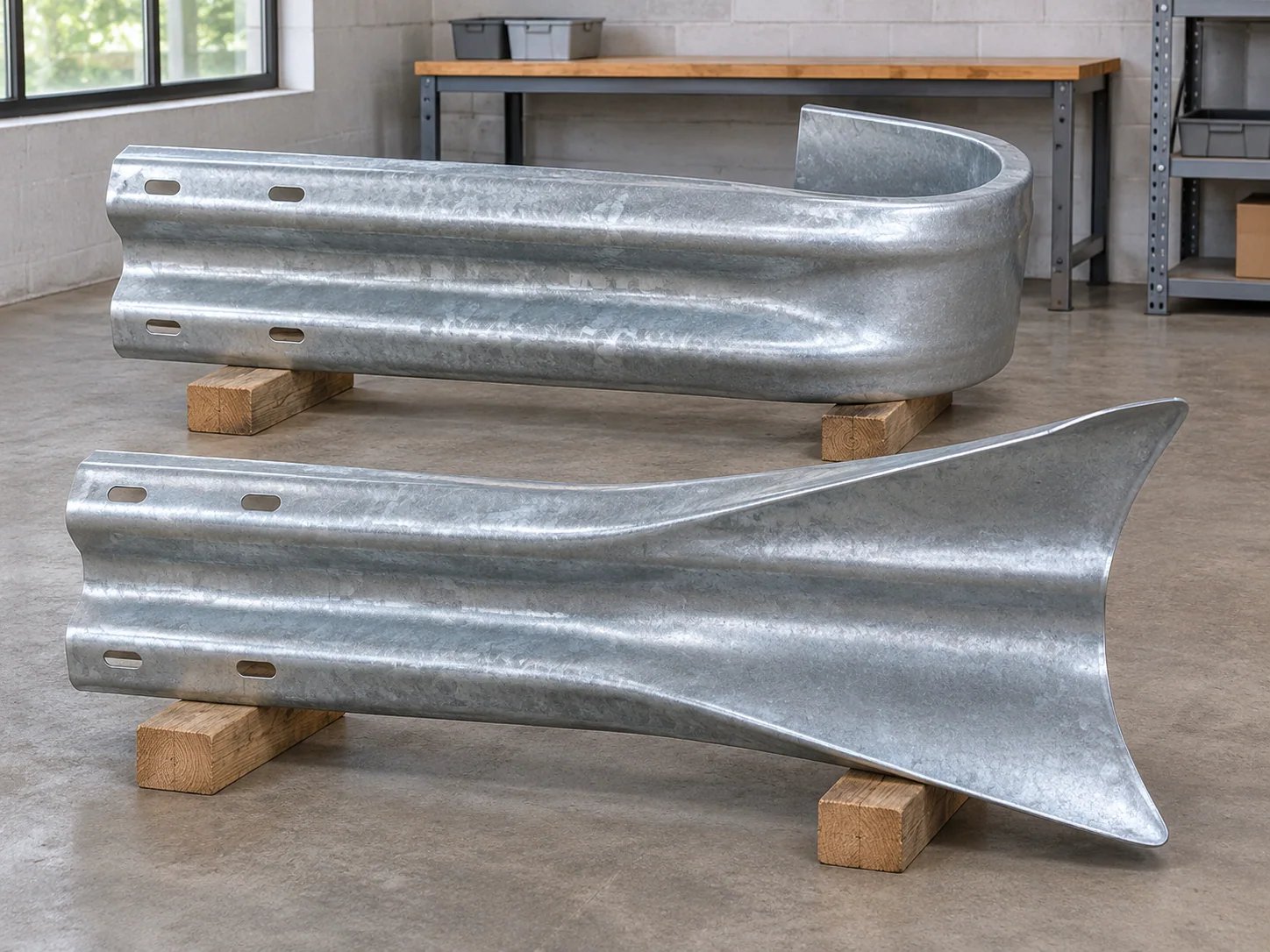
Rounded and flared steel pieces matched to the selected W-beam rail end

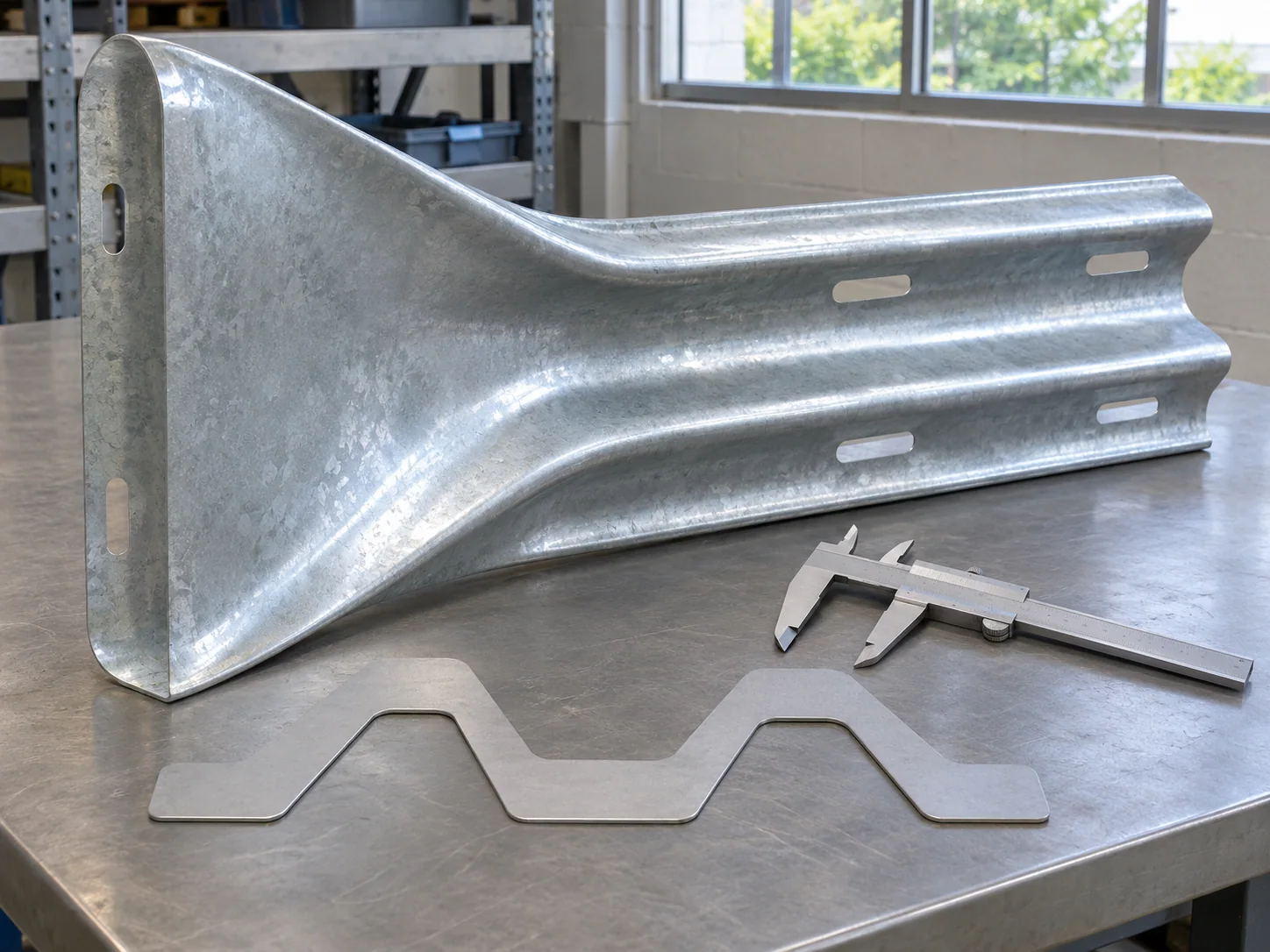
Our guardrail catalog includes rounded and flared formed-steel end sections. Each piece retains the corrugated mating end, connection slots and finished end shape from its selected detail. We supply these rail-end components by part reference and quantity, with the matching hardware identified on the offer.
Form choices
Rounded or flared
Mating profile
Selected W-beam detail
Supply format
Individual formed end pieces
Finish
Galvanized component route

Formed rail ends and their mating connection

Rounded formCurved return end with its specified radius and envelope
Flared formOpen flared end profile with its specified projection and rise
Mating endW-beam corrugation, overlap and splice-slot pattern
OrientationViewing direction, rail face and end-hand reference
Material and finishSpecified rail steel, thickness and galvanized/coated detail
SupplyEnd-section pieces and separately counted connection hardware

Rounded and flared end-section drawing references

Our catalog drawings show the following reference envelopes. Approximate inch dimensions remain approximate after conversion; the selected component drawing controls the supplied geometry.

Form and parameterCatalog inch referenceConverted reference (mm)
Rounded: overall projectionApprox. 24 in.Approx. 609.6
Rounded: transverse width16-1/4 in.412.75
Rounded: return radius6-5/16 in.160.34
Flared: overall projectionApprox. 27-1/2 in.Approx. 698.5
Flared: rise9 in.228.6

No matching specification. Clear the search to see every row.

Scroll sideways to see every column.

Factory guardrail catalog end-section drawings. Conversions use 25.4 mm/in.; radius conversion is rounded to 0.01 mm for reference. The selected drawing states steel thickness, finished tolerances, corrugation and connection-slot dimensions.

Rounded returns and flared end profiles

Rounded steel return

The rounded form carries a smooth curved return beyond the corrugated mating end. Overall projection, return radius and transverse envelope define the physical piece selected from that drawing.

Flared end section

The flared form opens the rail-end profile away from its straight mating tail. Projection, rise and edge contour identify the finished flare and its required surrounding clearance.

Component identity within the accepted barrier

The project’s accepted barrier detail identifies the required end component and its connection. Our offer retains that part reference and specified material/finish records with the supplied steel piece.

AASHTO M 180 covers end sections

AASHTO M 180 defines the strength, geometrical and coating requirements for non-proprietary W-beam and thrie-beam guardrail, transitions and end sections, and it treats end and buffer sections separately from standard beam elements. The project names the adopted edition and class.

Corrugation fit, splice slots and end orientation

The corrugated tail seats over its mate

The mating contour follows the selected W-beam detail. Its overlap and bearing faces establish how the formed end piece meets the adjacent rail panel.

Slots located from the rail datum

Splice slots retain their size, spacing and edge relationships to the corrugated profile. The matching fastener detail identifies head seating and the included nut/washer arrangement.

A stated view fixes the end orientation

The component drawing records the rail face and viewing direction. Any handed end or asymmetric connection retains its own mark, preserving the intended orientation through forming and packing.

End-section lots for component packages and repairs

Scheduled rail-end components

The barrier schedule identifies each end position and selected part reference. Rounded and flared pieces retain separate counts alongside straight panels, posts and other equipment.

Replacement pieces matched to retained rails

The retained rail profile and accepted repair detail establish the required tail, slots and end form. Those references identify the new steel component under the replacement order.

End profile and corrugated-tail checks

End-section profile and slot checks

Formed envelope

The chosen projection, radius or flared rise is checked from its drawing datums. Edge and end contours remain part of the finished component geometry.

Mating profile and slot pattern

Checks relate the corrugated tail and connection slots to the same rail reference. The required fit and fastening detail establish acceptance at that interface.

Finish and part identification

The selected steel thickness, finish and required records stay with the end-section mark. Different forms and hands retain separate inspection and packing identities.

Rail-end component records

End-section drawing and markProfile and envelope dimensionsMating contour and slot patternRequired material/finish recordsPiece and hardware counts

Formed-end pricing and protected curved profiles

Pieces and connection hardware itemized

Our offer lists rounded or flared end pieces by selected drawing, finish and quantity. Matching bolts, nuts and any specified washers have explicit separate quantities.

Curved noses and mating tails supported

Separators support the formed pieces without concentrating restraint contact on the curved nose or slot edges. Different profiles remain distinguishable within the packed groups.

Groups linked to their end positions

Packing references connect end-piece groups to their component schedule and receiving area. The agreed shipment terms and actual package dimensions accompany those counts.

Guardrail end-section purchasing questions

What information identifies a replacement end section?

The retained rail profile, existing end form, splice pattern and accepted repair detail identify the component. Add the part mark or drawing revision and required finish so the quote follows that exact rail-end configuration.

Does a rounded end always use the same orientation?

The selected component and barrier drawings establish the viewing direction and intended rail face. A handed or asymmetric connection retains its own orientation mark on the order.

How are the approximate catalog lengths used?

They provide an initial component envelope for comparing the forms. The quoted drawing supplies the finished projection, measurement datums and tolerances used for production and receiving.

Is overall end-piece projection the same as installed rail coverage?

Installed coverage comes from the barrier layout, including the splice overlap and the returned or flared portion. The end piece’s overall envelope and rail-connection datum remain separate dimensions; the layout establishes its start and end positions along the run.

Can the same end piece be used on a thrie-beam rail?

The required end piece follows the thrie-beam corrugation and its accepted connection detail. The W-beam references on this page identify a different mating profile; a thrie-beam request retains its own component drawing.

Which reference identifies a formed end within a terminal assembly schedule?

The assembly bill of materials provides the individual component part number and revision. Carry that reference and component drawing onto the formed-steel-piece order with its quantity. A larger terminal assembly retains its own scheduled product identity and accepted equipment scope.

Related guides and order tools

Get a guardrail end-section offer

Send the rounded or flared part reference, receiving-rail profile and connection detail with steel/finish requirements, piece counts and destination. We quote the formed end sections and identified connection hardware.

Metdax
Get a quote
Search Metdax

Language

Get a factory quote

Send your specifications or attach a material list.

Guardrail End Sections

Your information is used to respond to this inquiry. Privacy policy

sales@metdax.com

+86 177 7599 6440