Home » Products » Steel Sections, Coils & Plates » ASTM A36 Steel Plate

ASTM A36 Steel Plate Supplier

Structural carbon-steel plate for base plates, gussets and fabricated parts

We supply ASTM A36 steel plate for structural fabrication and distributor material orders. Each line identifies thickness, finished dimensions and quantity. Cut blanks retain their parent-plate and heat reference, with edge preparation and required examination itemized in the supplied work.

Material
ASTM A36/A36M
Product
Structural carbon-steel plate
Order formats
Parent plates or cut blanks
Acceptance
Material and finished dimensions

A36 plate supply specification

Material requirementASTM A36/A36M with the required edition and additional requirements
DimensionsThickness × width × length, or released part drawing
Product routeMill plate or qualified coil-derived plate identified where relevant
Surface and edgesMill condition or specified cut-edge preparation
TestingMaterial test record and ordered supplementary examination
TraceabilityHeat/plate cross-reference retained through the cut schedule

A36 plate strength reference

These published material values help check the grade description before selecting plate dimensions.

PropertyReference valueReference scope
Minimum yield strength36 ksiSSAB A36 plate reference, 0.100–6.00 in. thickness
Tensile strength58–80 ksiSame published A36 reference scope
Minimum elongation in 2 in.21%Published base requirement; width and A6 adjustments apply
Minimum elongation in 8 in.18%Published base requirement; width and A6 adjustments apply

No matching specification. Clear the search to see every row.

Scroll sideways to see every column.

SSAB publishes these A36 plate values for 0.100–6.00 in. thickness, using transverse tensile tests and the inch-pound basis. For plate wider than 24 in., the listed elongation minima decrease by two percentage points; ASTM A6 permits additional adjustments. This producer reference is separate from our quoted dimensions and supplied heat results.

A36 material identity and plate acceptance

A36 and A572 Grade 50

A36 has a 36 ksi minimum-yield reference in the thickness scope above. A572 Grade 50 specifies a 50 ksi minimum within its applicable product and thickness limits. The material line retains the grade required by the drawing and its corresponding acceptance requirements.

Read elongation with its gauge length

The 21% value uses a 2 in. gauge length; the 18% value uses an 8 in. gauge length. The material report identifies that basis for comparison with the purchase requirement. The forming drawing establishes the permissible bend detail for the finished part.

Toughness and special examination

An order requiring impact or ultrasonic examination names the test method, temperature where relevant and acceptance criteria. We retain that supplementary examination scope on the plate line before supply is arranged.

A36 plate blanks and weld-edge preparation

Net dimensions and machining allowance

The drawing identifies the delivered blank and final machined dimensions. Any extra stock for machining is stated as an allowance alongside the finished dimensions.

Weld edges and holes

The connection drawing locates bevels, holes and profiles. Material records establish the A36 steel identity, while dimensional inspection records the prepared features.

Parent-plate identification

A cut plan links each blank or controlled group to its source plate. This preserves the material reference when several sizes come from one parent plate.

A36 plate for structural fabrication packages

Base plates and connection parts

Base plates, gussets and stiffeners are ordered by their actual outlines and thicknesses. Anchors, welds and finished connection acceptance are separate from supply of the plate blank.

Fabricated frames and equipment supports

A36 blanks can be grouped by part mark for an assembly schedule. The material list keeps their grade and thickness separate from other structural or pressure-purpose plate items.

A36 plate checks from material record to blank

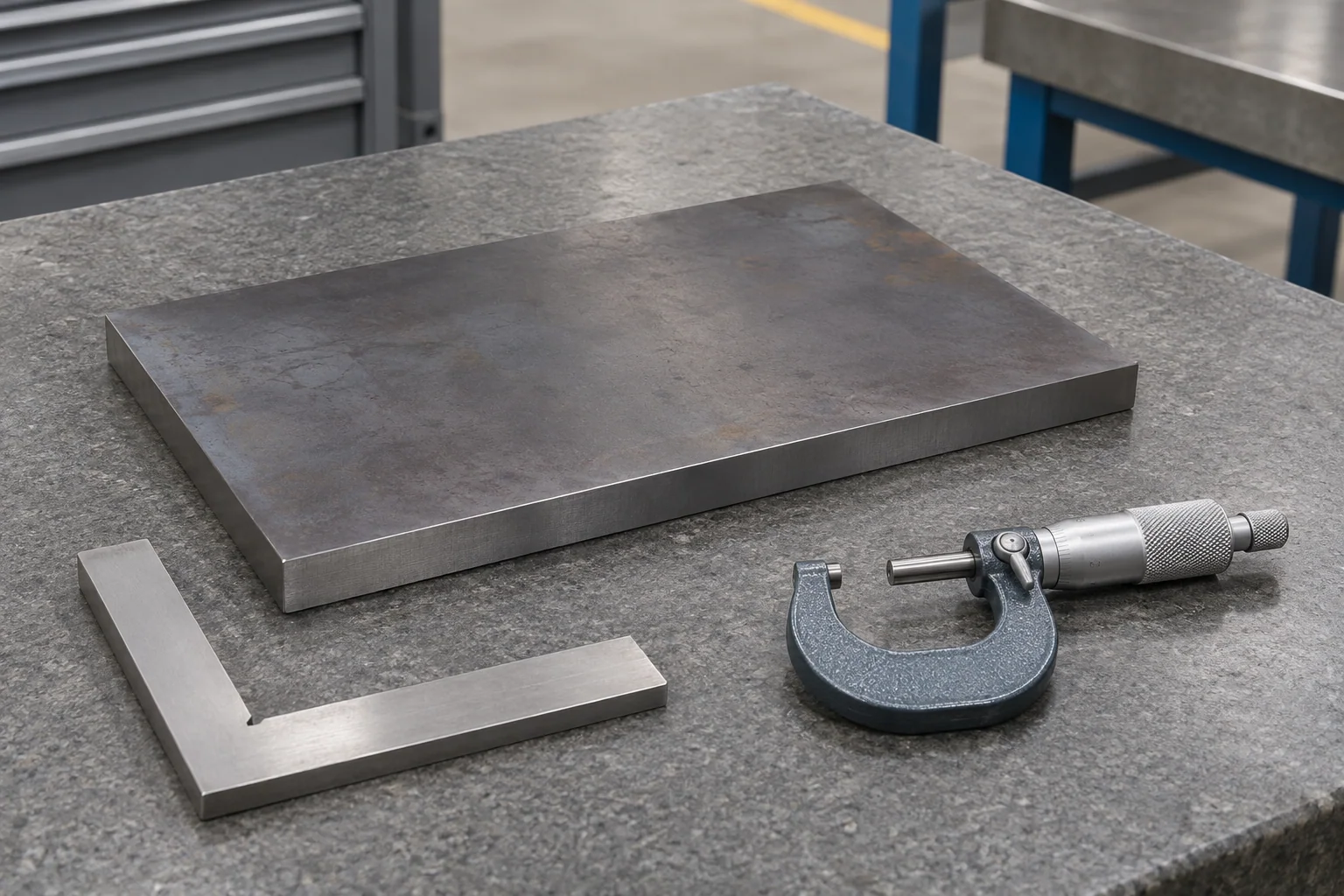
Carbon-steel plate blank beside a micrometer and square on a bench

Grade and heat identity

Material documents identify the supplied plate or controlled cut group and its actual heat. The parent-to-blank cross-reference retains that identity through preparation.

Thickness and final outline

Measured dimensions use the ordered thickness basis and applicable tolerances. Finished blank width, length and squareness remain distinct from the original parent-plate dimensions.

Flatness at the agreed stage

Cutting can release residual stresses in a parent plate. The order identifies the required flatness and acceptance stage, such as after cutting or machining, so inspection checks the condition needed by the receiving workshop.

A36 plate release records

Material specification and heatParent-to-blank cross-referenceOrdered dimensional checksPart and packing quantities
A36 plate quantities and export packing

Keep thickness groups identifiable

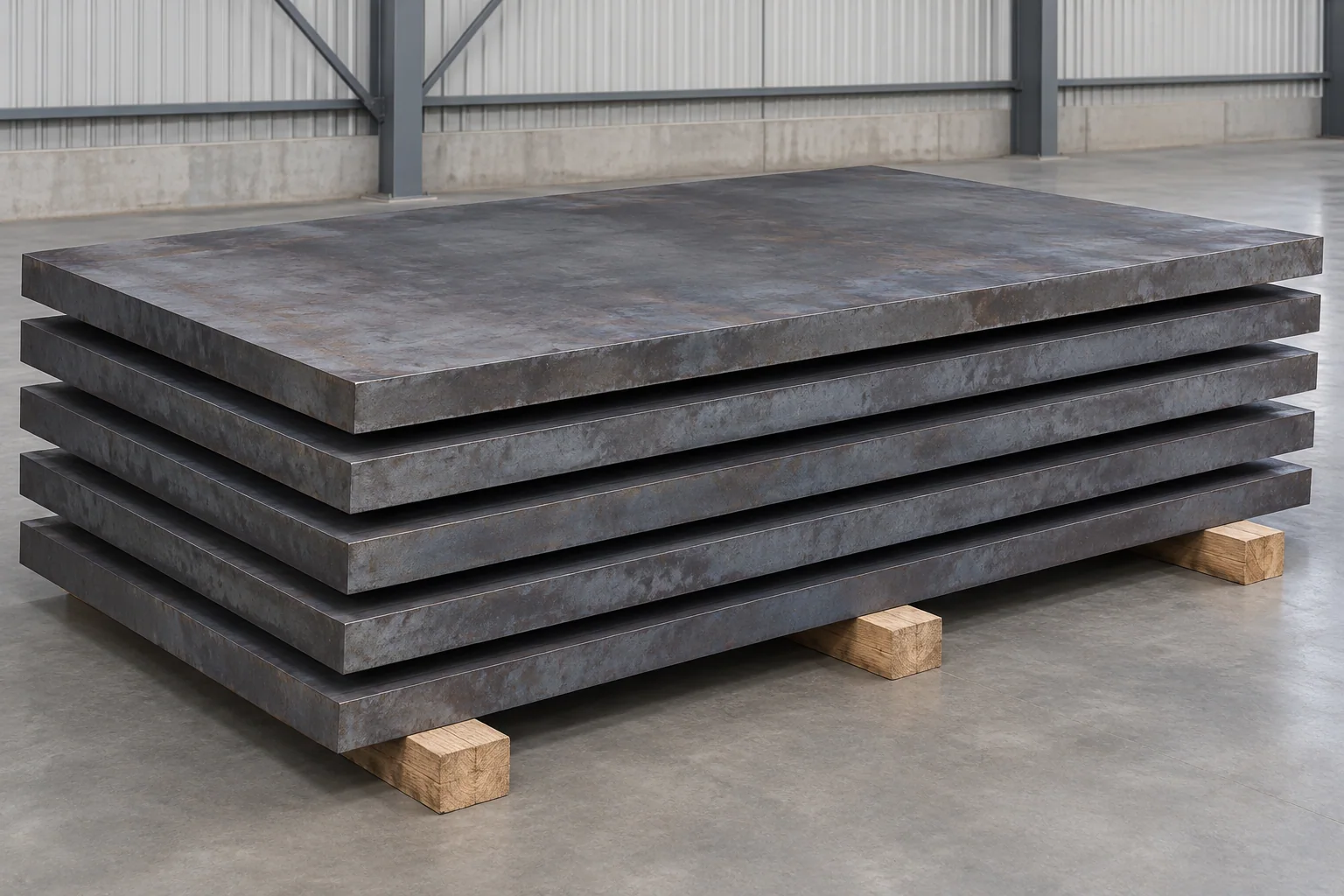
Plates and blanks are grouped by grade, thickness and part reference. Dunnage preserves lifting access and supports the package; small parts have secure identified packing.

Theoretical mass and actual supply

Nominal dimensions can support a theoretical mass calculation, while the commercial basis identifies any purchased parent material, cutting yield or weighed quantity. Those are different totals.

Price material and preparation clearly

Our offer separates A36 material, cut-part quantities, edge work and any specified tests. Packing and destination terms are included with the agreed supply scope.

ASTM A36 Steel Plate purchasing questions

How is a Charpy impact requirement specified for A36 plate?

The plate order states the test temperature, specimen and acceptance requirements under the applicable purchase specification. Those supplementary requirements accompany the actual material and test records.

Which records cover material identity and welding qualification?

The material certificate identifies the steel and its recorded test results. Welding uses the procedure and qualifications required for the actual fabrication and service; those records form their own part of the fabrication package.

How is A36 distinguished from A516 Grade 70 in a plate schedule?

A36 is ordered to the structural-material specification. A516 Grade 70 follows its pressure-vessel plate specification. The material schedule retains the required designation and its product, testing and certification scope.

Why can a wide A36 plate have a lower specified elongation than the table shows?

The published SSAB reference reduces the minimum by two percentage points for plate wider than 24 in. This changes the base values from 21% to 19% in 2 in., and from 18% to 16% in 8 in., before any other applicable ASTM A6 adjustment. Acceptance uses the plate width, gauge length and ordered specification together.

How is A572 Grade 50 compliance established when an A36 heat tests above 50 ksi?

Grade compliance covers the required chemistry, product, mechanical tests and certification together. A purchase calling for A572 Grade 50 needs material identified and accepted to that specification, with its full supporting records.

How are final machined dimensions included with a plate blank?

The quote identifies the machining work and its acceptance dimensions when supplied. A blank for later machining is delivered to its stated blank dimensions with the agreed stock allowance.

Quote your A36 plate and blank schedule

Send the ASTM A36 requirement, thickness, finished dimensions and quantities. Attach drawings for profiles, holes or bevels, and identify traceability, extra tests and destination for an itemized supply quote.

Metdax
Get a quote
Search Metdax

Language

Get a factory quote

Send your specifications or attach a material list.

ASTM A36 Steel Plate

Your information is used to respond to this inquiry. Privacy policy

sales@metdax.com

+86 177 7599 6440