Home » Products » Steel Pipes & Tubes » 316L Stainless Steel Pipe

316L Stainless Steel Pipe Manufacturer

Molybdenum-bearing A312 pipe for specified industrial process duties

Our TP316L pipe supply serves process fabricators and distributors buying against a defined material schedule. Seamless or welded pipe, nominal wall and finish are selected together. Grade and heat identity remain linked to the material records through full lengths and prepared cut pieces.

Grade
TP316L / S31603
Alloy family
Cr-Ni-Mo stainless
Pipe specification
ASTM A312
Preparation
Plain / beveled / cut

TP316L industrial pipe options

ProductRound stainless steel pipe for industrial piping
GradeTP316L; dual 316/316L where stated on the complying material certificate
A312 chemistry referenceCarbon 0.035% max.; molybdenum 2.0–3.0%, by mass
Manufacturing routeSeamless or welded, stated separately
DimensionsNominal pipe size and wall series, or exact OD × wall
FinishMill/pickled finish; mechanical finish as an additional requirement
DocumentsHeat-linked material records and specified inspection scope

316L nominal pipe dimensions

Match the NPS and selected wall series to the pipe schedule, retaining both dimensions alongside the grade.

NPS (in.)Outside diameter (mm)10S nominal wall (mm)40S nominal wall (mm)
1/221.32.112.77
133.42.773.38
260.32.773.91
388.93.055.49
4114.33.056.02
6168.33.407.11
8219.13.768.18

No matching specification. Clear the search to see every row.

Scroll sideways to see every column.

Selected ASME B36.19 nominal stainless pipe dimensions for section selection. Our quotation states the exact TP316L route, size, wall and delivered length. Allowable pressure follows the governing piping design and service conditions.

316L material selection and acceptance

Process fluid and cleaning cycle

The normal process fluid is only part of the exposure. Start-up chemicals, cleaning solutions, temperature excursions and stagnant pockets can change the corrosion conditions around a 316L pipe.

Low carbon and welding

The low-carbon grade limits sensitization risk during welding. A qualified welding procedure controls the fabrication cycle, followed by the required removal of heat tint and embedded contamination.

Material grade and product standard

A312 pipe and A213 heat-exchanger tube each follow their own product and dimensional requirements. We quote TP316L under the specified product standard, with the pipe or tube form and manufacturing route identified.

Surface preparation and weld connections

Weld-end geometry

Bevel and land dimensions follow the weld detail. The selected size, adjoining walls and bore alignment are checked together so the prepared ends suit the spool joint.

Pickled surfaces

Chemical pickling removes oxide scale and heat tint. Required internal roughness or a polished appearance has its own finish description and acceptance basis on the order.

Passivation as a separate operation

Passivation treats the stainless surface after suitable cleaning. Orders requiring it state the process and acceptance requirements; mechanical polishing has its own surface-texture specification.

Protection after cutting

Cut pieces are cleaned and identified before packing. Keeping carbon-steel dust, contaminated abrasives and unsuitable contact materials away from finished pipe helps preserve the surface prepared for fabrication.

316L supply for process equipment and plant pipework

Process skids and connection spools

Fabricators can source pipe by the approved 316L material list, with wall transitions and weld ends identified alongside the cut schedule. Each delivered piece retains its required grade, dimensions and preparation.

Planned plant replacement

Replacement sections retain the original grade, size and wall, with the condition of adjoining pipework recorded. Changed service conditions receive a material assessment for the new exposure before the replacement grade is accepted.

Alloy identity and finished-pipe inspection

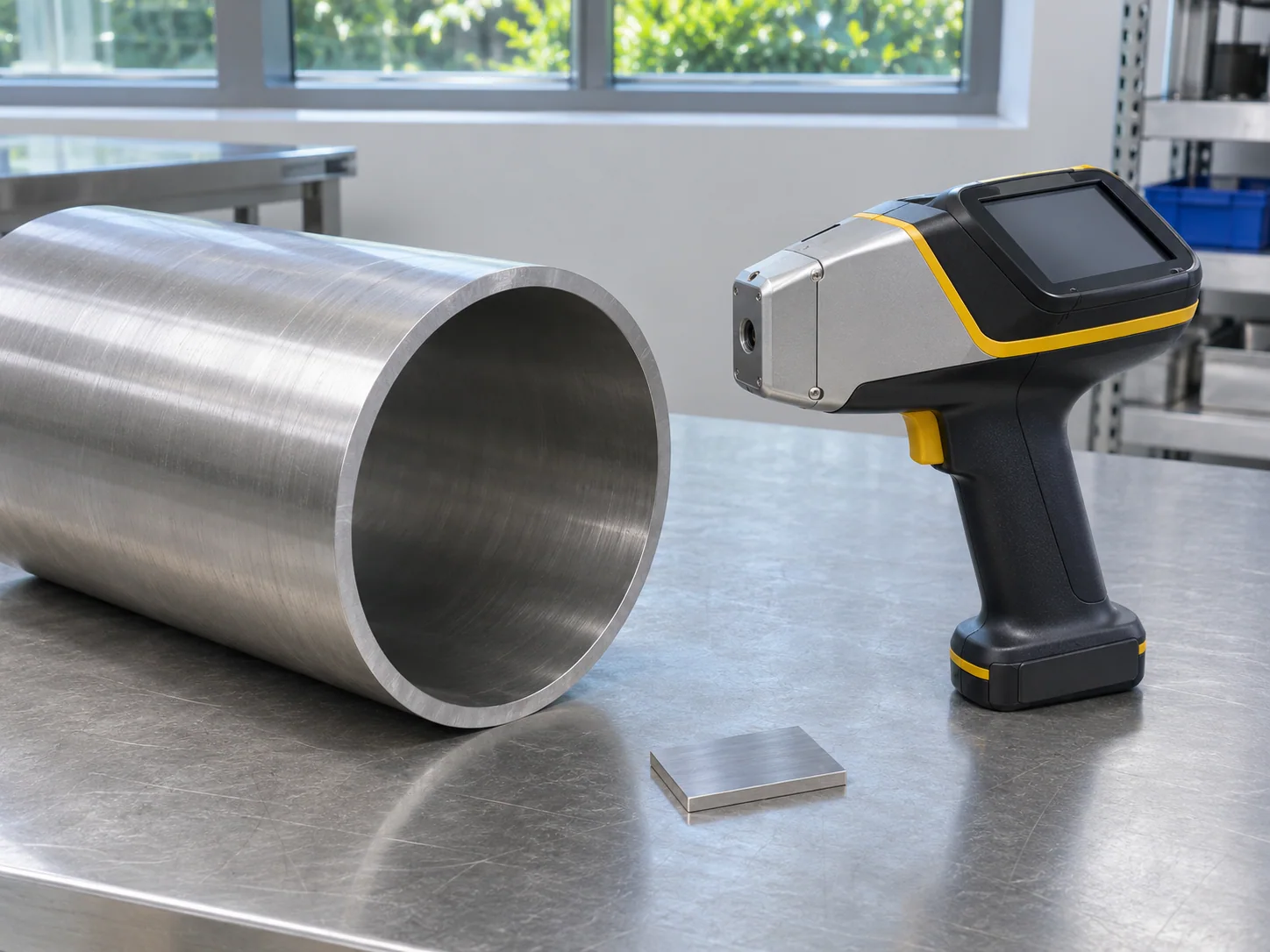
Stainless pipe and an alloy analyzer arranged on an inspection bench

Molybdenum identification

PMI can distinguish the molybdenum-bearing alloy family from 304-series material. Low-carbon verification additionally needs the material certificate or an appropriate analytical method.

Measured pipe dimensions

Outside diameter, wall and finished length are checked against the ordered combination. Any bore transition at a weld end is assessed using the actual fitting or connection drawing.

Traceability through cuts

The source heat number remains connected to the cut list and material records. Bundle identification adds the receiving and logistics reference while preserving that original material identity.

Clean bore and surface

End openings, contamination and residual processing marks are part of the release check. Additional surface tests or roughness measurements are separate acceptance items when specified.

316L material and release records

Material certificateRequired PMI or analysis recordsDimensional and end-preparation checksTraceable packing list

Packing that preserves grade and surface identity

Grade-separated bundles

316L material is kept identifiable beside other stainless grades. Clean spacers, protected bores and non-damaging restraints support receiving inspection and later workshop handling.

Piece-by-piece fabrication supply

Finished length, end preparation and piece count follow the cut list. Identification remains usable after the bundle is opened, particularly when the shipment contains several heats or dimensions.

Quoted scope by line item

Our offer states pipe route, wall, length and surface condition, followed by any cutting, treatment and inspection additions. Mixed-grade purchases retain separate material lines and records.

316L Stainless Steel Pipe purchasing questions

What is required to substitute 316L for 304L?

An approved substitution compares the material specification and actual service requirements. The review includes alloy chemistry, corrosion conditions and the cost of the proposed 316L line, with the accepted grade recorded on the order.

What exposure data is needed for 316L seawater duty?

The assessment uses temperature, chloride level, oxygen, deposits and crevice geometry for the actual seawater exposure. Those conditions establish the material selection and acceptance requirements for the proposed pipe.

Is dual 316/316L certification included on every pipe?

Dual 316/316L certification requires the supplied material to meet both grades and the certificate to identify them. We retain that actual certificate designation with the quoted pipe and delivered heat records.

Can 316L replace 316H in high-temperature pipework?

An approved grade change follows the piping material specification and high-temperature design requirements. A312 H grades have requirements for creep and stress-rupture duty; the review compares those requirements with the proposed low-carbon 316L material.

Are pickling and passivation the same finish?

Pickling removes oxide scale and heat tint. Passivation treats the surface after appropriate cleaning. The order names the requested treatment and its acceptance basis so the finishing scope is clear.

Can 316L pipe be supplied for a hygienic system?

A hygienic order identifies the required pipe or tube specification, connection dimensions, surface finish and acceptance criteria. We quote the requested 316L product against that complete dimensional and surface specification.

Quote your 316L pipe schedule

Attach the pipe schedule with TP316L, route, NPS and wall, lengths and quantity. Add the required surface treatment, weld-end detail, material records and destination. We return the defined supply and processing scope for each item.

Metdax
Get a quote
Search Metdax

Language

Get a factory quote

Send your specifications or attach a material list.

316L Stainless Steel Pipe

Your information is used to respond to this inquiry. Privacy policy

sales@metdax.com

+86 177 7599 6440