Home » Products » Construction & Infrastructure Products » Scaffolding Couplers

Scaffold Coupler Manufacturer

Double, swivel, sleeve and putlog fittings for tube-and-coupler scaffold orders

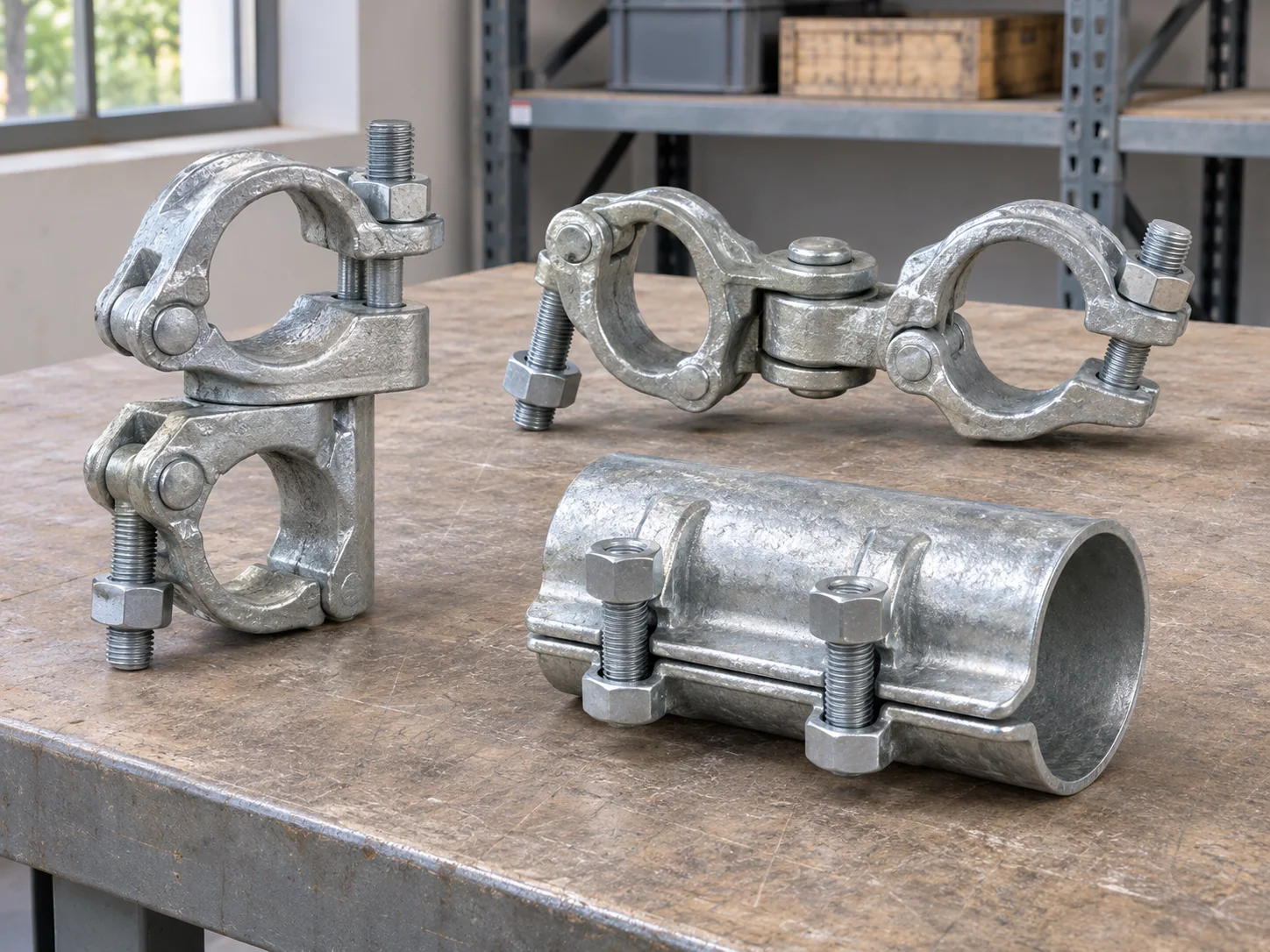
We supply pressed and drop-forged scaffold couplers in identified connection forms. Double couplers join crossing tubes at a right angle, swivel fittings serve inclined connections, and sleeves join tube ends in line. Our catalog keeps each form, tube-size reference and component mass separate for wholesale component orders.
Connection forms
Double / swivel / sleeve / putlog
Selected tube family
48.3 mm rows below
Body routes
Pressed or drop-forged
Order unit
Complete coupler pieces

Couplers identified by connection role and tube fit

Crossing connectionSelected double or swivel two-jaw form
In-line connectionExternal sleeve for the specified tube ends
Other listed formPutlog coupler for its specified attachment role
Tube identityBoth mating tube outside diameters and selected fitting family
FasteningMatched captive bolt/nut or other retained closure detail
AcceptanceSpecified material, finish, coupling class and required test records

48.3 mm scaffold-coupler catalog forms and masses

Selected catalog fittings for the stated tube family. Pressed and drop-forged variants retain their own product identities and listed mass ranges.

Catalog formBody routeTube reference (mm)Listed component mass (kg)
Double/right-anglePressed48.30.83–0.87
SwivelPressed48.31.02–1.05
External sleevePressed sleeve body48.31.00
PutlogPressed48.30.62
Double/right-angleDrop-forged48.30.97–1.05
SwivelDrop-forged48.31.12–1.25

No matching specification. Clear the search to see every row.

Scroll sideways to see every column.

Factory catalog component/tube/mass references for the selected 48.3 mm family. The actual fitting drawing and required acceptance specification identify saddle fit, fastening, material, finish and any stated class/test requirements.

Right-angle, swivel and in-line tube connections

Double couplers at crossing tubes

Two tube saddles are held at the specified right-angle relationship. The selected fitting keeps both tube seats, hinge and fastening arrangement together as one complete double coupler.

Swivel fittings for inclined members

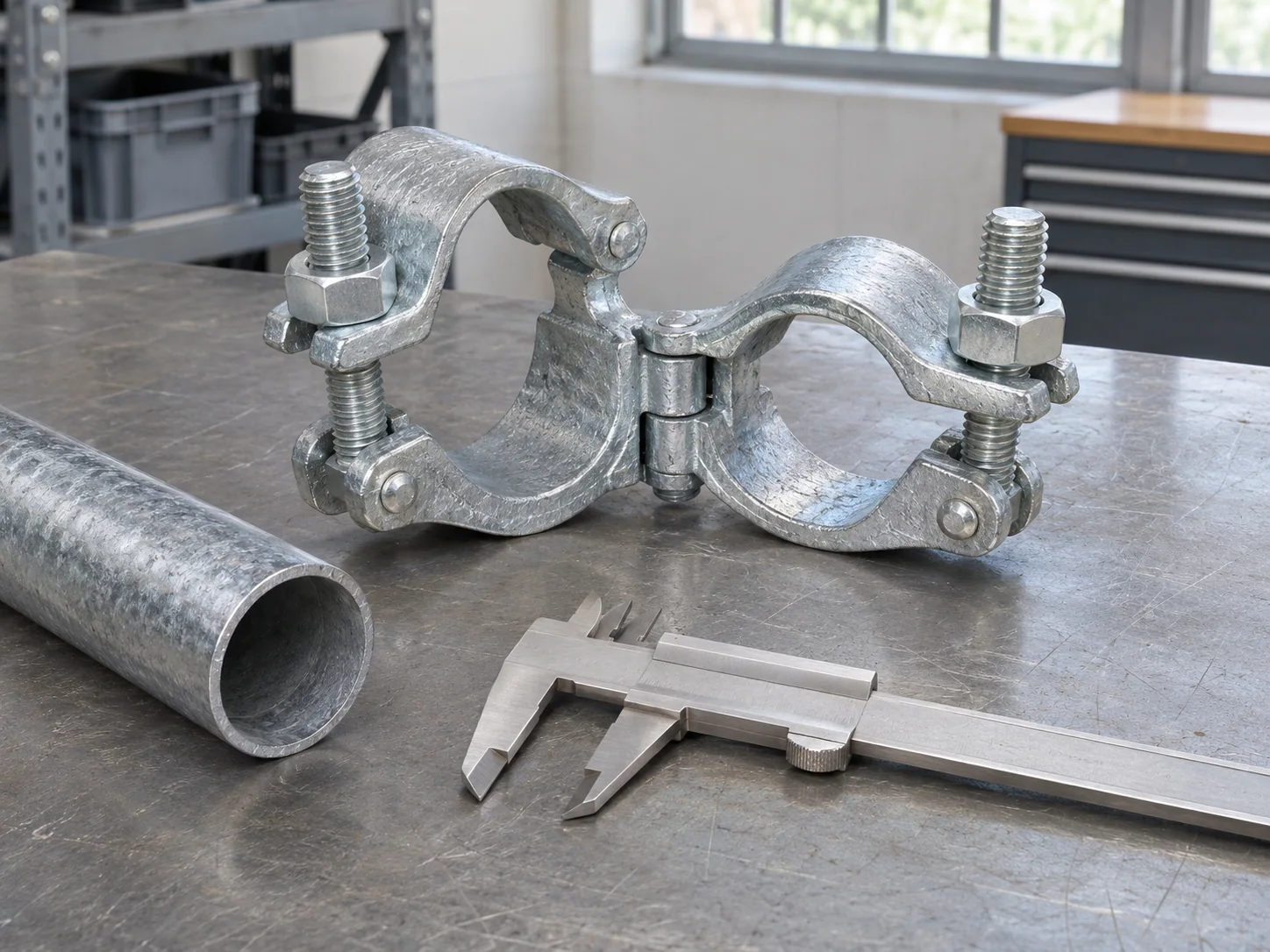
A central pivot allows the two saddles to meet an inclined connection. The required angle, bolt access and tube clearances remain part of the selected scaffold joint.

Sleeves and putlog forms

The external sleeve retains the specified two tube ends on one axis. A putlog fitting has its own attachment role and closure geometry; each form follows its identified connection requirement.

EN 74-1 for friction couplers

EN 74-1 specifies right-angle, swivel, sleeve and parallel couplers working by friction, for temporary works equipment such as scaffolds erected to EN 12811-1 and falsework to EN 12812. Less common coupler types sit in EN 74-2. The adopted edition is named on the order.

Saddle contact, hinges and complete fastening sets

Both tube identities retained

A two-jaw fitting is matched to both receiving tubes, including their finished surfaces. Tube diameter, saddle contact and the available closing range are checked together at the selected connection.

Pressed and drop-forged body details

The catalog distinguishes formed/pressed bodies from drop-forged fittings. Each selected body retains its own hinge, pivot or saddle geometry, with the specified material and acceptance records.

Bolt and nut access at the joint

The selected fastener detail defines closure and the required installation condition. Its tightening requirement follows that actual fitting specification, together with the tool access needed around the assembled tubes.

Coupler lots for tube-and-fitting schedules

A counted mix of connection forms

The connection takeoff separates double, swivel, sleeve and putlog pieces by their required role. We keep those counts and fitting references visible across the wholesale order.

Replacement fittings for retained tube families

The retained fitting reference and mating tubes identify the replacement saddle and closure arrangement. Different body forms or tube families remain distinct models on the quotation.

Coupler saddle and fastening checks

Coupler saddle and fastener checks

Fitting and tube geometry

Checks identify the saddle diameter and contact shape, hinge/pivot position and required sleeve dimensions for the selected fitting.

Finished closure and required tests

The actual bolt/nut set and finished closure are checked against the fitting specification. Required class or mechanical-test records retain their stated product and acceptance scope.

Complete assemblies and carton identity

The included closure parts and complete coupler count are reconciled by model. Different forms retain separate carton identification and receiving quantities.

Scaffold coupler records

Coupler form and drawingBoth tube and saddle referencesFastening and specified acceptanceMaterial/finish identityComplete-fitting count

Coupler-form prices and segregated cartons

A complete fitting in the quoted unit

Our quotation identifies the body route, connection form, tube reference and finish for each complete coupler. Included bolts and nuts remain defined within that unit; loose spares have separate counts.

Mixed forms kept distinguishable

Cartons group double, swivel, sleeve and putlog fittings separately. The agreed carton quantity or mass and protective packing follow the selected product lot.

Receiving by tube and fitting family

The packing list links each carton group to its actual fitting reference. Different tube families and fastening details retain separate item lines even where the shapes look similar.

Scaffolding coupler purchasing questions

Does 48.3 mm identify the coupler body’s outside diameter?

It identifies the catalog’s mating tube outside-diameter reference. The fitting body, saddle, hinge and fastening envelope have their own dimensions on the selected coupler drawing.

Can 48.3 and 48.6 mm catalog families share one part reference?

The selected fitting specification establishes its permitted tube fit and contact. Our catalog identifies 48.3 and 48.6 mm product families separately; the order retains the actual accepted fitting and tube combination.

Does a heavier coupler establish a higher load class?

Load or slip class follows the specified fitting design and its required test evidence. Component mass supports material and freight comparison alongside those separate acceptance requirements.

What is the 48.3 mm tube reference in inches?

A 48.3 mm outside diameter converts to 1.902 in., rounded to three decimals. Keep that actual outside-diameter value with the fitting reference. Nominal pipe size is recorded separately when it forms part of the connected tube specification.

What identifies a replacement fastening nut?

The retained bolt thread, nut form, material and finished-fit requirements identify the part. The selected fitting detail also preserves its bearing and tool-access arrangement.

Can a sample fitting be checked against our tubes?

Yes. A sample request identifies the fitting model and both tube references. The agreed checks can cover saddle seating, closure, hinge or pivot movement and finished surfaces before the production lot is released.

Related guides and order tools

Get a scaffold-coupler offer

Send the coupler forms and tube references with body route, finish, required acceptance specification, complete-fitting quantities and destination. We quote identified couplers and separately counted spare fasteners.

Metdax
Get a quote
Search Metdax

Language

Get a factory quote

Send your specifications or attach a material list.

Scaffolding Couplers

Your information is used to respond to this inquiry. Privacy policy

sales@metdax.com

+86 177 7599 6440