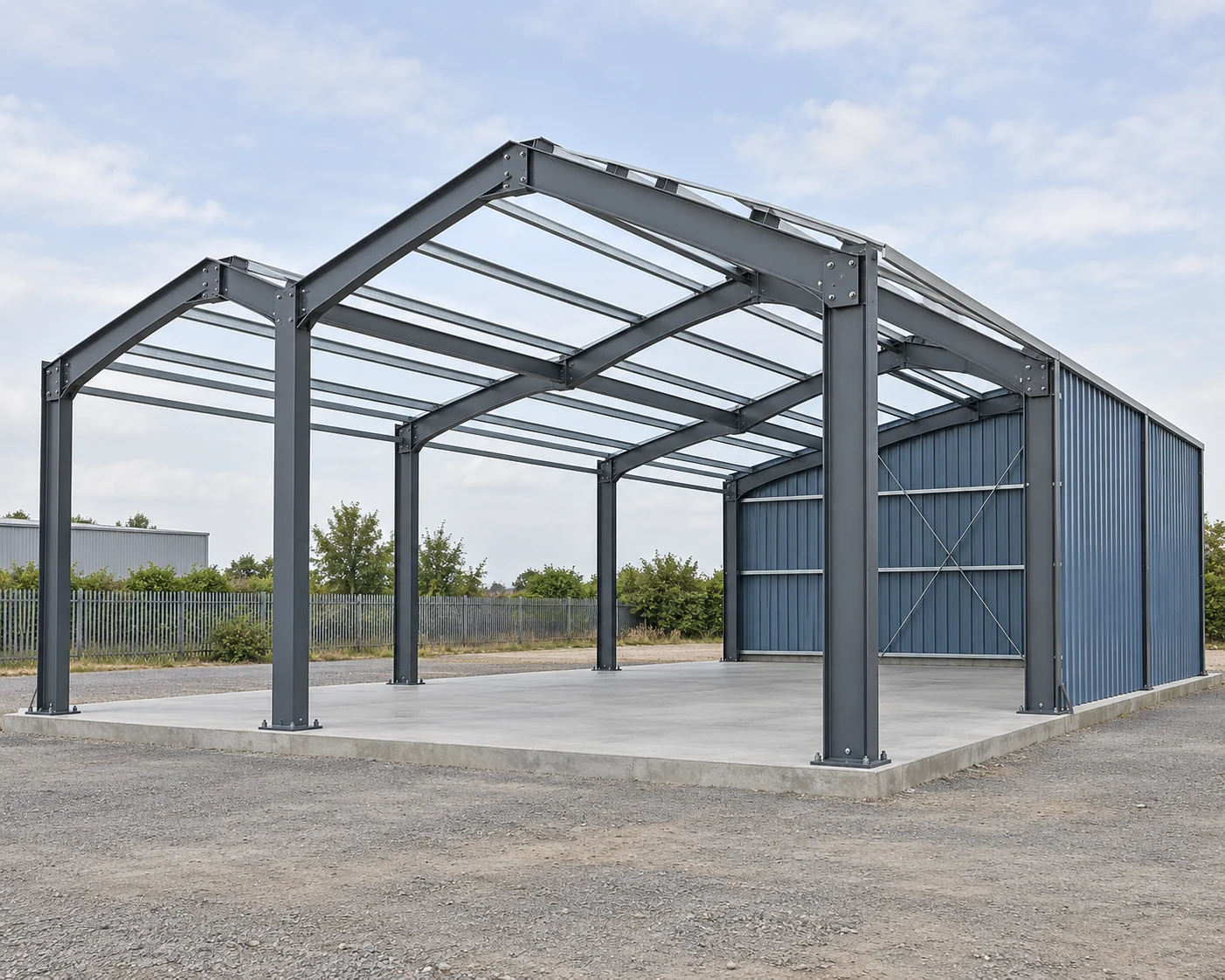
Separate Factory Work from Site Work
A Mixed Kit Is a Real Option
“Bolted building” and “welded building” are incomplete descriptions. A beam may have an end plate welded in the shop and then bolted to a column on site. Another detail may need a field weld after the shipped pieces are fitted together. Identify where each joint is completed before comparing labor or shipment sizes.

Keep the Building Brief the Same
For each alternative, use the same building layout, site design criteria, movement requirements, finish and future-use brief. The project designer must accept the member and connection details. A procurement comparison cannot choose a bolt quantity, weld size or safe erection arrangement from the method name.
Shipping envelope is a property of the actual assembly, not a universal advantage of one connection method. Compare packed dimensions, mass, lifting points and delivery sequence for the proposed pieces. Shop welding can reduce field work, but a larger fabricated assembly may be harder to transport or handle.
How Bolted and Welded Site Joints Differ
Access During Assembly
Once both details meet the design requirements, physical access and future use can decide the preference. A bolted detail needs access for the specified assembly and installation tools. A field-welded detail needs workable fit-up, access along the weld and the specified completion and inspection conditions.
Access During a Future Change
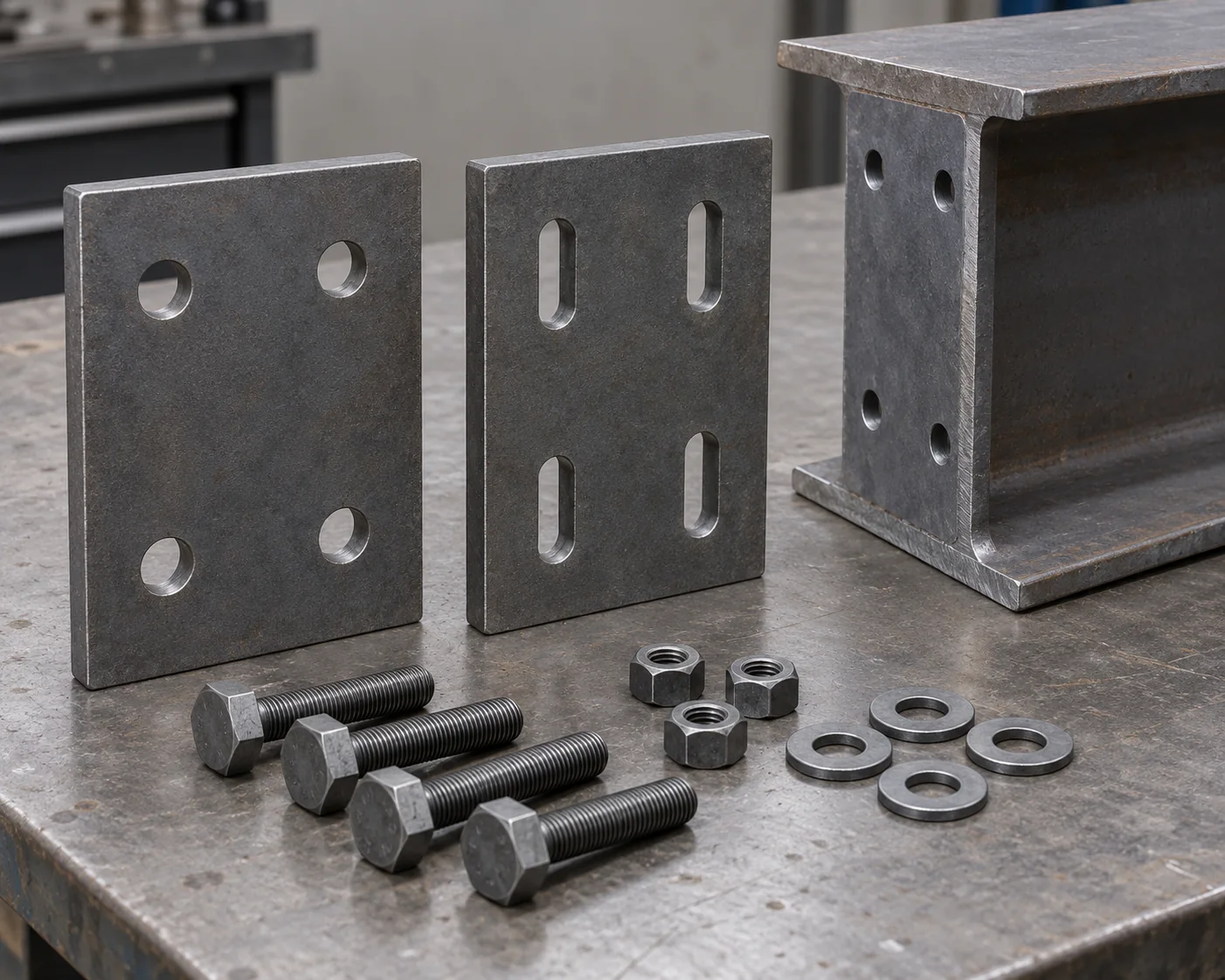
A removable bolted joint can suit a planned change because the connection can be dismantled without cutting that joint. Whether the members or fasteners can be reused is a separate assessment. A welded joint can also be modified, but separation commonly involves cutting or weld removal and subsequent repairs.
Swipe to view the complete table.
| Project need | Field-bolted detail | Field-welded detail |
|---|---|---|
| Joint completion | Aligned holes, accessible fastener assembly and specified installation method | Fit-up, welding access, qualified procedure/personnel and specified inspection |
| Later disassembly | Can permit dismantling at the joint; reuse still needs assessment | Typically involves cutting or weld removal at the joint |
| Restricted work area | Tool clearance can be the limiting space | Welding and inspection access can be the limiting space |
| Surface finish | Protect contact surfaces required by the specified joint; repair damage | Account for preparation and restoration of the weld-affected finish |
| Shipping | Price the actual members, plates and packed units | Price the actual pieces or shop-welded assemblies; do not assume one large unit |
When Should You Prefer Each Connection?
Qualification Comes First
First exclude a detail that cannot meet the structural requirements or be completed at the destination. Missing design acceptance, unavailable tool access or an undefined welding arrangement is a reason to hold that proposal. It is not proof that the competing method is inherently better.
Then Choose by the Project’s Priorities
Between two suitable proposals, prefer the detail that fits the owner’s most important assembly, transport or change requirement. Use the conditions below to identify that preference, then compare complete quotations and delivery plans.
Swipe to view the complete table.
| Condition | Preferred direction | What must be true |
|---|---|---|
| Planned disassembly; fasteners remain accessible | Field bolting | Accepted detail can be dismantled as planned; removal tools fit |
| A compact connection detail better fits the geometry | Evaluate the accepted welded alternative | Its actual detail resolves the space constraint and the welding/inspection work is feasible |
| Site cannot support the required welding work | Shop fabrication plus feasible field connections | Complete joint design and site assembly access are established |
| Reducing site work is the priority | More shop completion where practical | Packed assemblies can be shipped, lifted and erected under the project plan |
| The connection design or site work plan remains unresolved | Hold the affected choice | Resolve the missing detail rather than assuming it passes |
A Complete Choice for an Exported Warehouse Kit
Two Suitable Details, One Owner Priority
Consider a hypothetical warehouse extension that the owner expects to dismantle and relocate later. The owner prefers piece-level delivery rather than larger preassembled frame units. Two alternative connection details have been accepted for the same building brief: shop-prepared plates with field bolts, and a field-welded detail. Both have workable shipping plans, site access, competent completion crews and inspection arrangements.
The Choice and What Would Reverse It
Choose the field-bolted alternative for this brief. Its removable connections serve the planned relocation. Both packing plans already meet the delivery brief, so shipping is a shared qualification rather than the reason to prefer one detail. Shop welding remains part of the preparation where shown on its drawings. The welded alternative is technically viable, but later separation requires additional cutting or weld removal.
Reopen the choice if the relocation requirement is removed and a revised layout needs a compact detail better served by the accepted welded proposal. More shop-welded assembly could also become attractive if a feasible packing and erection plan reduces the required field work. Recheck the affected design and complete costs after either change. Without comparable prices, this example establishes a functional preference, not a cost winner.
Compare the Cost of Completing the Same Joints
Supply and Site Completion
Price fabrication, delivery and site completion against the accepted drawings. For the bolted option, include the required plates, hole preparation, fastener assemblies, installation and inspection. For the welded option, include preparation, fit-up, welding, inspection and finish restoration. Shop work belongs in the supply quotation unless the offer expressly separates it.
Remaining Costs and Timing
Then add the remaining project-specific costs: packing, freight, lifting, temporary works and site equipment. Add only items that are excluded from the supply price. A low bolt price or a short weld length cannot settle the installed connection cost, and a missing allowance is not zero.
Use the actual completion plans to compare schedule as well. A field-bolted detail does not guarantee fast erection if pieces do not arrive in sequence or tools cannot reach the joint. A field-welded detail does not guarantee delay if the required crew, access and inspection are available. Any cost or schedule advantage must come from the project offers.
What Belongs in the Released Building Kit?
Drawings and Identifiable Components
Issue matching fabrication and erection drawings with piece marks, connection locations and revision identifiers. The component schedule should distinguish shop-completed work from site-completed joints and identify the supplied connection materials. Match shipping units to the receiving and erection sequence so the required plates or fastener sets are available with their members.
Method-Specific Completion Requirements
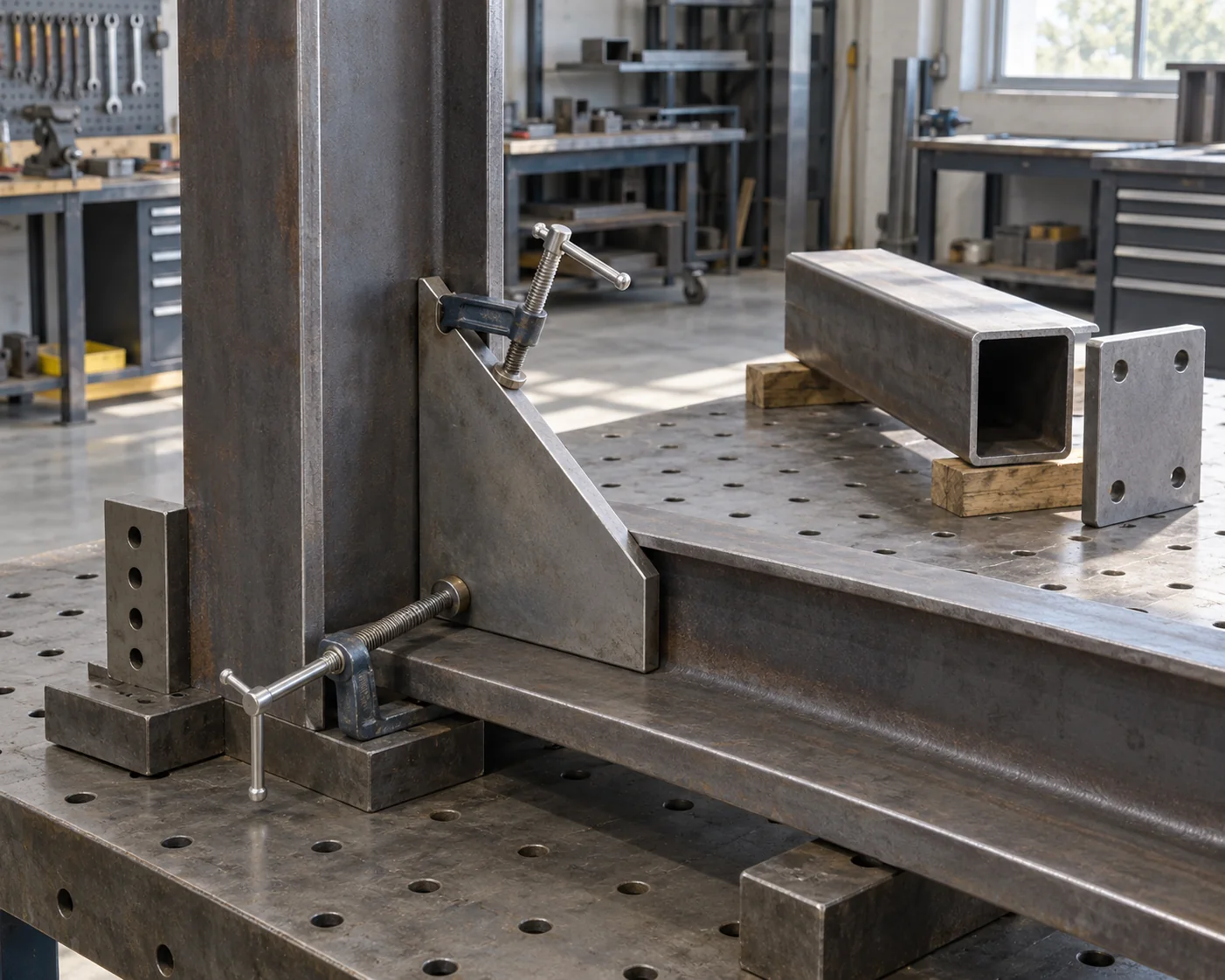
For bolted joints, retain the specified joint type and installation/inspection requirements. RCSC’s June 5, 2025 specification distinguishes snug-tightened, pretensioned and slip-critical joints; they are not one interchangeable tightening instruction. For welded joints, retain the project welding procedure, personnel qualification and inspection requirements. These requirements belong to the accepted project specification.
Identify the coating system and the approved repair method for damage or weld-affected areas. Record repaired locations and the completion evidence required by the contract. Site assembly also needs the project erection plan and temporary stability provisions; the delivered permanent joints do not establish the whole erection sequence.
Frequently asked questions
Does a field-bolted building kit contain no welds?
No. Shop-welded end plates, cleats or built-up components can be joined with bolts at the site. Read the fabrication and erection drawings to distinguish factory welding from field welding.
Can all the structural bolts use one torque setting?
Do not prescribe a single setting from bolt diameter alone. Follow the specified joint type, fastener assembly and installation method. RCSC 2025 Section 10 explains that torque–tension relationships vary with conditions such as finish, lubrication and assembly friction; a generic torque value does not establish the required pretension.
What should happen if the connection holes do not align?
Check piece marks, mating components and drawing revisions before requesting an engineered correction. Record the measured mismatch. Do not burn holes larger or treat slotted holes as an automatic repair. UFGS 05 12 00 Section 3.2 prohibits flame enlargement of holes in its project-guide requirements; the actual project specification governs the permitted correction.
Can a connection be field-welded after galvanizing or painting?
Only under the accepted fabrication and welding arrangement, with the affected coating preparation and restoration defined. Establish access for that work and the required inspection. A local repair does not, by itself, prove the same coating performance as an undamaged original finish.
Can removed bolts be reused when the kit is relocated?
Removability does not automatically authorize fastener reuse. Identify the actual fastener assembly, installation history and applicable project requirements before the responsible designer or specification authority decides. Plan replacement fasteners when reuse has not been accepted.
Is packing size enough to choose the connection method?
No. Packed dimensions must be considered with mass, lifting, delivery order and the site completion plan. A small shipping unit that cannot be assembled or inspected at its destination is not a complete solution. Compare accepted packing and erection plans for each connection alternative.
Technical Basis and Source Scope
Research Council on Structural Connections, Specification for Structural Joints Using High-Strength Bolts, June 5, 2025: Section 4, joint types; Section 10, arbitration and torque–tension variability. This is a technical basis for the bolting distinctions, not a bolt schedule for a particular kit.
U.S. federal construction criteria, UFGS 05 12 00: Structural Steel, August 2018, Change 2 May 2021: Sections 1.5, shop drawings; 3.2, connections; 3.4–3.7, welding, finish repair and quality control. It is an editable project guide. Apply the accepted specification and destination requirements to the actual project.
