Know Which Dimension You Are Ordering
Width, ID and OD
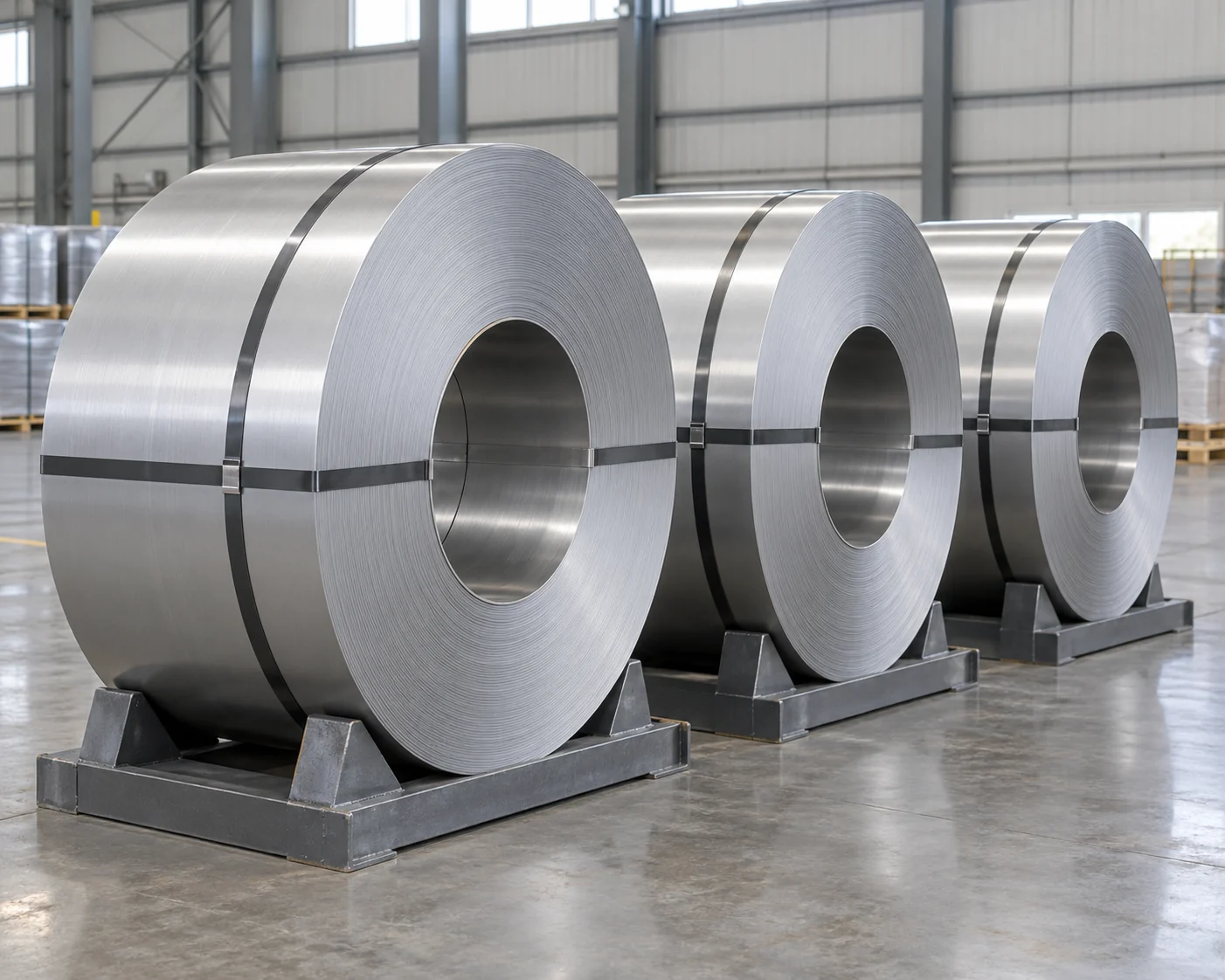
Width is the strip dimension across the coil face, along the coil axis. ID is the diameter of the eye that meets the mandrel or an approved sleeve. OD is the diameter across the outside wraps. These three measurements describe different directions or surfaces; strip thickness is another field.

Parent Coil and Finished Coil
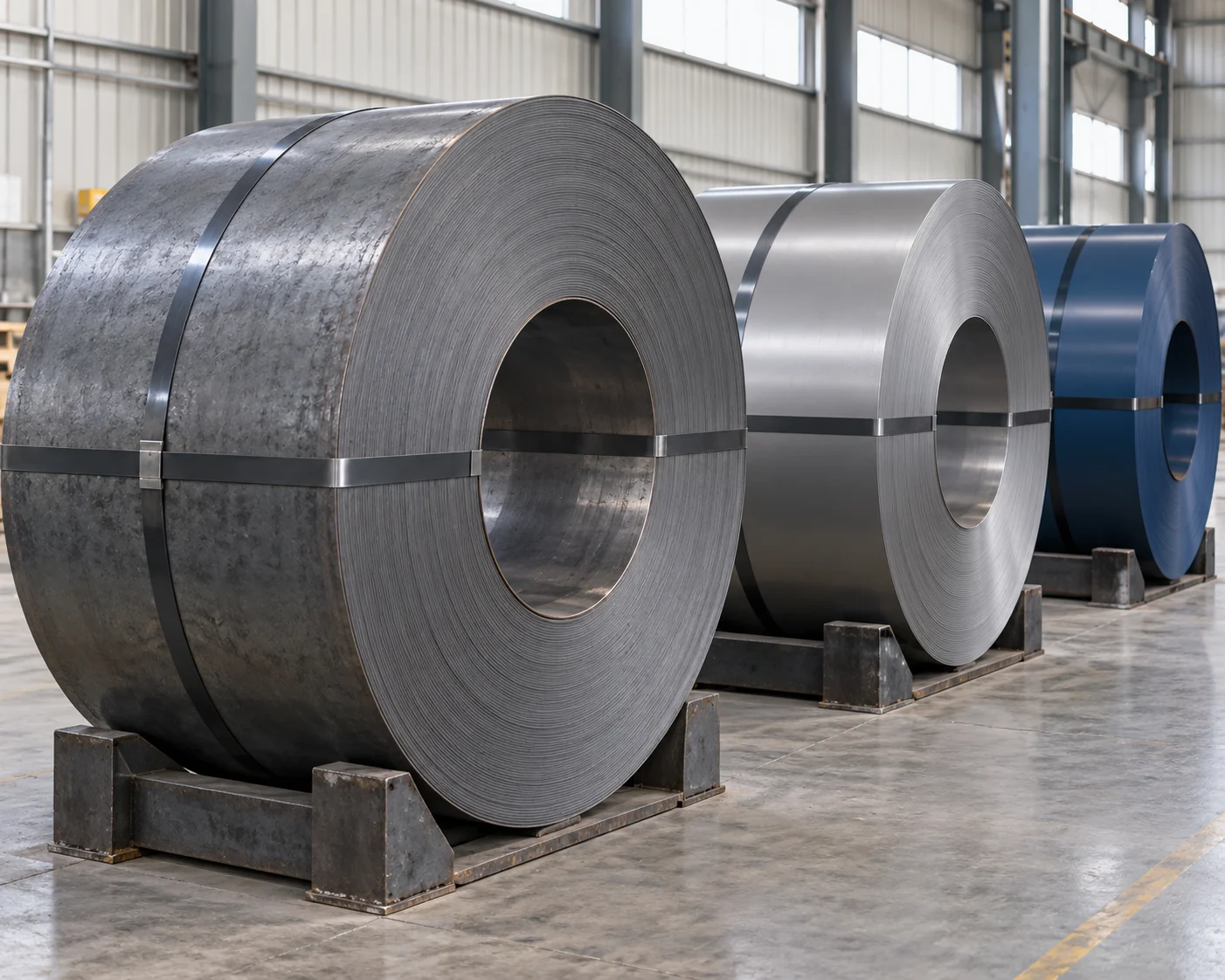
Write the delivery stage alongside the dimensions. A parent coil going to a slitter has incoming limits, while each finished slit coil has the downstream uncoiler’s limits. The parent’s accepted weight or diameter does not automatically approve the finished strip for the next machine.
Use the material grade, condition, thickness and coating required for the job as well. Dimensional fit is necessary, but does not establish that the leveler, feeder or forming tool can process the material at the planned setting.
Read the Limits of the Installed Equipment
Uncoiler, Feeder and Loading Equipment
Collect the uncoiler’s approved width range, supported ID range, maximum OD and maximum coil mass for its actual configuration. Add the leveler and feeder’s material limits, and the coil car or loading equipment limits where used. Public machine tables show these as separate fields; one tonnage rating cannot stand in for the others.
Use the manual, configuration record and any approved changes for the machine in the plant. A sales brochure for a similar model is a useful starting point, not proof of the installed setup. Where a maximum is conditional on width, material strength, thickness or an option, carry that condition into the order.
Receiving Can Be the Limiting Step
For receiving, establish the load that can be moved through the intended route with the selected equipment. A forklift’s general nameplate tonnage is not necessarily the payload with a coil attachment at the actual load center. OSHA specifically requires attention to the rated forklift/attachment combination. Obtain the applicable handling limit before setting the supplier’s coil-weight maximum.
Write the Dimensional and Weight Limits
Width and Its Tolerance
For width, begin with the strip width required by the product drawing or cutting plan. Agree the permitted deviation and the method and position of measurement. The whole offered tolerance band must fit the permitted production envelope. A nominal width that fits is insufficient if its plus tolerance does not.
Bore and Outer Diameter
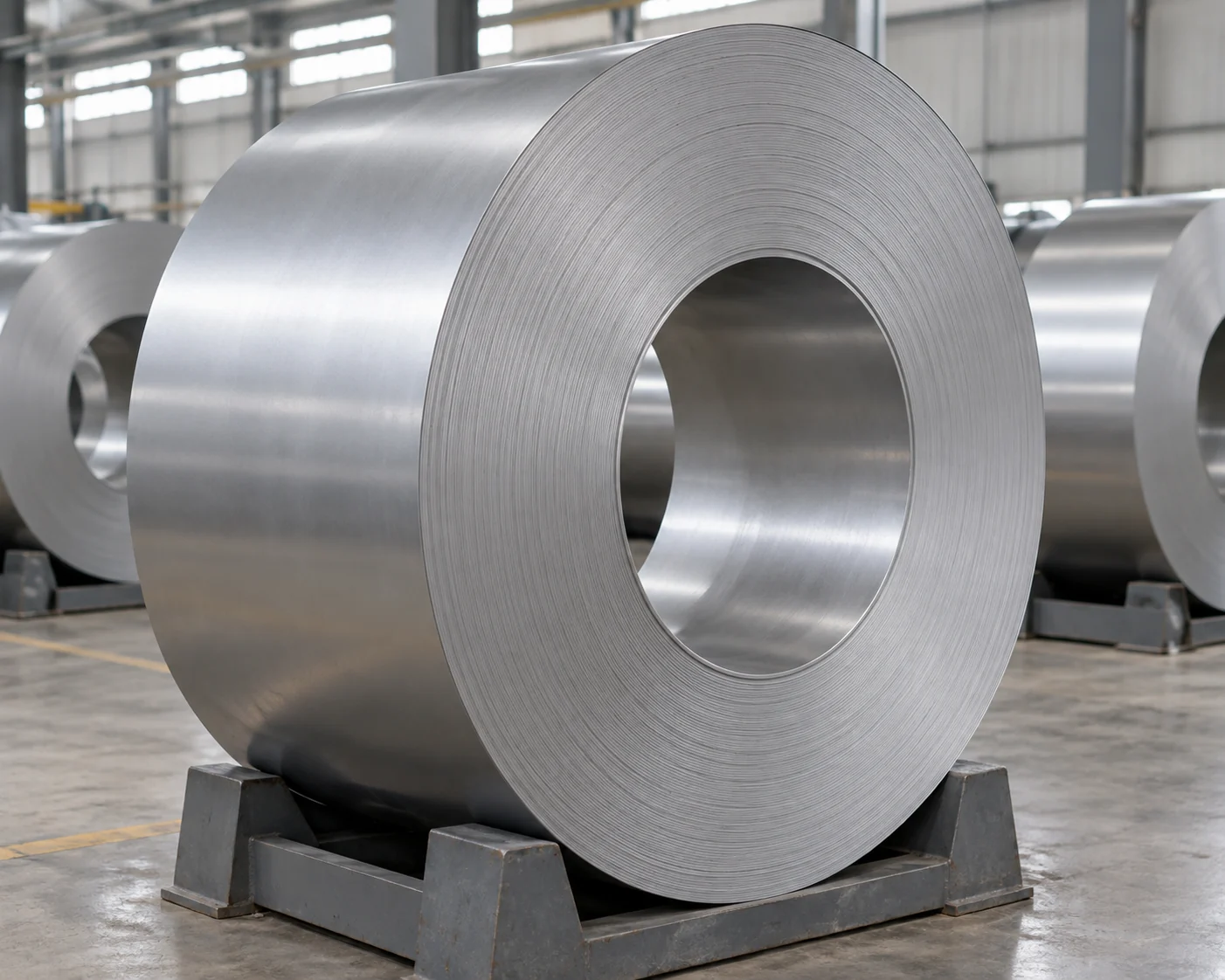
For ID, state the required bore and its tolerance, and identify any core or sleeve. Check the delivered bore against the approved clamping arrangement. Do not treat a mandrel’s expansion range as permission to use any bore without checking how the coil will be supported and gripped.
For OD, state the maximum delivered diameter that the configuration can accept. Clarify whether removable wrapping, edge protection or other packaging must fit additional receiving clearances. An “approximately” stated OD is not an agreed upper limit.
Net Coil Weight and Packed Weight
For weight, state the maximum net steel mass per coil and the maximum packed mass for receiving. Define what tare includes. Use kilograms or explicitly identified metric tonnes, rather than an unqualified “ton.” Specify how the supplier will report actual weights for each coil.
Worked Example: A 5,000 kg Coil That Cannot Be Received
Inputs Before the Weight Check
For this hypothetical order, the production setup accepts 1,199–1,201 mm strip width, a 506–510 mm bore, OD no greater than 1,000 mm, and net coil mass up to 5,000 kg. The required strip width is 1,200 ±0.5 mm. Separately, the approved receiving arrangement has a 4,700 kg payload limit for the actual attachment, load center and route. Allow up to 200 kg for the supplier’s packaging and cradle.
A supplier proposes a 5,000 kg net coil with a 508 mm bore, 980 mm OD and compliant width. Its packed mass is 5,200 kg under the assumed tare. The dimensions and uncoiler mass rating pass, but the receiving payload fails: 5,000 + 200 = 5,200 kg, which exceeds 4,700 kg.
The Completed Order Limits
The resulting purchase limit is 4,500 kg net per coil and 4,700 kg packed: 4,700 − 200 = 4,500 kg. Retain the separate 1,000 mm maximum OD because reducing weight is not a substitute for checking diameter. Require the supplier to confirm that its proposed coils meet all five order entries below.
If the delivered tare exceeds 200 kg, this same 4,500 kg net limit no longer guarantees that packed mass fits. Reconcile the actual packed load before shipment. If an approved receiving configuration changes, recalculate the handling part of the order; the uncoiler’s dimensional limits remain separate.
Swipe to view the complete table.
| Order field | Value to specify | Basis |
|---|---|---|
| Strip width | 1,200 ±0.5 mm | Required width band fits 1,199–1,201 mm setup |
| Coil ID | 508 ±2 mm | Delivered bore stays within assumed approved 506–510 mm range |
| Coil OD | 1,000 mm maximum | Independent uncoiler limit |
| Net steel mass | 4,500 kg maximum per coil | 4,700 kg receiving payload less 200 kg maximum tare |
| Packed mass | 4,700 kg maximum per coil package | Actual handling arrangement; packaging included |
Confirm the Delivered Coil, Not Just the Quote
The Coil-by-Coil Record
Ask for each coil’s identity, actual width and bore information, OD, net weight, packed weight and packing arrangement. Link those records to the material grade, condition and thickness. Agree how out-of-round eyes, telescoping wraps, damaged edges or changed packing will be reported and resolved.
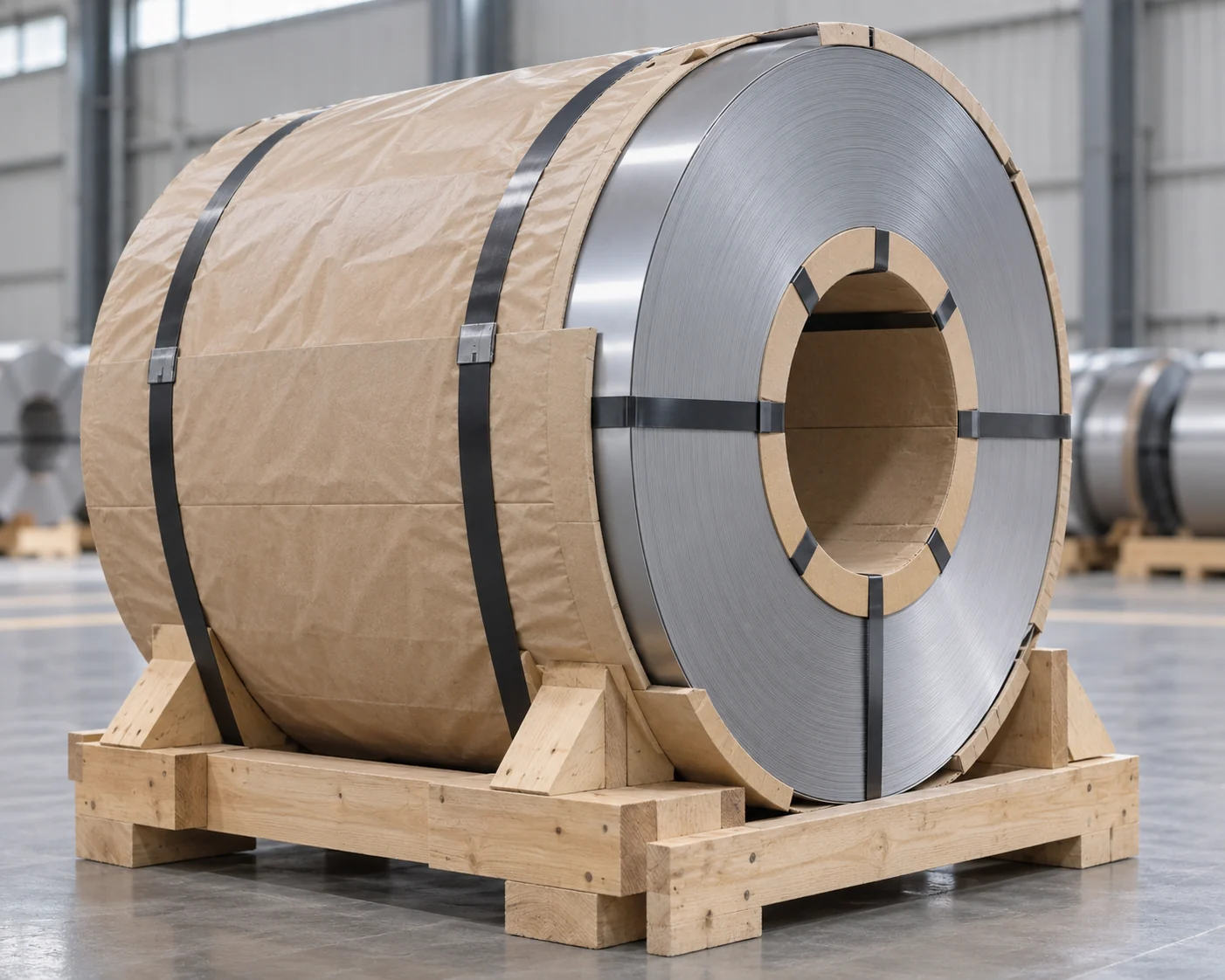
At receiving, compare those records and the agreed inspection results with the order before releasing the coil to production. A missing weight or an unclear sleeve condition is an open item. Resolve it with the supplier and plant equipment owner instead of assuming that a smaller-looking coil will fit.
Handling a Proposed Change
If the supplier proposes rewinding, slitting, a sleeve or a different coil split, check the finished result against the same requirements. Those operations may solve one constraint while changing another. Keep the revised coil identities and records with the accepted order.
Frequently asked questions
Is 508 mm the standard ID for every steel coil line?
No. Use the installed machine’s approved bore range and gripping arrangement. Even where 508 mm is a quoted option, the delivered tolerance, sleeve and eye condition still need agreement. Do not substitute a familiar nominal ID for the machine check.
Can a sleeve make an oversized coil eye acceptable?
Only if the machine owner or manufacturer has accepted that sleeve and configuration. Check its dimensions, support and effect on load and handling. A sleeve is a proposed equipment interface, not an automatic way to make any coil fit.
Can OD be calculated from coil weight?
A geometric estimate also needs bore, strip width and material assumptions, and it can differ from the wound coil because of packing and winding condition. Use an estimate for planning only. Obtain and check the actual supplied OD where clearance or machine capacity depends on it.
Does a lower coil weight mean fewer production problems?
It can ease a specific handling limit, but more coils can mean more loading and setup interruptions. Once every limit is met, compare the actual run plan, coil changes and receiving capacity. Do not optimize weight independently of the production task.
Should I give the supplier a minimum coil weight too?
If small coils disrupt the run or create uneconomic remnants, agree a minimum or target range as well as the hard maximum. State how short or end coils are treated. A target must not override the equipment or handling limit.
Can dimensional acceptance replace the first-coil production trial?
No. Dimensions establish physical fit within the agreed checks; the material and process still have to produce the required part. Use the agreed trial to examine feeding, leveling, forming and the finished result, especially after a material or processing change.
Technical Basis and Source Scope
OSHA, Powered Industrial Trucks eTool: Parts — Attachments, “Potential Hazards” and “Requirements,” checked October 15, 2026: attachment effects and the rated forklift/attachment combination. This handling reference does not establish an uncoiler rating.
CIDAN/Forstner, Motorized Decoiler D5/D8, “Technical specifications”; Forming Line, 3000Kg Mechanical Decoiler RM3000M, “General Features” and “Technical Details Chart”; undated public product pages checked October 15, 2026. These examples separately specify coil width, bore, OD and mass. The installed machine’s approved documents determine the actual order limits.