Start with a Pipe Specification for Each Utility
Separate Cooling Water, Steam and Compressed Air
Cooling water, steam and compressed air should not share a material selection merely because they sit on the same skid. Use the approved service conditions and piping specification for each line: fluid composition, design pressure and temperature, corrosion provisions, cleanliness and the governing project requirements. This guide concerns package selection; it does not select a material grade for an unknown service.

Make Pipe and Fitting Descriptions Agree
Translate that specification into orderable items. Identify pipe material and product standard, nominal size, wall requirement and ends. Specify the corresponding fitting type, material, dimensions and weld-end details. For flanged joints, carry the mating face, flange rating basis, gasket and bolting requirements into the package as well.
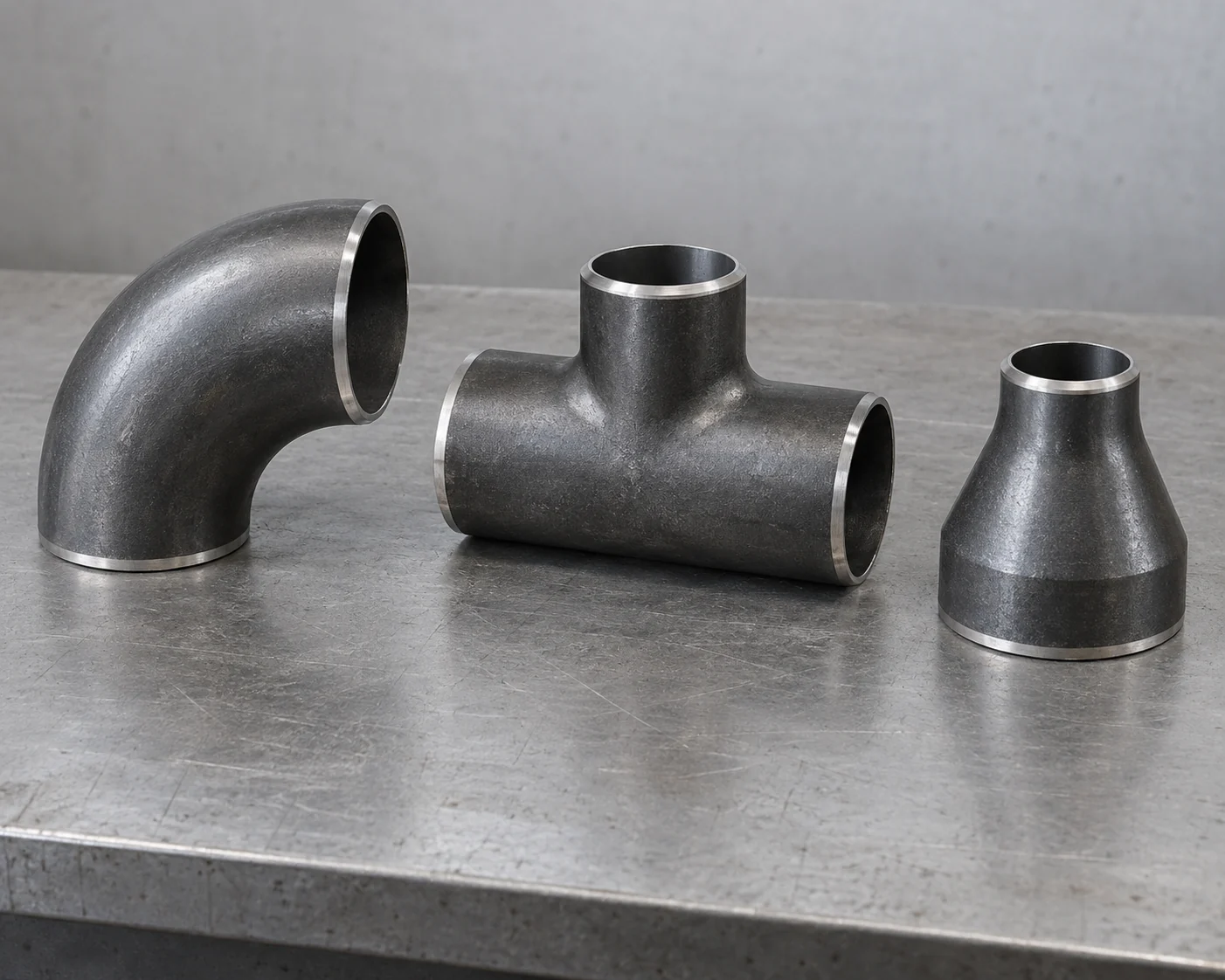
ASME B16.9 covers factory-made wrought butt-welding fittings within its stated scope. It does not, by its name alone, select a fitting material or establish that the whole skid is suitable for a particular service. Likewise, the project must establish whether ASME B31.3 or another piping code applies; B31.3 includes piping that interconnects packaged equipment.
Choose Loose Materials, Prefabricated Spools or a Hybrid Package
Loose Kits Leave Fabrication with the Skid Builder
A loose-material kit supplies the pipe and fittings for the fabricator to cut, fit and assemble. It preserves flexibility while the skid arrangement is developing and suits a contractor with the necessary fabrication capability. The price comparison must include that remaining work, inspection and material handling.
Spools and Hybrid Packages Move Selected Work Off Site
A prefabricated spool package supplies identified pipe assemblies made to controlled drawings. It moves work into the shop, but commits the buyer to the stated geometry. It is most useful where equipment positions, connection orientations and transport limits are settled. Buying spools is a different scope from buying the loose components shown on their bills of materials.
A hybrid package prefabricates the stable internal runs and provides defined site closure pieces. Those pieces are designed locations for final fit-up, with a specified joining, inspection and testing plan. They are not permission to cut or reroute any convenient part of the skid. This approach is useful when the skid is ready but the external tie-ins still need a final survey.
Swipe to view the complete table.
| Package | Best fit | Work or exposure that remains |
|---|---|---|
| Loose pipe and fittings | Capable skid fabricator; geometry still developing | Cutting, fit-up, joining, inspection and assembly |
| Prefabricated spools | Stable drawings and equipment interfaces | Transport protection, installation fit and final system testing |
| Shop spools plus closure pieces | Stable skid interior; unresolved final site dimensions | Measured closure fabrication and its specified inspection/test work |
Keep Equipment Removal and Site Tie-Ins in the Layout
Leave Space to Remove the Equipment
Show the pipe connections on the actual equipment arrangement. A removable joint is useful only if the connected piece can be withdrawn and the tools can reach it. Check the pump or valve service procedure, spool removal direction, flange access and support arrangement before fixing the assembly lengths.
Describe Both Sides of Every Site Connection
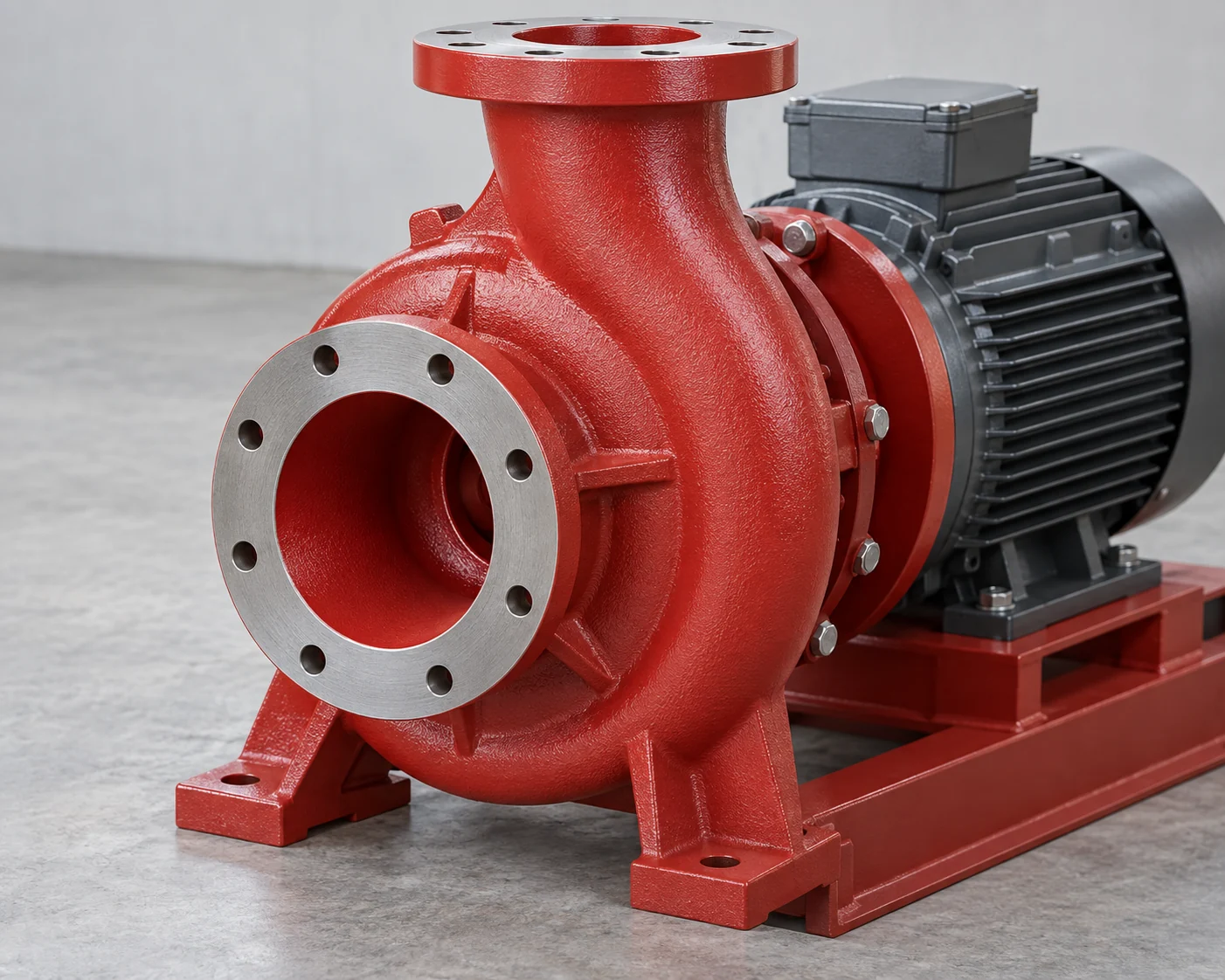
Define each skid boundary by line identification, connection details, position and orientation. Identify which side supplies the mating flange, gasket, bolts and closure material. Use the equipment supplier’s current drawings for nozzle positions; a concept image cannot supply those dimensions.
Keep the piping support and nozzle-load review separate from simply making the ends meet. The finished layout must suit the selected equipment during installation and operation. A flexible connector or a field weld is not a general remedy for an unsupported or misaligned pipe run.
Example: Prefabricate the Skid and Measure the Site Closures
Two Complete Offers, One Site-Work Priority
Consider a hypothetical cooling-water skid. Its internal equipment positions and pipe drawings are accepted, and the pipe material, joints, supports and inspection requirements are fixed. The two external header connections will receive their final dimensional survey after adjacent equipment is installed. The project permits planned field closure welds and provides qualified personnel and the required inspection and final testing. These assumptions apply to this example only.
Two complete offers meet the same material and quality requirements. Offer A supplies a loose kit, with a qualified contractor performing all skid fabrication on site. Offer B supplies shop-fabricated internal spools plus the specified material for two measured site closures. Both can meet the installation date, and both include the same required final system testing. The owner wants to minimize fabrication inside the congested plant area.
The Selected Package and Its Limits
Choose B. Release the stable internal spool drawings for shop fabrication, while leaving the two final closure dimensions to the site survey. This meets the owner’s working-space priority without pretending the external dimensions are already known. Keep shop completion, delivery, closure fabrication and final system testing as distinct scope items so that none disappears between offers.
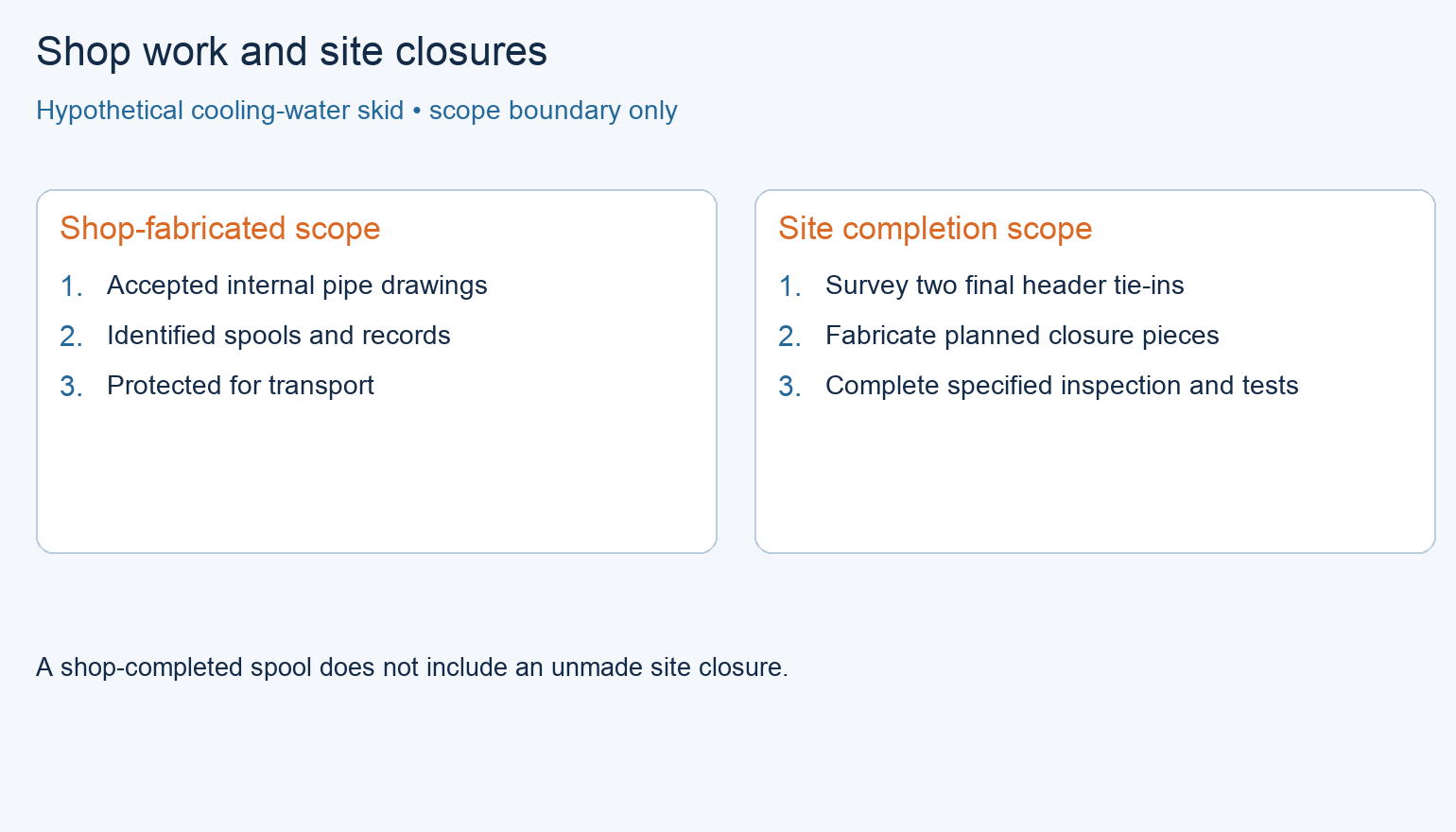
A fully finished set of external tie-in spools is premature under these assumptions. If the site survey becomes final before fabrication and the assembled package can be transported and installed, prefabricating those pieces may become practical too. If field welding is prohibited, redesign the boundary for an accepted assembly method or wait for final measurements; the hybrid arrangement described here is no longer ready to order.
No cost or schedule saving is assumed. Compare the complete offers for materials, fabrication, examination, cleaning, protection, transport, site work and testing. For B, do not add the included shop fabrication a second time; do not treat unquoted closure work as zero.
Order the Finished Scope, Then Preserve It Through Delivery
Distinguish Material Supply from Spool Fabrication
List the deliverable for every line item: loose component, finished spool or installed assembly. Add the drawing revision and required records. State whether the price includes welding, examination, testing, cleaning, coating and preservation. The supplier of the pipe and fittings may be different from the party responsible for spool fabrication.
Keep Shop Acceptance and Final System Testing Clear
Identify spools and loose closure materials so the receiving crew can connect them to the current drawings. Protect ends and surfaces according to the service and handling requirements. Separate materials that must not be mixed during storage or fabrication.
Agree on what a completed shop package demonstrates and what remains for site acceptance. Shop testing of a defined assembly does not automatically cover a later closure weld or the fully connected system. The project’s governing requirements determine the test boundaries, sequence and records.
Frequently asked questions
Does a modular skid always need seamless pipe?
No. Use the pipe product and manufacturing route accepted by the project specification for that service. Modularity alone does not make seamless pipe necessary, and the word seamless does not establish suitability without the grade, wall and service conditions.
Should all skid connections be flanged?
Not necessarily. Removable connections can help where equipment or a spool must be serviced, but every joint needs suitable space, sealing and assembly provisions. Use the accepted piping design to decide where welded, flanged or other permitted connections belong.
Can spare pipe length replace a planned closure piece?
Extra material can be useful, but it does not define where a field joint may be made or how it will be inspected and tested. Show the closure location and joining method in the design, then provide the material needed for that work.
What if the equipment supplier changes a nozzle position?
Check the affected spool geometry, supports, removal space and site boundary before releasing or modifying it. Hold the affected fabrication while the drawing is revised. Unchanged, independently buildable portions may continue if the project team accepts that separation.
Can fittings from different manufacturers be packaged together?
They can be considered when the specific products satisfy the same accepted material, dimensional and joining requirements. Preserve identification and the required records. One supplier name does not replace those checks, and different names do not automatically make the package unsuitable.
Is a shop pressure test enough to accept the installed skid?
Only for the scope and conditions covered by that test. Connections completed later and the final system may need further examination or testing under the governing requirements. Define those boundaries before deciding that an offer includes all testing.
Technical Basis and Source Scope
ASME B31.3-2024, Process Piping, public scope description: materials, design, fabrication, assembly, erection, examination, inspection and testing, including piping interconnecting packaged equipment. The public description establishes scope; it is not a review of the complete code or a determination of the code governing a particular skid.
ASME B16.9-2024, Factory-Made Wrought Buttwelding Fittings, public scope description: dimensions, tolerances, ratings, testing and markings for fittings within its scope. Sources checked October 19, 2026. The package choices and cooling-water example are editorial guidance and explicit assumptions, not code-mandated fabrication arrangements.
U.S. Department of Energy, Improving Pumping System Performance: A Sourcebook for Industry, Second Edition, May 2006, pages 31–32: piping support and fit-up loads near pumps. Equipment-specific limits remain part of the selected pump documentation.