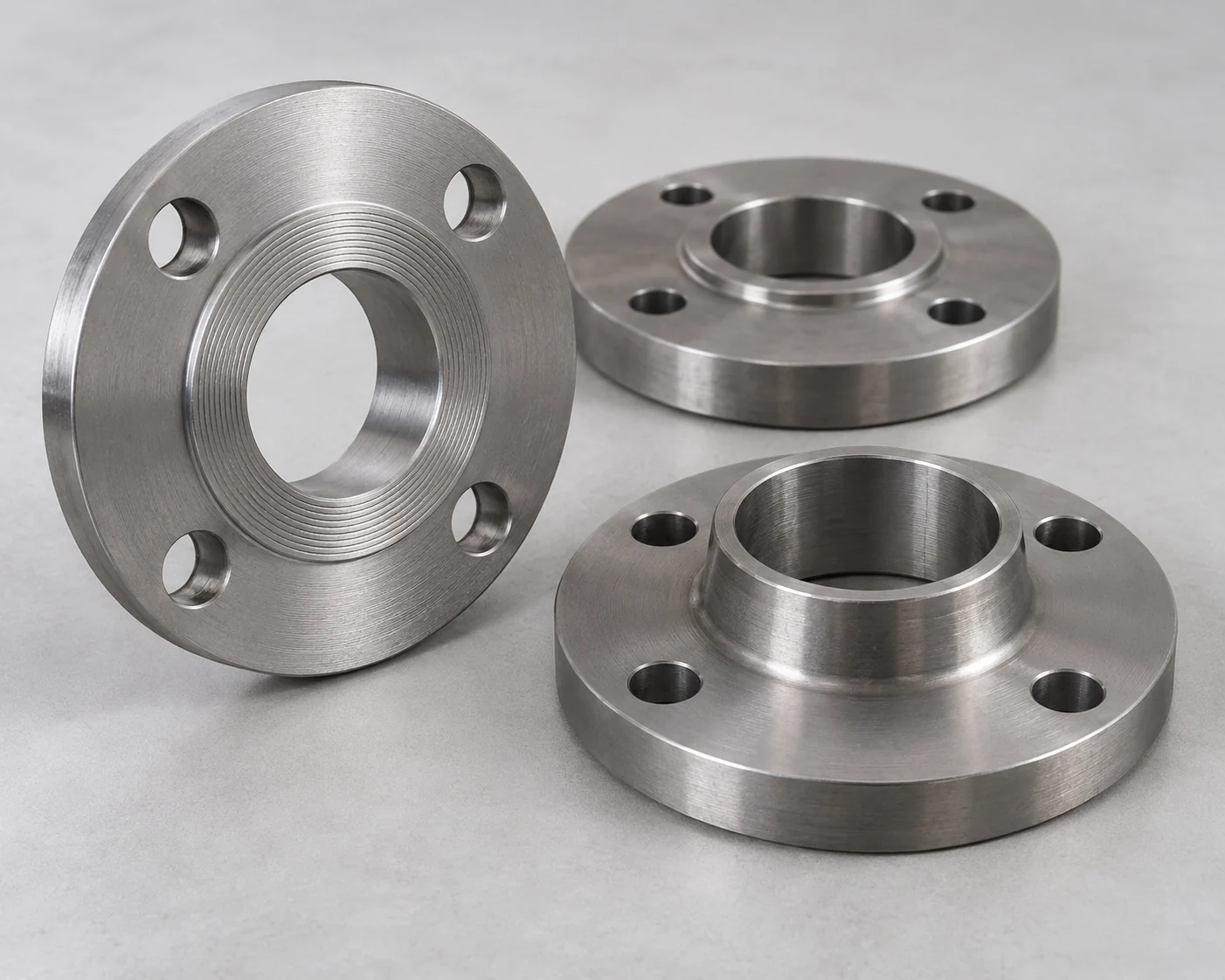
Compare the flange factory behind the offer
MFC Flange, ULMA and Weldbend have identifiable manufacturing operations and published flange ranges. This alphabetical comparison uses their current product pages and linked catalogs, checked October 19, 2026. Request the exact material, size, class and delivery condition on each inquiry line.
Swipe to view the complete table.
| Manufacturer / operation | Material and manufacturing focus | Published flange scope | Procurement distinction |
|---|---|---|---|
| MFC Flange · Sealy, Texas · Newman group | Stainless, duplex, nickel and chrome-alloy forgings; forging, machining, heat treatment and testing listed at Sealy. | Catalog size range 1/2–24 in.; weld necks, raised faces and Class 300 are listed. Stainless offerings include 316/316L. | Use the current MFC-Sealy identity. Its offering is a starting point for the stainless line, with the exact A182 grade and records stated in the proposal. |
| ULMA Forged Solutions · ULMA Forja S.Coop., Spain | Carbon steel, stainless and other alloys; forging through final machining, with heat-treatment and cladding capabilities. | Forged and fully machined flanges to ASME B16.5, B16.47 and MSS SP-44; overall published range 1/2–102 in. | A candidate for multiple material groups and engineered items. Identify the proposed factory, material and delivered machining condition for each line. |
| Weldbend · Argo, Illinois | U.S. manufacturer of carbon-steel fittings and flanges; catalog flange notes identify A105/SA105. | Catalog 63 includes NPS 6 Class 300 weld necks; its broader fittings/flange family extends to 60 in. | Its catalog sales policy routes purchases through jobbers and distributors. Keep the seller separate from the flange manufacturer and heat identity. |
MFC Flange: a stainless and specialty-alloy source in Sealy
Name the current operation, then specify the stainless grade
The current MFC Flange business is the Sealy operation that joined Newman Flange & Fitting in 2025. Its announcement identifies the acquired business as Ameriforge–MFC-Sealy, formerly Ameriforge/Maass. Use that factory identity on the inquiry and proposed records; the former Maass name alone can point to a different historical business or manufacturing location.
MFC’s current stainless and weld-neck pages list 316/L among the offered grades. Its capabilities describe open- and closed-die forging, turning, milling, drilling and in-house heat treatment. These are relevant operations for a finished weld neck: the forging supplies the body and hub, while machining establishes the bore, weld end, gasket face and drilling specified on the order.
Tie the inspection package to the delivered flange lot
The site lists positive material identification, chemical and mechanical testing, and several nondestructive examination options. For an EPC stainless line, put the required tests, sampling and report content in the accepted inspection plan. The useful comparison is the proposed record package for the actual flange lot, rather than the length of a website’s test list.
ULMA: carbon and stainless flanges through final machining
ULMA Forja S.Coop. trades as ULMA Forged Solutions. Its current product information covers forged and fully machined flanges, including weld necks, while its material range includes carbon steel, stainless, duplex and nickel alloys. A North America sales office is listed on its contact page. This makes ULMA a candidate to approach with both carbon-steel and stainless line groups in an EPC schedule.
Keep the base material and any overlay separate
The published process includes forging, heat treatment, machining and final machining. ULMA also offers corrosion-resistant weld overlay. A solid F316L forging and a carbon-steel body with stainless overlay are different material constructions; an overlay proposal belongs on a separately identified deviation for a schedule that calls for solid F316L.
ULMA’s quality page describes destructive and nondestructive testing as required, including ultrasonic, magnetic-particle, liquid-penetrant and X-ray methods. Agree the applicable method, extent and acceptance basis with the proposed manufacturing and inspection plan. Its general capabilities describe available processes, while the order establishes which records accompany each finished item.
Weldbend: A105 carbon flanges and a distributor buying route
Separate catalog bore and heat treatment from the order condition
Weldbend’s own flange catalog identifies ASTM A105/ASME SA105 carbon steel. Its Class 300 table includes the NPS 6 weld-neck form used in the example below, and its notes allow the purchaser to specify the required bore instead of accepting the catalog’s standard bore. The table is a useful product reference; the project’s adopted standard and finished-part drawing remain the purchasing basis.
For material records, Weldbend’s Flange Summary Data Sheet lists heat-treatment type when applicable, mechanical and chemical results, hardness and purchase-order supplementary testing among the report information. Its marking information connects the flange to a heat identification and bore designation. A buyer requiring normalized delivery should state that condition expressly and obtain the corresponding record, rather than infer it from the A105 name.
Retain the manufacturer identity through the seller
Catalog 63’s published sales terms restrict sales to jobbers and distributors. An EPC buyer using that route should name the actual selling channel and retain Weldbend as the manufacturer on the item and records. The manufacturer’s carbon-flange catalog supports a carbon-steel inquiry; it is not the source used here to establish a stainless offering.
One EPC flange schedule, two material groups
Consider a hypothetical U.S. EPC order for 24 carbon-steel and 12 stainless-steel weld-neck flanges. Both lines are NPS 6, Class 300, raised face, to the project-adopted ASME B16.5 edition. The carbon line requires ASTM A105 in the normalized delivery condition; the stainless line requires ASTM A182 F316L. The order also specifies bore and weld-end drawings, surface finish and inspection requirements.
Assume the owner permits the proposed U.S. and Spanish manufacturing locations and allows the two material groups to be purchased separately. The first inquiry allocation is then straightforward: Weldbend through its selling channel for the carbon line, MFC Flange for the stainless line, and ULMA for both lines as a combined-package alternative.
Swipe to view the complete table.
| Manufacturer inquiry | Schedule allocation and basis | Details to confirm in the offer |
|---|---|---|
| Weldbend, through the identified distributor | Carbon line: 24 pieces. Its own A105/SA105 catalog includes the NPS 6 Class 300 weld-neck form. | Explicit normalized delivery condition, specified bore/weld end, finished-part and heat records, and the selling-channel quote. |
| MFC Flange, Sealy operation | Stainless line: 12 pieces. Current products include 316/L, weld necks, Class 300 and raised faces. | Exact ASTM A182 F316L certification for the proposed lot, specified bore/weld end, manufacturing location and agreed test/report scope. |
| ULMA Forged Solutions | Both material lines: 24 carbon + 12 stainless pieces. Its current manufacturing range covers both material families and fully machined weld necks. | Line-specific A105 normalized and A182 F316L proposals, finished machining condition, manufacturing location and the two material/inspection record packages. |

Keep the carbon and stainless items on separate lines even though size and class match. Confirm the carbon line’s normalized condition through the manufacturing records and the stainless line’s F316L grade through its material documentation.
If the owner requires one manufacturer to cover both material groups, begin with ULMA’s combined proposal among the reviewed offerings, while inviting the other sources to identify any additional manufacturing scope they can document. If U.S. manufacture becomes a contractual requirement, reassess the actual proposed locations before retaining the Spanish-manufactured option. Neither change permits a material substitution.
After technical acceptance, compare the actual delivered offers on the same piece counts and finished-part scope. Include required testing, third-party attendance, material records, packing and delivery terms. A distributor line and a factory line can both be compared once those included items and responsibilities are clear.
Frequently asked questions
Does an old Maass approval automatically cover a new MFC-Sealy order?
Do not assume that a brand name alone settles the project’s vendor approval. Give the responsible project party the current legal entity, Sealy manufacturing location, offered material and product scope, with the relevant ownership or name-change information. Ask how the existing approval applies to that proposed order. The 2025 acquisition announcement supports the identity review; it does not itself grant or cancel an owner’s approval, or cover another former Maass factory.
Can a forged blank be compared with a fully machined flange?
Only after the remaining work is included. A forging blank still needs the specified machining and finished-part acceptance. Identify who will complete the bore, weld end, face and drilling, who retains identification through machining, and who issues the finished records. An offer for a blank is a different supply scope from a flange ready for the specified fabrication step.
Is the raw-material mill certificate enough for flange acceptance?
It can support the starting material’s identity, but it does not by itself show the finished flange’s delivery condition, final dimensions or completed inspection. Ask for the record chain linking the raw heat, forging, applicable heat-treatment lot, finished-part identification and the required test results. Review the records against the purchase line and specified product edition.
Does a catalog label of 316/L settle an ASTM A182 F316L requirement?
Use the exact material designation on the purchase line and proposed material report. Ask whether the offered lot is certified to the requested specification and grade, or dual certified, and verify the actual results and delivery condition. A family label on a web page is useful for choosing whom to approach; it is not a substitute for the lot-specific certification.
When should third-party inspection hold points be agreed?
Before the affected manufacturing or test stage is released. Put the required witness or hold points, notice arrangements, acceptance basis and release records in the agreed inspection plan. For example, a required witness at a material test cannot be recovered simply by adding a signature after the test has been completed. Arrange access and attendance with the actual factory and seller.
Can an NPS 30 flange be added under the same B16.5 heading?
NPS 30 falls outside B16.5’s published size scope. Give the additional line its actual large-diameter standard, series where applicable, material, class, face and drawing. ULMA and Weldbend publish B16.47 offerings, but their broad ranges do not establish acceptance of that new line. Reopen the manufacturer comparison for the specified large-diameter item.
Technical Basis and Source Scope
MFC Flange, “Newman Flange & Fitting Welcomes MFC Flange to Family of Companies,” October 30, 2025; current Home, Stainless Steel, Weld Neck Flanges and Capabilities pages, checked October 19, 2026. The acquisition announcement identifies MFC-Sealy; the current product pages give the listed material families and manufacturing operations.
ULMA Forged Solutions, current About Us, Materials, Forged Flanges, Quality and Contact pages, checked October 19, 2026: legal manufacturing identity, material families, finished-flange/process scope, testing as required and North America office. The overall size range is not a guarantee of every size/material/class combination.
Weldbend, Catalog 63, flange pages carrying copyright 2010 and currently linked by the manufacturer: printed p. 89, Class 300 table and bore/material notes; p. 146, raised-face information; p. 169, heat-code and product marking; p. 179, jobber/distributor sales terms. Flange Summary Data Sheet, undated, p. 1, Heat Treatment, Test Reports and Product Marking. These are manufacturer references; apply the project-specified standard editions.
ASME B16.5-2025, Pipe Flanges and Flanged Fittings: NPS 1/2 Through NPS 24, official public Description/Scope, checked October 19, 2026. The public scope identifies the covered sizes and subjects.