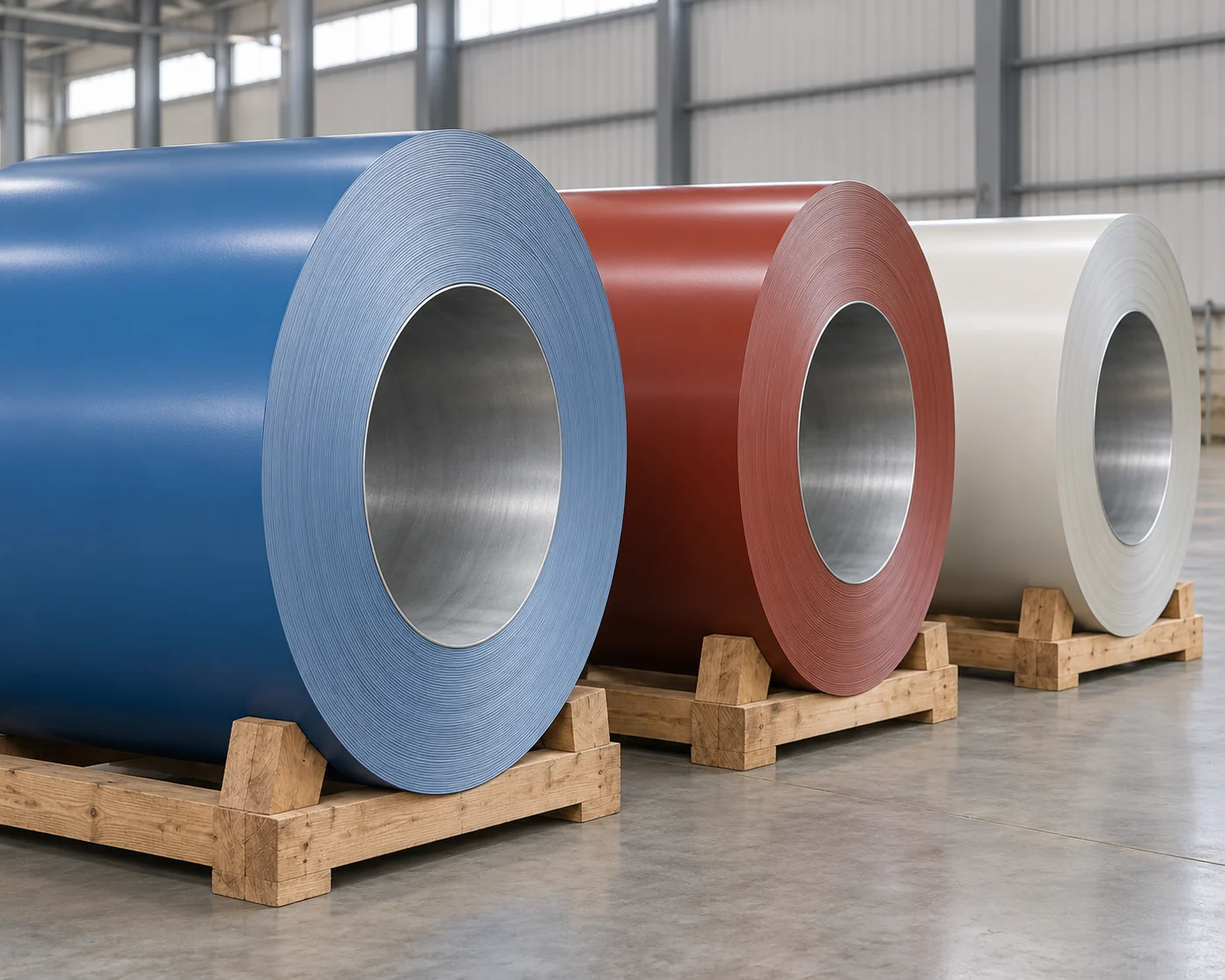
What does the roof need to retain under strong sun?
Appearance durability
Separate appearance durability from solar heat performance. Fade is a change in color; chalking is a powdery surface change. Film integrity concerns defects such as cracking, peeling or loss of adhesion. These outcomes matter to a roof that must keep its intended appearance and protective coating under weather exposure.
Solar heat performance
Solar reflectance describes how much incident sunlight a surface reflects. Thermal emittance describes its ability to release absorbed heat as thermal radiation. Neither is a measure of fade resistance. EPA’s Using Cool Roofs to Reduce Heat Islands explains the two thermal properties; the actual building’s climate, insulation and use affect the energy outcome.
Decide which preferences can change
For a prominent roof, the owner may prioritize a specific color and its stability. For a large roof with several acceptable colors, reducing solar absorption may be the stronger preference. State both requirements before selecting the finish. High UV exposure alone does not establish the required metallic coating or a cooling-energy saving.
Which coating system is the best starting point?
Start with documented weatherability
A suitable 70% PVDF coil system is a strong candidate when color and chalk resistance under weathering are central to the project. In the Kynar 500 formulation context described by Wood and colleagues in 70% PVDF Coatings for Highly Weatherable Architectural Coatings, the percentage is PVDF by mass of the polymer binder—not 70% of the whole wet paint. The formulation and pigments still matter.
Choose the exact formulation and film build
Specify a named coating product and color, not just the resin family. Sherwin-Williams’ Fluropon 70% PVDF Coil Coating Systems data sheet distinguishes solid, mica, metallic, bright-color and solar-reflective versions, with different coat arrangements. Its particular bright-color and metallic systems illustrate why some finishes include a clear coat; they do not establish that every PVDF roof needs one.
Retain the complete build: pretreatment, primer, color coat, any required clear coat and the reverse-side finish. State dry film thickness for each relevant layer and distinguish it from the total exposed-face film. A thicker generic paint description is not an equivalent replacement for the specified system, and extra organic film cannot make up missing base steel or metallic coating.
Keep the substrate and reverse face in the system
The steel grade and base-metal thickness must suit the panel design. The metallic coating—zinc or the specified aluminum-zinc product—and the primer must suit the roof’s corrosion exposure and coating process. Include underside condensation, drainage, cut edges and compatible roof accessories in that assessment. A highly weatherable topcoat does not resolve an unsuitable substrate or wet detail.
Swipe to view the complete table.
| Project priority | Best starting choice | What could change the choice |
|---|---|---|
| Demanding appearance retention; several colors permitted | A documented weatherable coil system, such as suitable 70% PVDF, in an acceptable color with useful aged solar performance. | A different named formulation meets the same appearance, thermal and forming requirements on better actual purchase terms. |
| A specific dark architectural color is essential | The qualified dark-color formulation, using solar-reflective pigments where they deliver the required measured performance. | Its aged solar properties or color-specific weathering do not meet the project requirements. |
| Appearance requirements are less demanding; initial cost matters most | Evaluate a named SMP or other exterior system against those actual requirements. | Its lower quoted cost cannot compensate for an unmet fade, chalk, film or roof requirement. |
| Marine deposits, chemical fallout or persistent wet exposure is also present | Select the full corrosion-protection arrangement before choosing the decorative finish. | Ordinary-atmosphere acceptance no longer describes the site. |
How should weathering tests and warranties be compared?
Read the exposure conditions and endpoints
Ask for results tied to the proposed color and coating build. A useful exposure record identifies the specimen, substrate and film, test method, location or laboratory cycle, duration, orientation where relevant, and separate results for color change, chalk and film integrity. Compare like conditions. A single “UV resistant” statement does not reveal which appearance outcome was evaluated.
For example, the Fluropon data sheet’s South Florida Exposure Testing table lists color change, chalking and film integrity separately. That is useful evidence structure; it is not a universal forecast for every roof. Accelerated exposure hours cannot be converted directly into outdoor service years, and a different test cycle can change what a result means.
Identify what the written warranty actually covers
Read the project’s written finish warranty alongside the technical evidence. Identify the covered failures, color and location conditions, claimant, maintenance duties and remedy. Do not infer coverage from the longest advertised year count. Steelscape’s sample Prints PVDF warranty, effective October 1, 2025, illustrates product-specific limits: it defines covered film/chalk outcomes, restricts the beneficiary and identifies color-formulation exceptions. Those terms apply to that named product, not to the systems in the example below.
Keep forming and roof coverage separate
Keep finish coverage separate from substrate-corrosion coverage and roof watertightness. Also require the coating and substrate to survive the intended roll-forming and seam or lap geometry. A flat weathering specimen does not establish adhesion after forming, and a successful forming sample does not establish long-term weathering.
How do light colors and dark cool pigments change the choice?
Use color-specific values
Visible color and solar reflectance are related but are not interchangeable specifications. Solar-reflective pigments can improve a dark color’s radiative performance without turning it white. Evaluate the actual formulation and color. The words “cool pigment,” “PVDF” or a familiar color code do not supply a measured reflectance value.
Keep initial, aged and calculated values distinct
For a sustained thermal-performance requirement, compare the relevant aged values as well as initial values. The CRRC Roof Directory distinguishes initial and three-year-aged radiative properties; it also identifies interim Rapid Ratings separately from measured three-year results. Match the listed product, color and finish to the offered material. A rating does not, by itself, approve the roof or demonstrate compliance with a particular project requirement.
Solar reflectance index, or SRI, is calculated from solar reflectance and thermal emittance under stated conditions. It is not a UV-weathering score. A roof can have favorable solar properties while its proposed color lacks the needed fade evidence; another can retain its color well but absorb more sunlight. Require separate weathering and radiative-performance records for the proposed finish.
Worked choice: two colors for one commercial roof
The roof requirements and two proposed finishes
Consider a hypothetical inland commercial roof with high UV exposure and a project objective to reduce absorbed solar energy. There is no identified marine or chemical exposure. The same steel grade, base-metal thickness, galvanized coating, panel profile, supports, drainage and fixings have been established for both proposals. The architect permits either a light gray or a dark gray roof; the owner prefers lower solar absorption once all roof requirements are met.
Both proposals use complete 70% PVDF systems with compatible pretreatment, primer and backer, and their specified film schedules. The dark formulation includes solar-reflective pigments. Assume both have color-specific evidence meeting the same project fade, chalk and film-integrity requirements, suitable forming and adhesion results, and written finish and substrate coverage for the stated roof conditions. Both can be supplied in the required dimensions and quantity, meet the delivery date and fit the budget. No price difference or service-life difference is assumed.
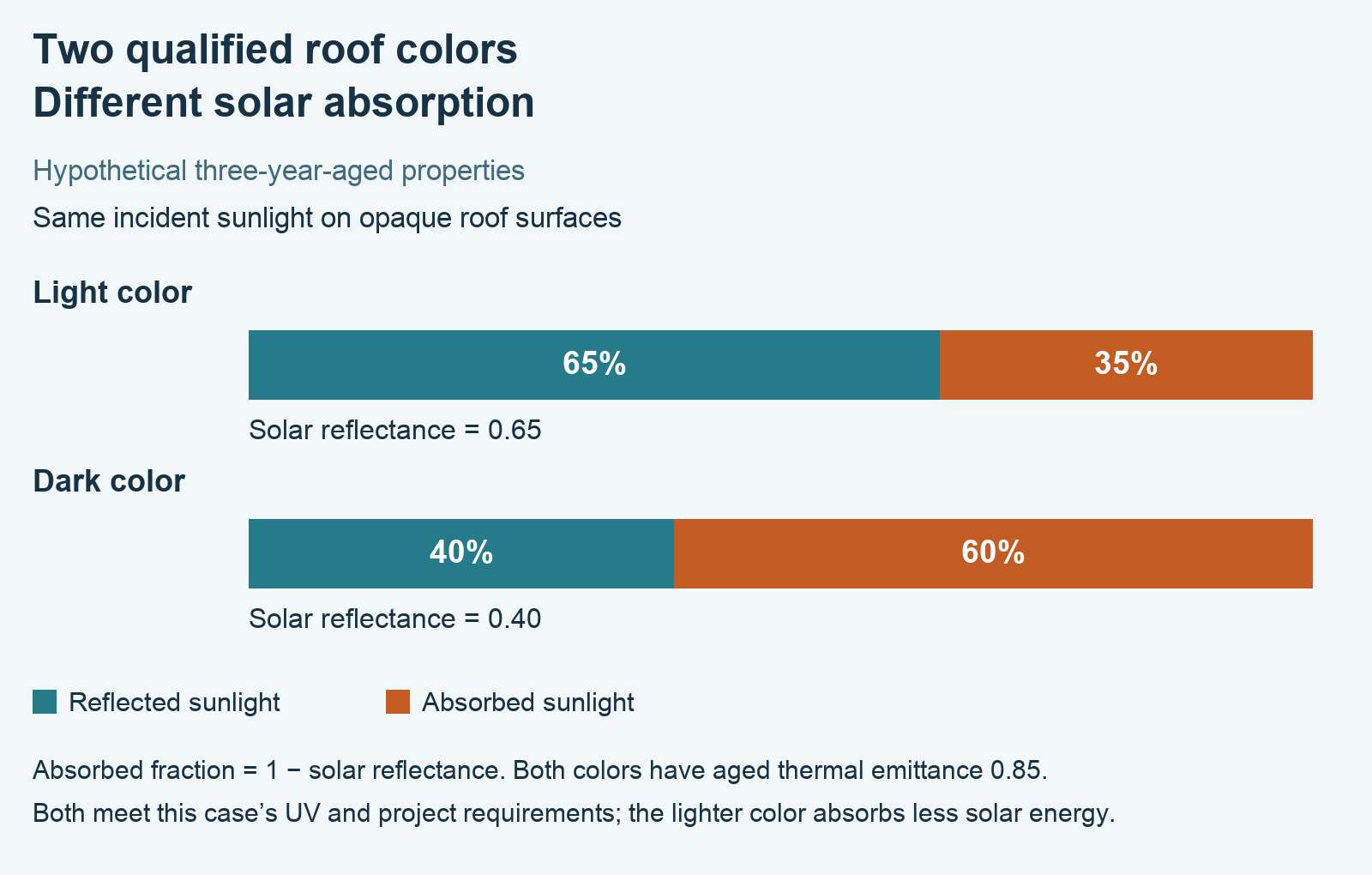
Assume the exact offered colors have three-year-aged solar reflectance of 0.65 for light gray and 0.40 for dark gray, with aged thermal emittance of 0.85 for both. The project requires aged reflectance of at least 0.35 and emittance of at least 0.75; these are example project targets, not code thresholds. For the energy comparison, treat both surfaces as opaque and expose them to the same incident sunlight.
Swipe to view the complete table.
| Decision factor | Light gray system | Dark gray system |
|---|---|---|
| Color-specific weathering, forming and roof use | Meets the example requirements. | Meets the same requirements. |
| Architectural color acceptance | Permitted. | Permitted. |
| Three-year-aged solar reflectance | 0.65; exceeds the 0.35 target. | 0.40; exceeds the 0.35 target. |
| Three-year-aged thermal emittance | 0.85; exceeds the 0.75 target. | 0.85; exceeds the 0.75 target. |
| Share of incident sunlight reflected | 65%. | 40%. |
| Share absorbed by the opaque surface | 1 − 0.65 = 35%. | 1 − 0.40 = 60%. |
| Result under the stated preference | Select: lower solar absorption. | Qualified alternative when dark color has greater value. |
Selection: light gray for lower solar absorption
Choose the light-gray system. Both candidates qualify, but the selected color absorbs 35% rather than 60% of the same incoming solar energy under the example inputs—a difference of 25 percentage points. This supports the owner’s stated preference without claiming a particular roof temperature or electricity saving. It does not show that light gray has better UV durability; both systems already satisfy that separate requirement.
When the dark finish wins—or must be replaced
If the architect makes dark gray mandatory while the other requirements remain unchanged, choose the qualified dark system. If instead the project raises its aged-reflectance requirement to 0.50, the stated dark system no longer qualifies; find a different acceptable formulation or reconsider the color. Hold either candidate if its actual color-specific weathering, forming or roof-use requirement is unresolved.
Keep the selected finish intact through purchase and forming
Keep the specified layers and color together
The selected example is the light-gray 70% PVDF system on the project-defined galvanized substrate, with the specified pretreatment, primer, topcoat film and backer. Retain its color-specific weathering requirements and the aged radiative values used for selection. Changing the pigment formulation, gloss, coat build or substrate is a proposed product change, even if the invoice still says “PVDF gray.”
Define the supplied material and any substitution
For the actual order, name the product and specification editions, steel grade and base-metal thickness, metallic-coating type and designation, complete paint schedule, color/gloss reference and required exposed-face orientation. Include the relevant formed-panel acceptance and the written warranty scope. ASTM A755/A755M-18(2024) identifies the prepainted exterior-building-sheet product family; that standard number alone does not select a color, film build or roof system.
Resolve custom-color minimums, batch consistency, film options and delivery before comparing complete offers. If a lower-cost alternative meets the same roof, appearance, thermal and forming requirements, it can be the better purchase. If a proposed substitution changes one of those results, evaluate that change explicitly rather than treating the resin label as equivalence.
Frequently asked questions
Can a dark cool-pigment finish perform like a white roof?
Do not assume equivalence. Solar-reflective pigments can improve a dark formulation, but compare the actual initial and aged reflectance and emittance values. If the dark color is mandatory, select among qualified dark products; if none meets the project target, the color or performance requirement needs to be reconsidered.
Is a higher SRI evidence of better fade or chalk resistance?
No. SRI is calculated from solar reflectance and thermal emittance. Fade, chalk and film integrity need their own weathering evidence. Use the SRI value only for the thermal-performance requirement to which it applies.
Does every PVDF roofing finish need a clear coat?
No. Use the complete system specified for the chosen color and effect. Some named bright-color or metallic systems include a clear coat; other solid or mica systems do not. Adding or deleting a coat changes the tested build and should not be treated as a harmless upgrade.
Can two suppliers using the same color code be treated as equivalent?
No. A color reference does not define pigment chemistry, resin, gloss, film build, solar properties or weathering behavior. Compare the proposed physical samples and product-specific data. Keep the agreed color and performance requirements together when approving a substitution.
Will field touch-up paint have the original coil finish’s rating and durability?
Not automatically. A factory-applied coating system and a local repair are different applications. Follow the selected product’s repair instructions and obtain confirmation of the repair’s appearance and performance scope. Do not transfer the original product’s radiative rating or weathering claim to an unspecified touch-up coating.
Does the longest finish warranty provide the best protection for the owner?
Not necessarily. Compare covered failures and thresholds, eligible claimant, exclusions, maintenance and remedy as well as duration. A long film-integrity period may not provide the color coverage or installed-roof remedy the owner expects. Obtain the warranty that actually applies to the supplied product and project.
Technical Basis and Source Scope
Kurt Wood, Akira Tanaka, Min Zheng and Dana Garcia, 70% PVDF Coatings for Highly Weatherable Architectural Coatings, Atofina paper hosted by Arkema; undated, PDF p. 4, polymer-binder definition and pigmentation discussion. Used for formulation principles, not current product qualification.
Sherwin-Williams, Fluropon 70% PVDF Coil Coating Systems, ©2018, document SW-CC-2,001-9-2018: PDF p. 2, coating-build table; p. 3, substrates, end uses and South Florida Exposure Testing. Product-specific data; not a warranty or universal roof lifespan.
U.S. EPA, Using Cool Roofs to Reduce Heat Islands, updated June 18, 2026: What Is a Cool Roof? and building/climate considerations.
Cool Roof Rating Council, Roof Directory, directory headings and disclaimers, checked October 19, 2026; Understanding the Solar Reflectance Index: A Calculated Value, April 17, 2024, p. 1.
Steelscape Prints PVDF Based Coating Technology Limited Warranty, sample effective October 1, 2025: definitions, beneficiary and color-formulation conditions. Named-product example only.
ASTM A755/A755M-18(2024), Scope 1.1–1.4: prepainted steel sheet for exterior building products.